

Biomaterial Mulching Mat (2)
Lack of effective methods to control weed growth
Summary
We tested the effectiveness of a biomaterial mulching mat to control weed growth through blocking sunlight in Tabanan, Bali.
Why we rated it this way
The biomaterial mulching mat is effective to suppress weed growth, but it is more complex to create than obtaining commercially available mulching mats.
The problem
What we found
Invasive weeds such as rhizomatous, perennial grasses, and annual seed-producing weeds have a detrimental impact on the productivity of coffee plantations. These weeds intensively compete with coffee plants, consuming nutrients at a rate twice as much as the coffee plants. This competition for nutrients results in a significant decrease in the overall yield of coffee plants, leading to a yield decrease of 35% (from 12.5 quintals to 7 quintals per hectare). Furthermore, weeds contribute to increased pest infestations on coffee plants and increase the risk of coffee tree diseases.
To address the negative impacts of weeds, one commercially available and effective tool is a mulching mat. Typically made from black, nonwoven fabric in a circular shape, these mats block sunlight from reaching weeds, causing them to wilt. The application of mulching mats is straightforward – they are simply placed on top of the soil.
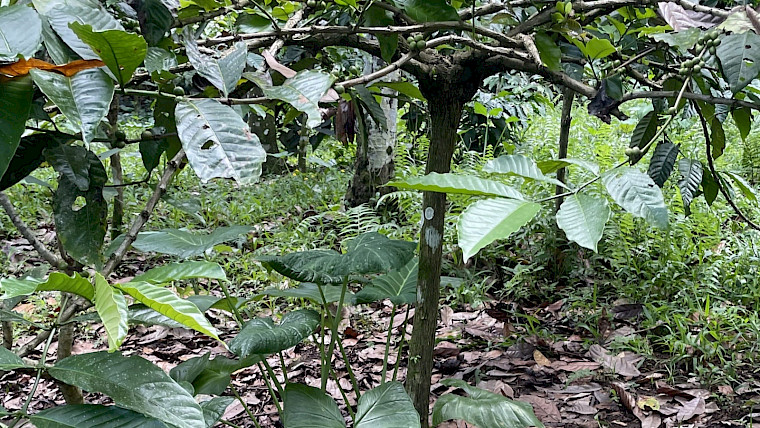
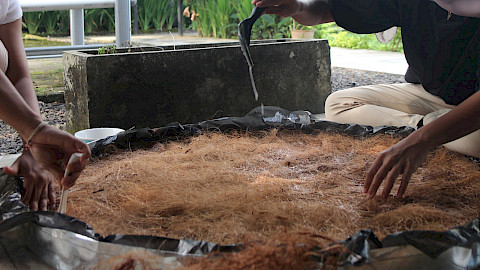
However, the mats are not available in Bali and need to be sourced from abroad, significantly increasing their cost and making them prohibitively expensive for farmers. Therefore, a locally available and similarly effective solution is needed to control weed growth. In response to this challenge, Kopernik has been testing biomaterial mulching mats made from coconut husks. When placed over grass, these mats effectively suppress weed growth. However, the adhesive in the mats starts to show signs of decay after only two weeks. To address this issue, we increased the amount of adhesive in this experiment.
The solution
What we tested
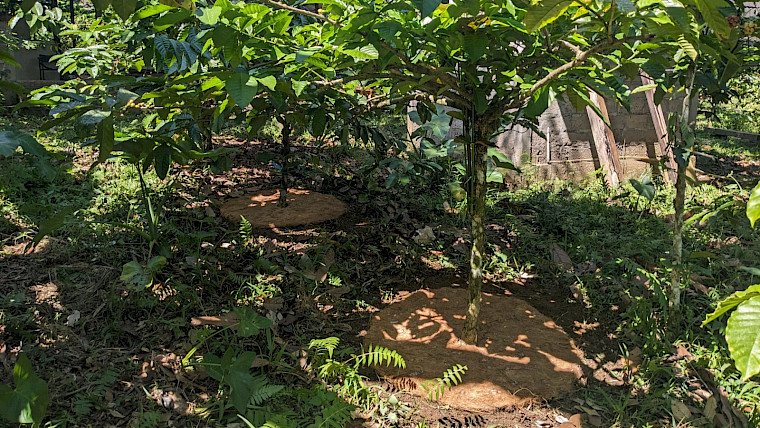
In this field experiment, we tested the biomaterial mulching mat with additional adhesive on a larger scale and compared its effectiveness with that of commercial mulching mats in a real coffee plantation setting.
Project design
How we ran it
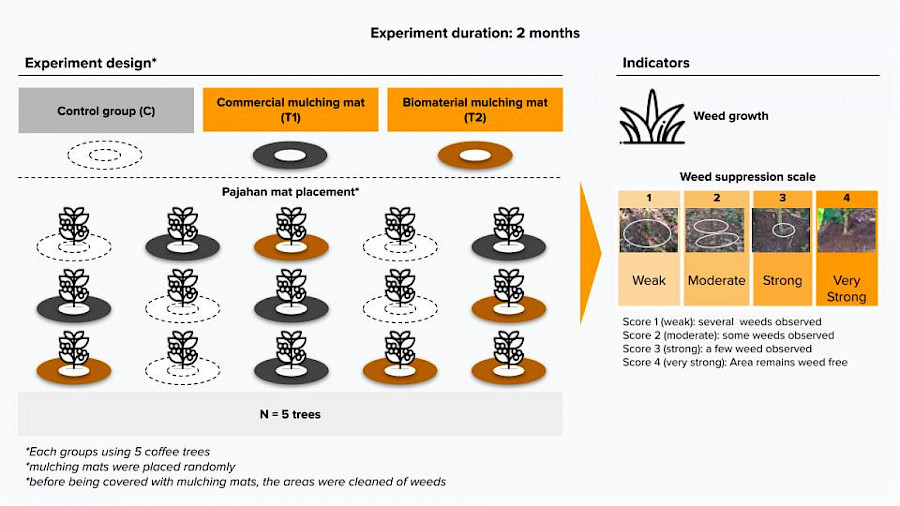
Following our in-house experiment, we aimed to assess the weed mat’s effectiveness in suppressing weed growth. We randomly selected five trees each for the control group (C), Treatment 1 (T1) and Treatment 2 (T2) in a 10-square-meter area of the coffee farm. After the selection process, the coffee trees were cleared of existing weeds to ensure all trees had the same baseline. Finally, we installed the mulching mats based on the aforementioned randomization.
The configuration of each tree was as follows:
- Control Group (C): coffee tree without a weed mat
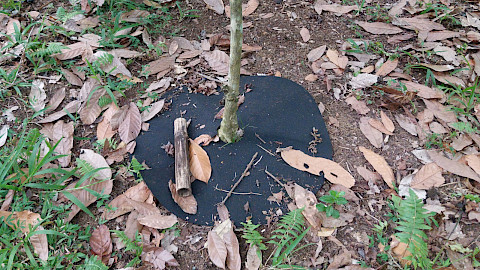
- Treatment 1 (T1): coffee tree covered with a commercially available weed mat (made from nonwoven fabric)
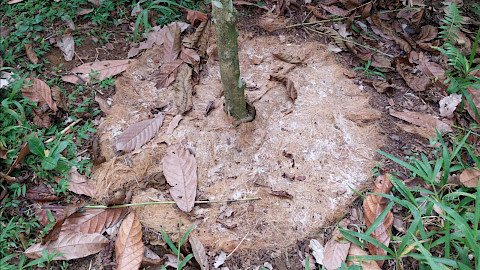
- Treatment 2 (T2): coffee tree covered with a biomaterial mulching mat (made from coconut fiber)
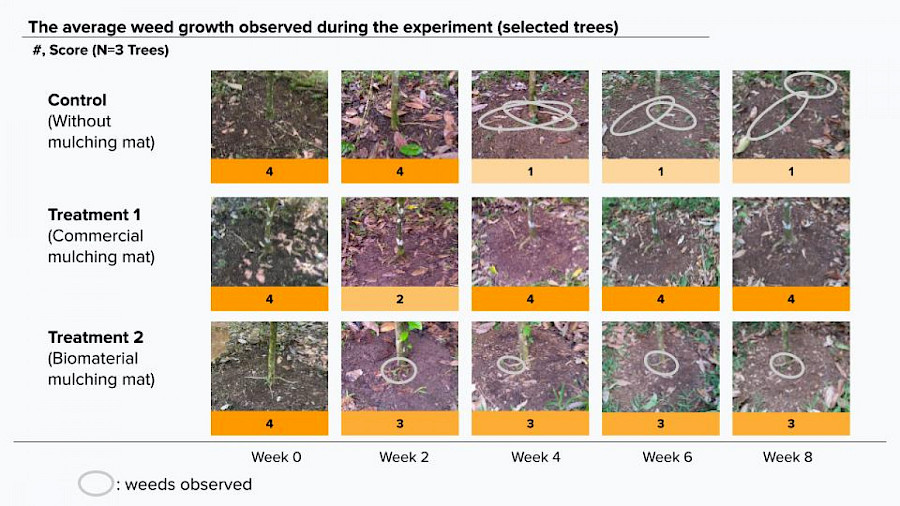
To monitor weed growth, we observed and assessed it on a weekly basis. The assessment used a subjective scale ranging from 1 to 4, based on weekly photos of the weeded areas covered by the mats. The scale used was as follows:
- Score 1 (weak): several weeds observed
- Score 2 (moderate): some weeds observed
- Score 3 (strong): a few weed observed
- Score 4 (very strong): area remains weed free
In addition to the main indicator, we also collected feedback from farmers.
The technology
Results
What we learned
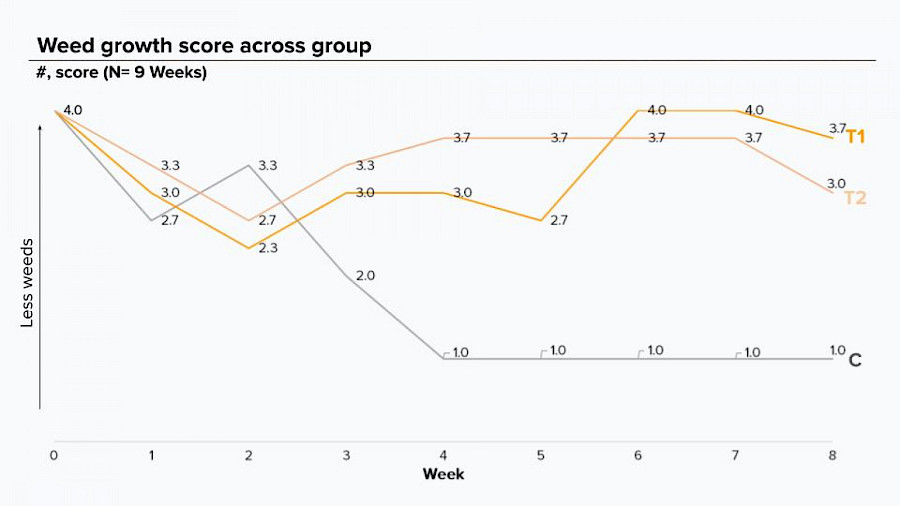
The weed growth scores during installation, or a baseline period, were similar, as we had cleared the existing weeds from the coffee trees. After the installation of mats, the scores between each group started to vary. The control group had the worst performance of all, showing an increase of weeds from the first week to the eighth week. This indicated that weeds could easily grow at the coffee tree site without any intervention.
On the other hand, the commercial mulching mat yielded promising results. It had the highest weed suppression score, with 3.7 points, meaning only a few weeds were observed during the experiment. Similarly, our biomaterial mulching mat also performed better than the control group during the eight-week experiment period. It even showed better results than the commercial mulching mat during the first five weeks. However, the biomaterial mat ultimately had a lower score than the commercial one (meaning more weeds were observed).
Conclusion
The biomaterial mulching mat can effectively suppress weed growth compared to the control group, but is less effective than the commercial mulching mat. Despite its effectiveness, farmers were concerned about the difficulty and cost of producing either the biomaterial mulching mat or purchasing the commercial one.
Additional considerations
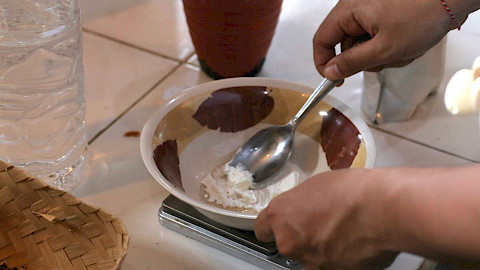
We collected feedback from farmers after the experiment, and they expressed difficulty in creating and developing the bio mulching mat on their own. The bio-mulching mat requires calcium chloride, alginate, and glycerin, which are difficult to access in the field. Additionally, it costs about IDR 14,000 to produce one weed mat. Given this information, farmers were reluctant to create new biomaterial mulching mats.