

Black Soldier Fly (BSF) larvae as Alternative Feed for Chicken
Increasing price of chicken feed
Summary
We tested the effectiveness of using BSF larvae as an alternative feed for chickens compared to traditional feed, and analyzed the economic impact for farmers.
Why we rated it this way
Given that the nutritious content of the BSF and the conventional chicken feed used in the experiment were inconsistent, the results are inconclusive.
The problem
What we found
Chicken consumption in Indonesia increased from 3.5 to 6 kilograms per person per year between 2010 and 2019, and growth is expected to continue. The Central Bureau of Statistics reported that Indonesia produced over 860 tonnes of chicken in 20211. Studies have shown that up to 80% of chicken production cost is feed, typically made up of concentrate, corn, and bran. However, the price of animal feed has risen by 25 % in the last two years, from $1,400/ton in March 2020 to $1,745/ton in December 20222 making the chicken farming business less economically sustainable.
The solution
What we tested
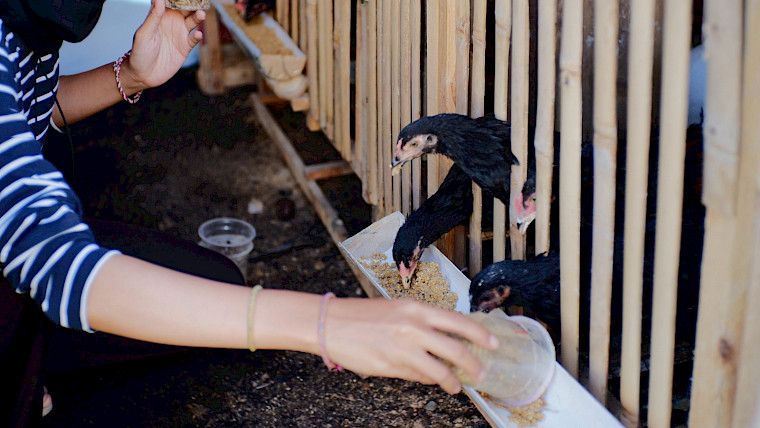
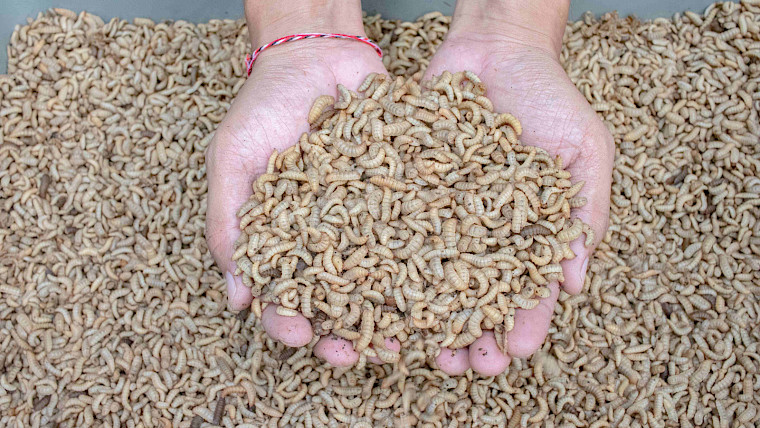
To address the rising cost of animal feed, Kopernik in collaboration with Magi Farm, conducted an experiment to evaluate the effectiveness of using BSF larvae as an alternative feed for chickens, compared to conventional feed. To understand its effectiveness, we measured the weight gain of chickens fed BSF larvae, and compared it to the weight gain of chickens fed conventional feed, and then conducted a profit and loss analysis for chicken farmers.
Project design
How we ran it
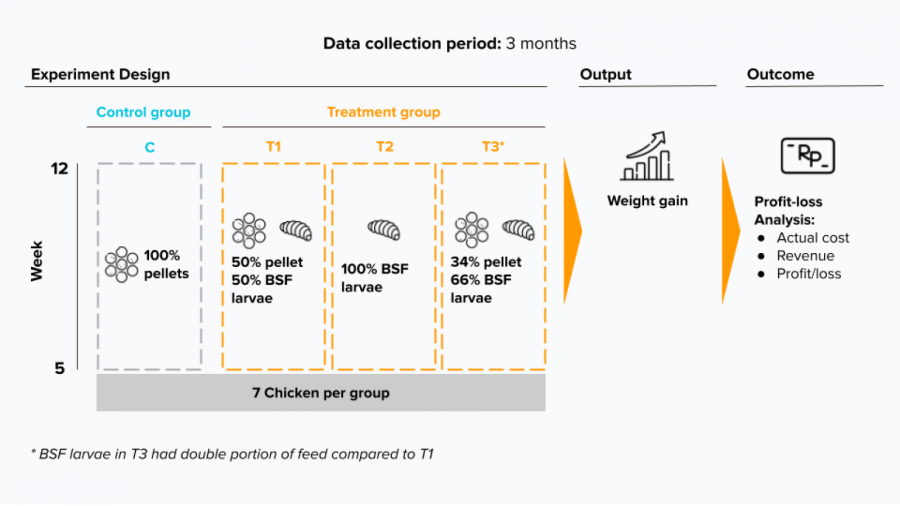
We tested the effectiveness of BSF larvae as alternative feed for chicken by measuring the weight of chickens from four groups with the following feed composition:
- Control group (C): conventional feed (a combination of concentrate, corn, and bran)
- Treatment 1 (T1): conventional feed (50%) and BSF larvae (50%)
- Treatment 2 (T2): BSF larvae (100%)
- Treatment 3 (T3): conventional feed and double the amount of BSF larvae as compared to T1
We started the experiment with 5-month old chickens, which is the age that they are old enough to consume and digest the BSF larvae.
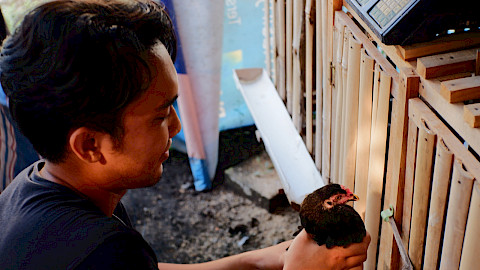
Each feed combination was given to 7 chickens (a total of 28 chickens across the four groups). We collected data weekly to measure chicken weight as well as the costs incurred for each group. This experiment was conducted between April and June 2022.
The technology

Results
What we learned
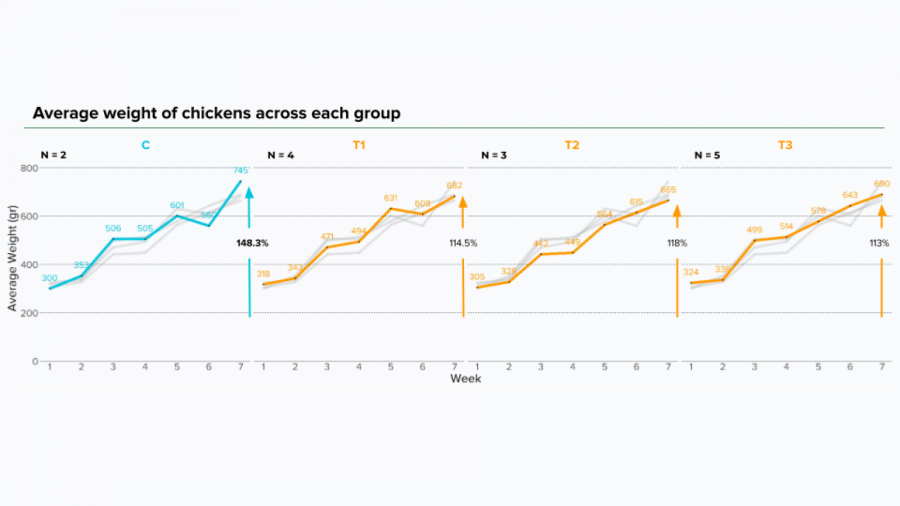
We found that the weight of chickens fed with BSF in the T1, T2 and T3 did not increase as much as that of chickens in the control group (C). The weight increases recorded were 114.5% (T1), 118.0% (T2), and 113.0% (T3), compared to 148.3% (C).
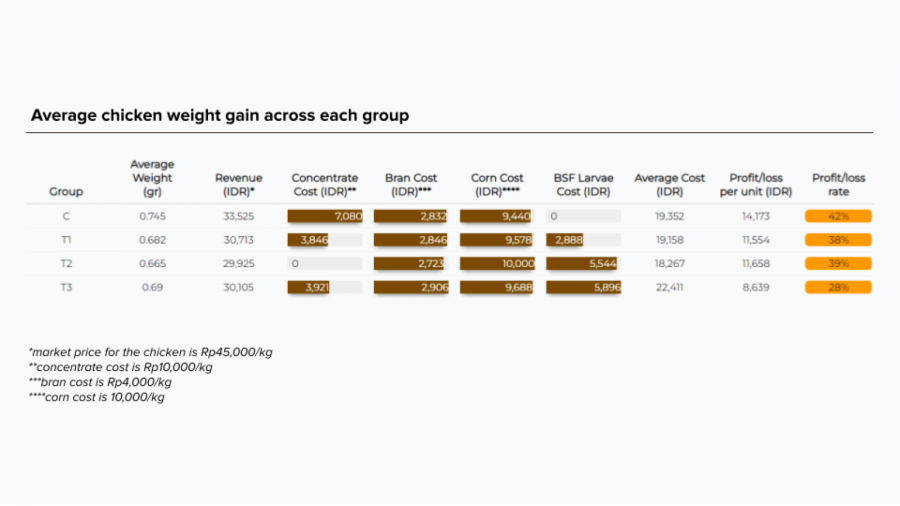
This experiment also showed that feeding chickens with the conventional feed was more profitable than with BSF larvae. The average profit per head obtained in the control group was Rp. 14,173 (42%), followed by treatment group T2 at Rp. 11,658 (39%). In terms of the costs incurred, the total cost of T2 was the lowest among all groups (IDR 18,267). This calculation is based on the profit per head in each group, rather than the groups as a whole, in order to exclude the influence of predators explained in the additional consideration section below).
Conclusion
Given that the nutritious contents of the BSF and the conventional chicken feed used in the experiment were uneven, the results are inconclusive.