

Ergonomic Weaving Tool (1)
Discomfort and pain during the weaving process
Summary
We designed and developed a prototype of an ergonomic weaving tool to improve the weaving experience for women weavers in Adonara and Lembata, East Nusa Tenggara.
Why we rated it this way
The prototype design of the ergonomic weaving tool was easy to use by the weavers and improved their comfort levels.
The problem
What we found
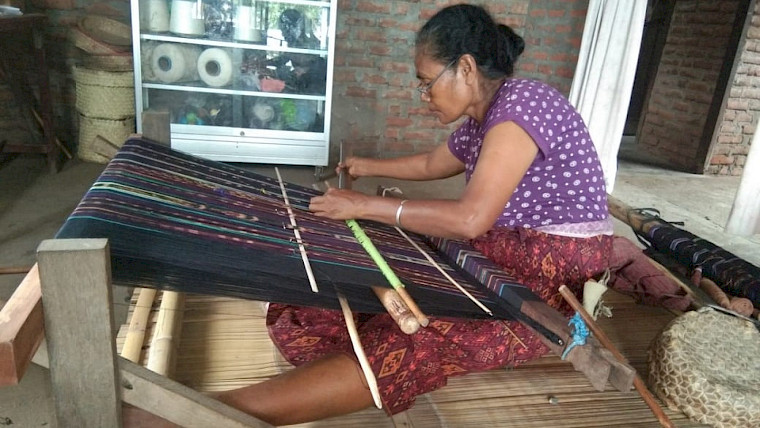
Weaving has been part of Indonesia’s heritage for centuries, representing local cultures and traditions. In Adonara and Lembata, there are more than 1,000 women weavers, most of whom have been weaving from a young age (PEKKA, 2012) using a traditional weaving tool with a back-strap loom. The tool requires the weavers to be seated in a position which has them with their legs stretched out in front on the ground. This method has resulted in prolonged discomfort and pain throughout the entire body leading to musculoskeletal problems especially in the lower back, hip, and leg areas. Musculoskeletal pain becomes more severe as the women get older. This causes complications among women in performing daily duties, carrying heavy loads, and farming. In the long term, the pain could lead to severe health problems for the weavers (ETWA, 2010).
The solution
What we tested
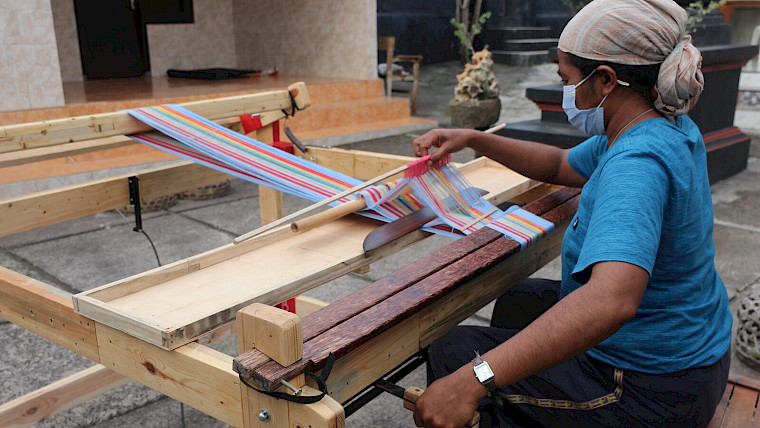
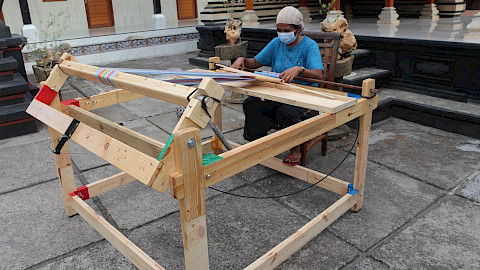
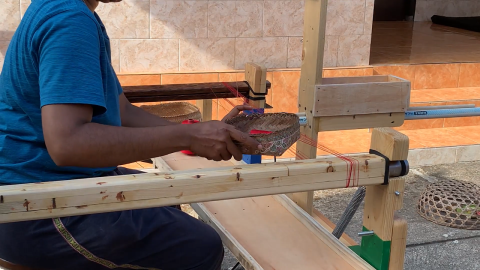
In collaboration with TORAJAMELO, a social enterprise that supports women weavers in Adonara and Lembata, Kopernik developed an ergonomic weaving tool prototype without altering the traditional weaving technique. We removed the tension control on the backstrap loom and replaced it with a swing arm and lever mechanism. The tool was elevated above the ground to allow for a better sitting position during the weaving process.
In this prototyping stage, we tested the performance of the tool and the weaving experience of a master weaver to ensure ease of use and improve comfort in comparison to the traditional tool.
Project design
How we ran it
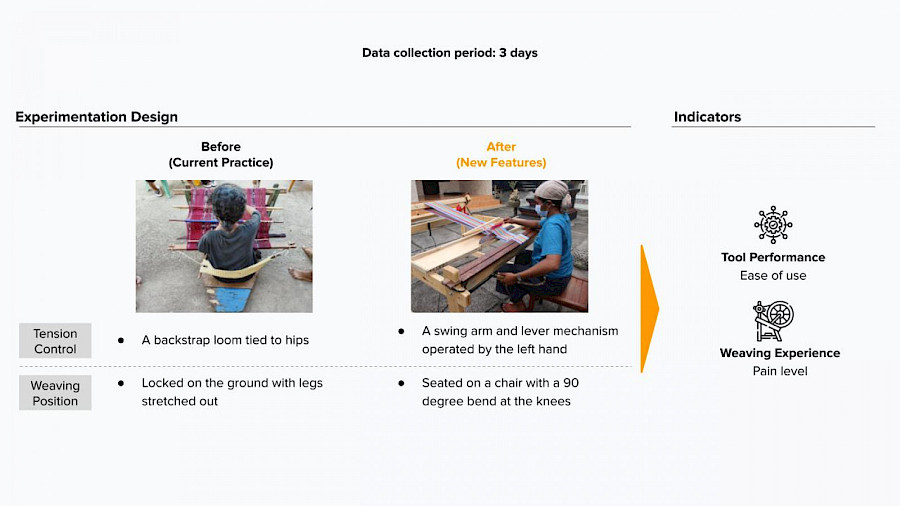
In this prototyping stage, we collaborated with a master weaver from Adonara to test the performance of the prototype by measuring the ease of:
- Warping or neked - process to combine the yarn to form a base.
- Weaving - a process to interlace the warp and weft to form fabric.
We then assessed the weaving experience by measuring the pain level of the master weaver based on a self-reported pain scale by the weaver.
The technology
Results
What we learned
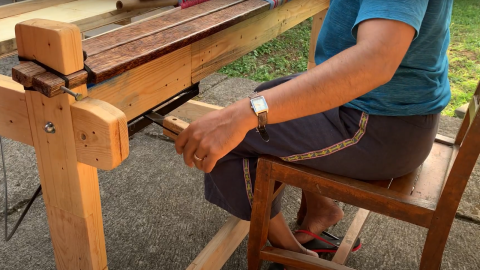
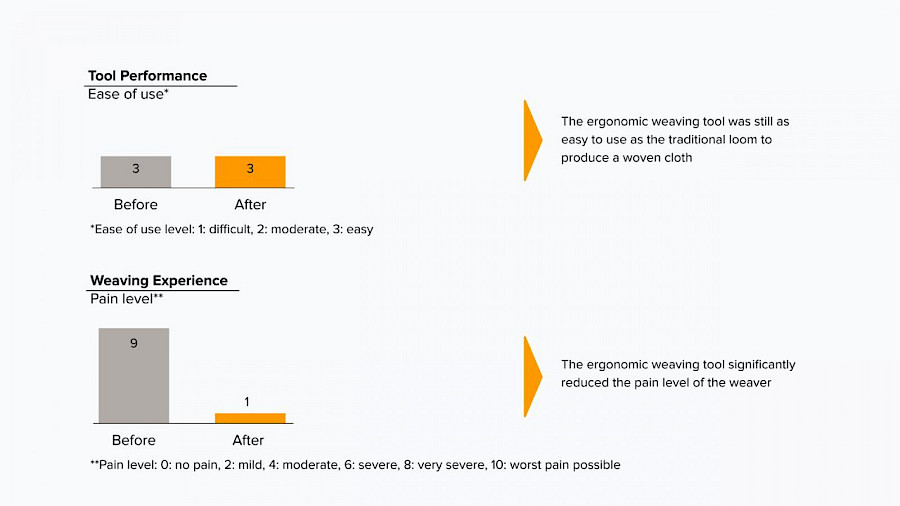
In this initial stage, we found that the prototype was just as easy to use in producing woven cloth and textile as the previous tool. By adding ergonomic features, the weaving tool has improved the master weaver’s experience during which she indicated no experience of pain. As the backstrap loom was replaced with a swing arm and lever mechanism operated by the left hand, the weaver no longer felt pain in her hips. In addition, because the tool is now elevated from the ground, the weaver can sit in a more comfortable position.
Conclusion
In this prototyping stage, we found that the ergonomic weaving tool was easy to use to produce woven cloth. By adding ergonomic features - the swing arm, the lever mechanism and elevation - the prototype was able to improve the weaver’s experience in reducing pain.
During the next stage, Kopernik will conduct pilot testing of ergonomic weaving tools with four weavers in Adonara and Lembata over a four week period to better understand the ergonomic impact of the tool.
Additional considerations
In this prototyping stage, the tool was found to be easy to use and improved the weaving experience. Nonetheless, the ergonomic impact can only be ascertained after more weavers utilise this tool for a longer time period. Kopernik will therefore conduct pilot testing of the ergonomic weaving tool with four weavers in Adonara and Lembata.
In terms of the design, this tool is made of a solid knock-down structure intended to be easily set up and dismantled by weavers. This tool is also equipped with a solar lamp to support weavers to weave at night. It is also adjustable to produce woven cloth in various sizes.
The total budget for the making of this prototype is IDR 2,589,250 which is significantly higher than the traditional tool which costs around IDR 150,000-200,000.