

Gas Detection Sensor for Forest Fire Monitoring
Lack of early detection system for forest fire
Summary
We tested the accuracy of a gas sensor to detect forest fire smoke in Central Kalimantan.
Why we rated it this way
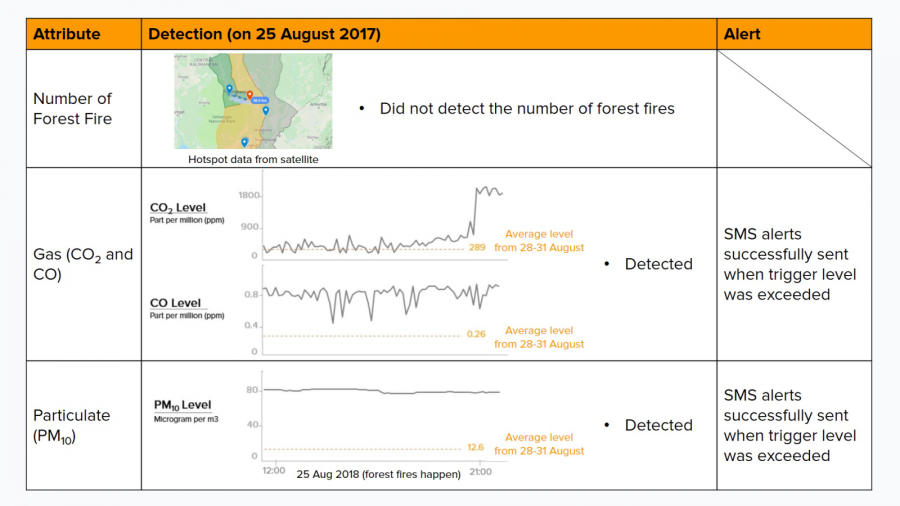
The fire monitoring system was unable to detect the number of fire events accurately.
The problem
What we found
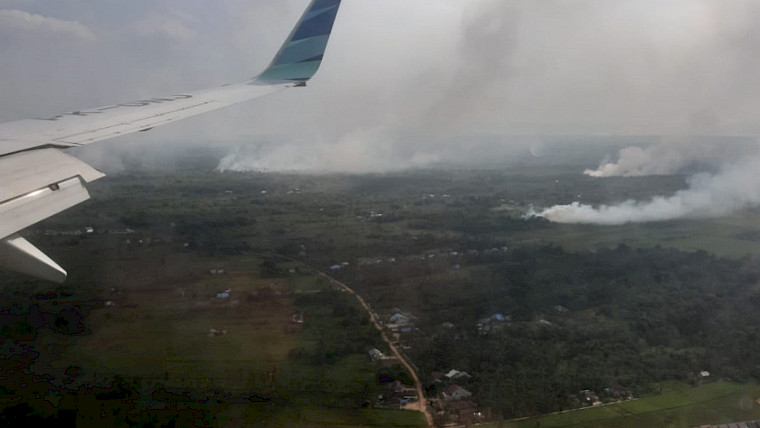
Haze caused by forest fires in Sumatra and Kalimantan puts the health of millions of people at risk every year when they are exposed to smoke from the fires. In 2016, 43 million Indonesians were exposed to smoke from forest fires, and half a million suffered acute respiratory infections. To map the location of fires, current forest fire monitoring systems use satellites. However, data from such systems are prone to delays due to the satellites’ orbit periods. Real-time monitoring is needed to help the government and other relevant stakeholders act quickly to address and mitigate the worst effects of forest fires.
The solution
What we tested
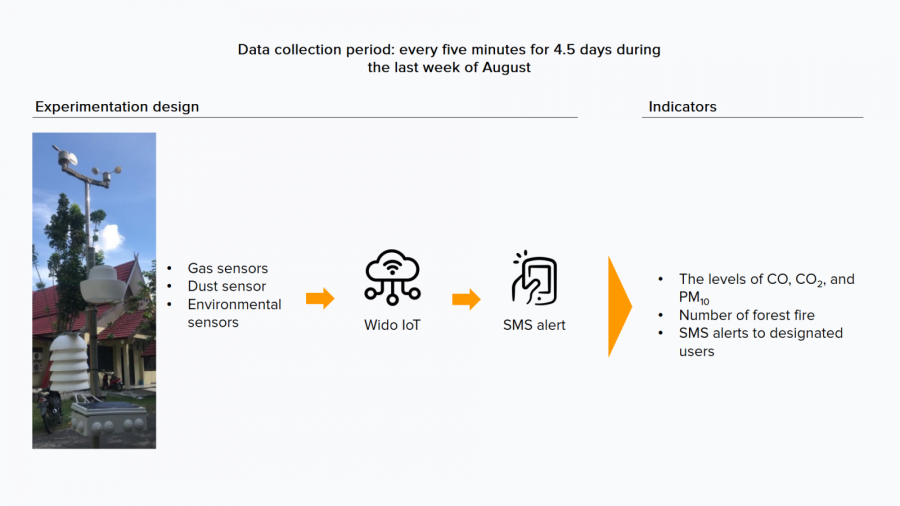
Kopernik tested a gas sensor in Central Kalimantan to identify fire hotspots so that fires could be contained more quickly than through using satellite monitoring. We tested the accuracy of a sensor by measuring the number of fires detected by the sensor—based on carbon monoxide (CO), carbon dioxide (CO2) and particulate matter (PM10) levels—and whether this information was successfully transmitted to the designated users when the trigger levels were exceeded.
Project design
How we ran it
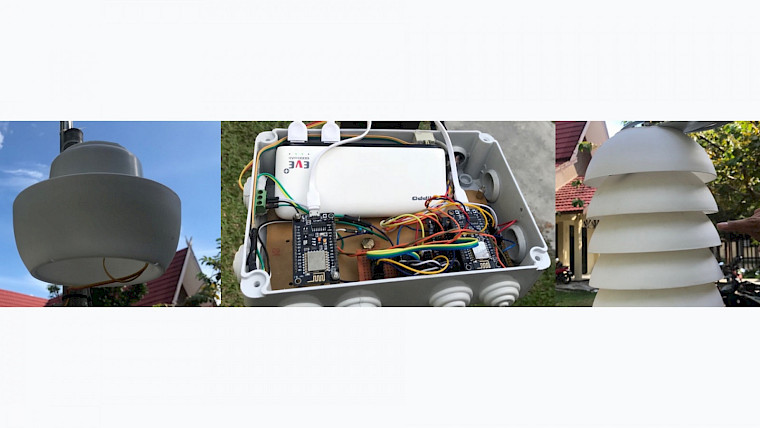
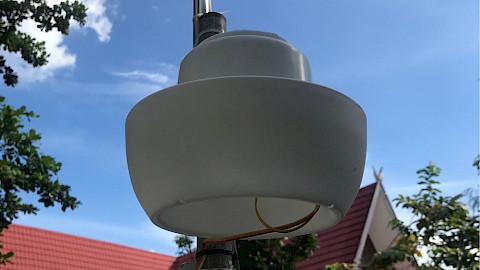
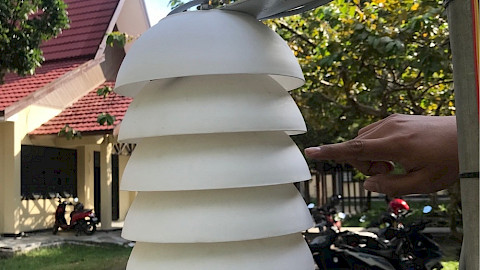
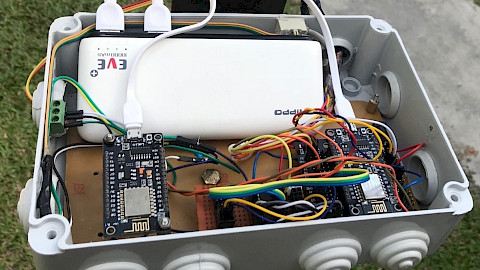
Together with researchers from the University of Palangkaraya, we built a sensor system using the Arduino’s Wido Internet of Things (IoT) microcontroller board and three different types of sensors: gas sensors (CO2 and CO), a dust sensor (PM10) and environmental sensors (temperature, relative humidity and wind direction). The sensor was equipped with a mechanism to send SMS alerts automatically to designated users when CO2, CO, and PM10 levels exceeded 300 ppm, 5 ppm, 50 µg/m3 respectively.
The sensor collected and transmitted data every five minutes and was tested over 4.5 days during 25 August 2018 and 28-31 August 2018. We compared the data collected to satellite data.
The technology
Results
What we learned
We found that the sensor was able to measure increased levels of CO, CO2, and PM10 when fires were detected by the satellite. However, the sensor could neither determine the number of forest fires. When the forest fire happened and the CO2 and PM10 levels exceeded the trigger values, SMS alerts were successfully sent to designated users.
Conclusion
The sensor was able to send alert information to designated users through SMS text when there were increased CO2 and PM10 levels. However, the data could not be used to determine the number of fires. Further research and development is needed for this solution to provide real-time monitoring to respond to the presence of fires quickly and effectively.
Read more
Project profile
Reports and references
Ningrum, Nanis Sakti. (2018). Monitoring Forest Fire: Gas Detection Sensor Phase One Project Report.