

Shredding Machine for Fish Floss Production
Laborious fish shredding process
Summary
We tested the effectiveness of a small-scale machine to improve the shredding process of fish floss production.
Why we rated it this way
The shredding machine was able to reduce the time and number of workers required to shred fish.
The problem
What we found
Despite contributing to 10 percent of the national fish production, East Nusa Tenggara (NTT) has one of the lowest number of Micro Small and Medium Enterprises (MSMEs) engaged in fish production and processing in Indonesia. One of the most popular fish products amongst the local population in NTT is a light and fluffy product called fish floss commonly known as abon ikan. Fish floss is shredded or mashed fish meat cooked with spices, then stir-fried until the fish meat is dry and powdery. Fish floss is usually eaten with rice or sprinkled on bread.
The production of fish floss involves several stages. One of these is shredding, which is crucial in getting the fish floss to be the right consistency. Kopernik’s Market Demand Research (MDR) report found that many MSMEs in NTT use manual methods of shredding the fish using their hands and simple tools. The owners of these MSMEs, mostly women-led, complained about the process as it is very labour intensive and less efficient than using more modern tools.

The solution
What we tested
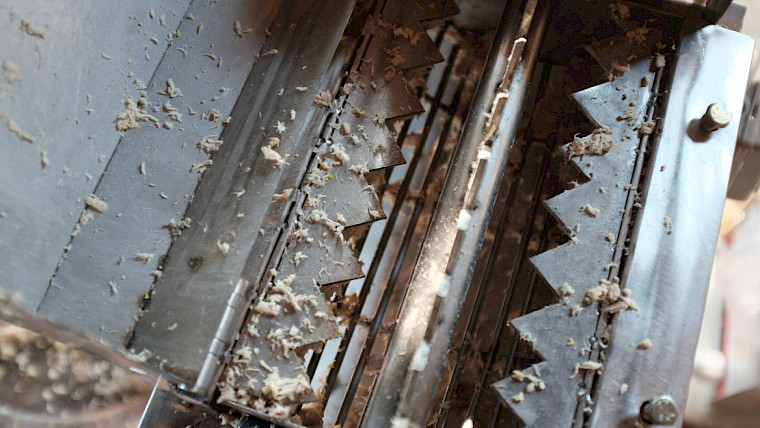
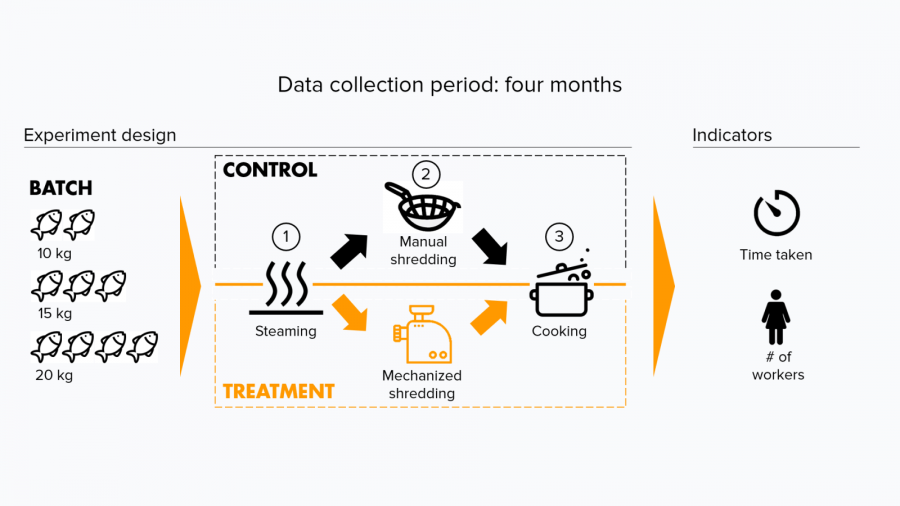
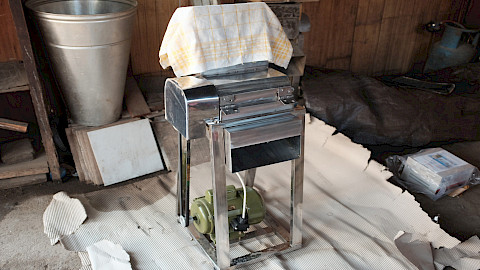
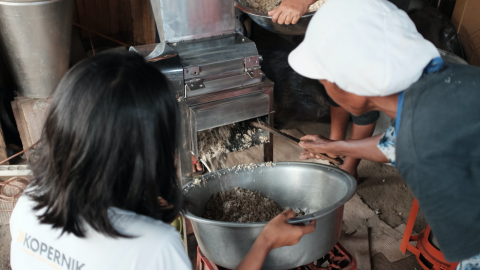
We tested a small-scale machine to improve the fish shredding process. We compared the efficiency of the shredding machine to the manual shredding method which uses oil strainers by measuring the time and the number of workers required to shred fish.
Project design
How we ran it
From June to September 2019, we worked with Kembang Baru, an all-female small fish floss enterprise in Maumere district, East Nusa Tenggara province, Indonesia, to test the efficiency of the shredding machine. We compared the shredding machine (treatment group) to the current shredding process which uses oil strainers (control group) by measuring the time and the number of workers required to shred fish. We experimented with three batches (10 kg, 15 kg, and 20 kg) in line with the typical production capacity of Kembang Baru.
The technology

Results
What we learned
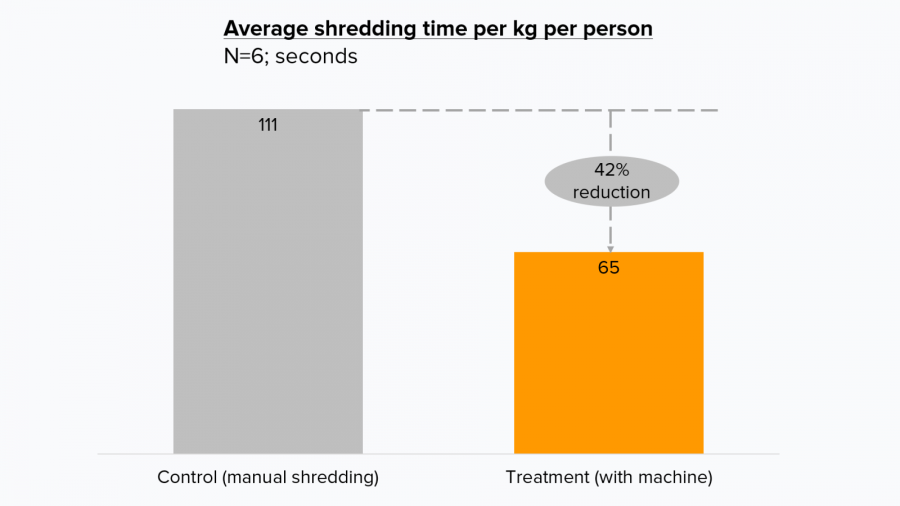
We found that the machine (treatment group) sped up the shredding process by 42 percent compared to the traditional shredding method (control group). Using the shredding machine, it took a worker an average of 65 seconds to shred 1 kg of tuna while the manual shredding method took 111 seconds.
The machine also reduced the number of workers required to shred the same amount of fish in a shorter time period to the manual shredding method.
Conclusion
The experiment showed that the shredding machine sped up the shredding process and reduced the number of workers required to shred fish in the fish floss production process.
Read more
Project profile
Nadhila, Kirana. (2020). Improving fish processing: Shredding machine.