

Simple Batik Wastewater Treatment
Untreated textile wastewater pollutes the environment
Summary
We tested the performance of a simple batik wastewater treatment method to treat wastewater produced from home batik makers in East Java before discharging it to the ground.
Why we rated it this way
The simple batik wastewater treatment method was found to be moderately effective in reducing several chemical parameters in the wastewater to be safely discharged to the ground.
The problem
What we found
Indonesia is home to various forms of batik art fabrics. After being recognized by UNESCO as ‘Masterpiece of The Oral and Intangible Heritage of Humanity’, the batik industry has grown rapidly and provided job opportunities to more than 200,000 people across Indonesia. In 2020, the value of the industry reached US$21.5 million despite the COVID-19 pandemic. As one of the central batik-producing provinces in Indonesia, East Java currently has 9,824* small traditional batik businesses that absorb more than 29,000 workers.
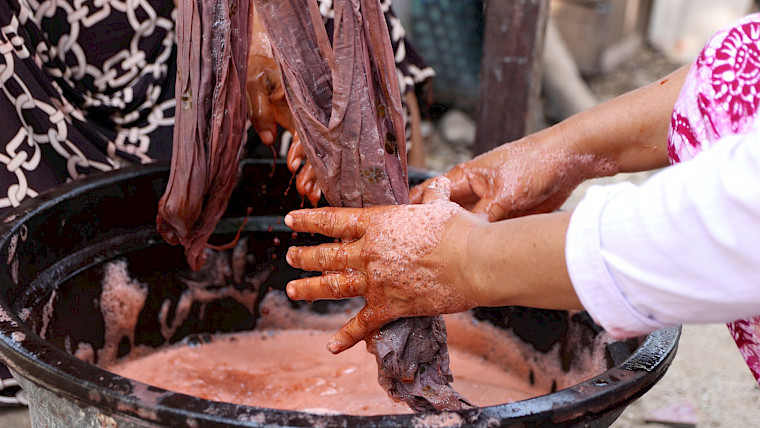
While the batik industry in East Java contributes to people’s income, the batik-making process produces wastewater that contains excess pollutants, especially heavy metals (Cr, Cd, Pb, etc) and organic materials such as ammonia that lead to groundwater contamination. Consuming groundwater contaminated by heavy metals can lead to severe health effects such as cancer, cardiovascular diseases, and kidney failure.
The solution
What we tested
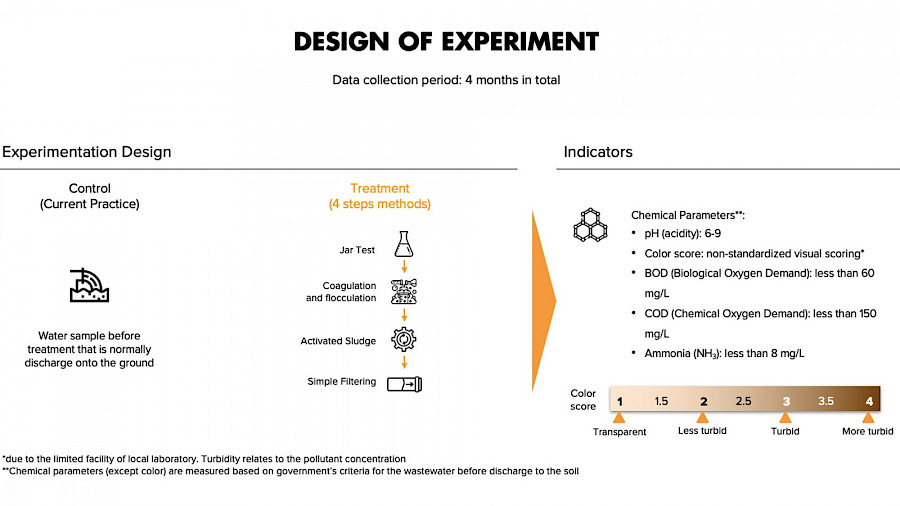
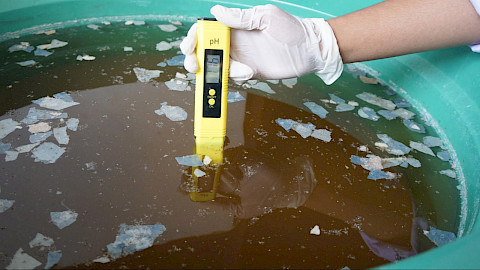
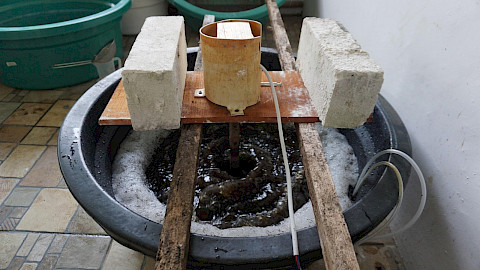
Kopernik tested a simple batik wastewater treatment method - a coagulation and flocculation technique consisting of activated sludge and a simple water filter system - to remove water pollutants before discharging them to the ground. To understand the performance of the method, we tested and compared a number of parameters, including physical and chemical parameters, in the treated and untreated wastewater.
Project design
How we ran it
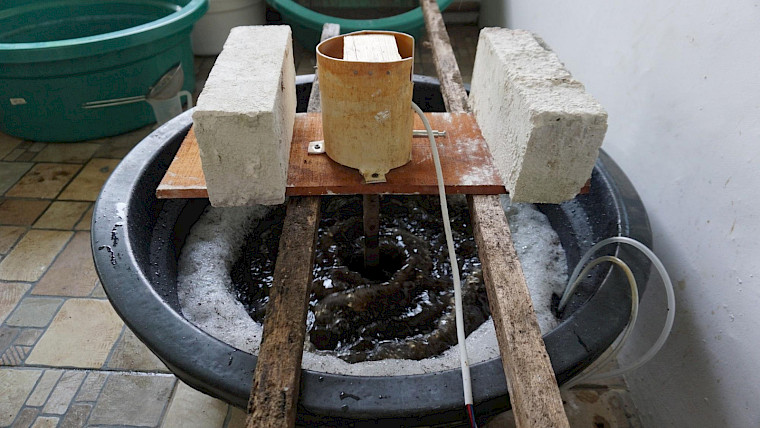
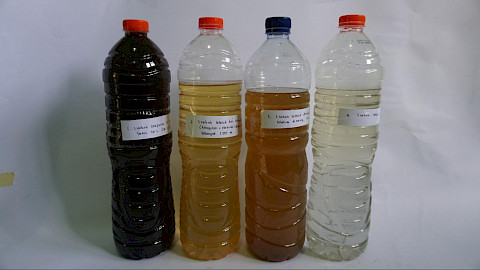
The experiment was conducted from September to November 2020 in Tuban Regency, East Java. We collected three water samples; Sample A, B, and C from different batik producers to test the performance of this method which comprises of the following 4 steps:
- Jar test: A microscale chemical testing to get an optimal dosage of coagulant
- Coagulation and flocculation: Adding coagulant to the wastewater to separate suspended pollutants from the water in the form of flocs
- Activated sludge: A microbiology process using bioreactor to reduce organic materials in the wastewater
- Simple water filter system: A multi-layered filter using gravel, sand, active carbon, and palm fiber to separate big and small particles from the processed wastewater.
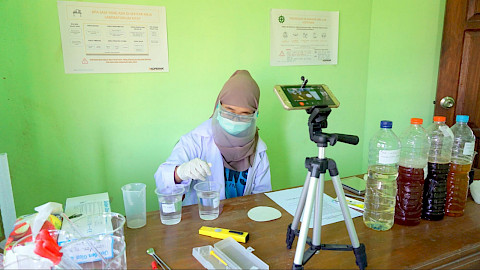
We measured the five parameters, including the concentration of chemical pollutants in the wastewater samples based on the Ministry of Environment and Forestry regulation on wastewater quality standards (Permen LHK No. P.16/MENLHK/SETJEN/KUM.1/4/2019). The government’s standards include measurement of 13 criteria (11 chemical, and 2 physical), but due to the unavailability of the lab equipment in Tuban, we decided to measure 5 out of 11 chemical criteria: pH, color, BOD, COD, and ammonia.
The chemical analysis was conducted by sending the samples to the laboratory. As for the color analysis, we created our own non-standardized quantification. This was done by visual observation based on the color score since the local laboratory did not have the facility to conduct a color content analysis.
It is important to note that the treatment for sample C was slightly different from other samples. This was due to the result in the sample B experiment that didn’t meet the intended results. Therefore, we decided to improve the filtering system. We added an EM4 activator to increase microbe activity in the activated sludge step and added more carbon (from 4 cm to 5 cm) to the filter layer in the simple water filter system step.
The technology
Results
What we learned
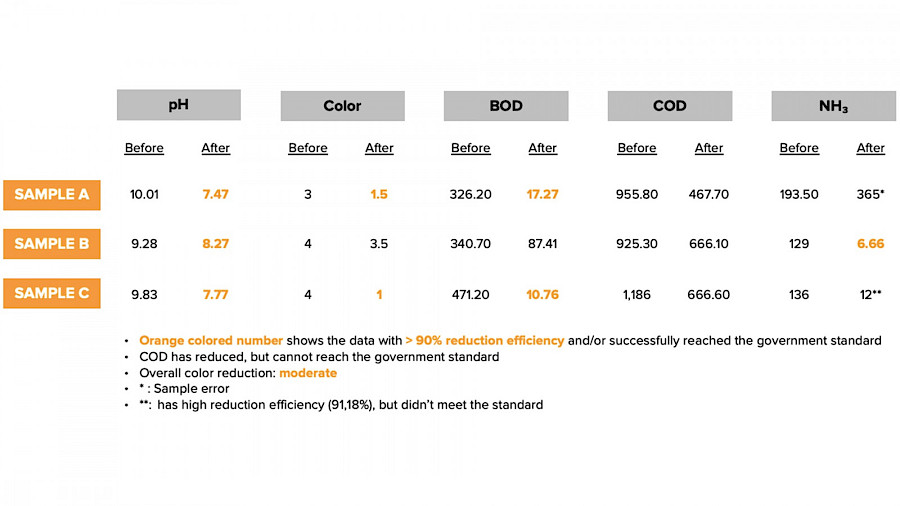
We found that the performance of the treatment method in Sample C was better than in Sample A and B, where it was able to meet the Government’s standard for almost all parameters.
The pH levels for the three samples were reduced, reaching the government’s standard of pH levels (6-9). The color score of the three samples, however, produced different results. Sample A and C indicated that they were between less to moderately turbid, whereas sample B indicated that the turbidity was still heavy. The BOD in Sample A and C were reduced significantly to reach the government standard. Meanwhile, the COD level in the three samples was reduced but did not meet the government standard. Other parameters such as ammonia level showed a significant reduction in Sample B and C, while an error occurred in Sample A as the stirrer was overheated and thus the activated sludge process was not completed.
Conclusion
In this experiment, we found that the treatment method performed well in Sample C, with an additional layer of activated carbon in the filtration stage, where it reached the government standard of wastewater criteria in all of the parameters but COD. The treatment method still needs enhancement to meet all government standards to enable water safely discharged to the ground.
Additional considerations
In terms of cost for this simple wastewater treatment method, home batik producers can access locally available materials with an estimated cost of IDR 5 - 10 million (USD 357-686). The application of the method was also relatively simple, and more likely to be adopted by other home batik producers in the area.