

Solar Dryer for Rice Grain
Resource-intensive rice grain drying process
Summary
We tested the effectiveness of a solar dryer in reducing rice grain drying time, debris, labor effort, and space required.
Why we rated it this way
In dry conditions, the solar dryer took twice as long as traditional floor drying. However, it produced cleaner grains and required less labor. In terms of space efficiency, the solar dryer performed better at full capacity, while floor drying was more suitable for small batches and easier to scale up.
The problem
What we found
Indonesia is the fourth-largest rice producer in the world. In 2024, rice production in Indonesia reached 52.66 million tonnes, and 30.34 million tonnes are used for direct consumption by Indonesians (BPS, 2024). Before rice reaches consumers as ready-to-cook rice, it undergoes several post-harvest processes, including drying, threshing, cleaning, milling, grading, packaging, storage, and distribution. Among these processes, the drying process serves as a crucial step as it facilitates efficient separation of rice from the husk during milling that leads to better results.
Farmers typically harvest rice 2-3 times a year, during both the rainy and dry seasons. However, with increasingly unpredictable weather, extended rainy periods can delay the drying process, requiring more time and effort and can affect the quality of the rice. On average, it takes about a week to dry rice during the rainy season, though drying times vary depending on individual farmer practices.
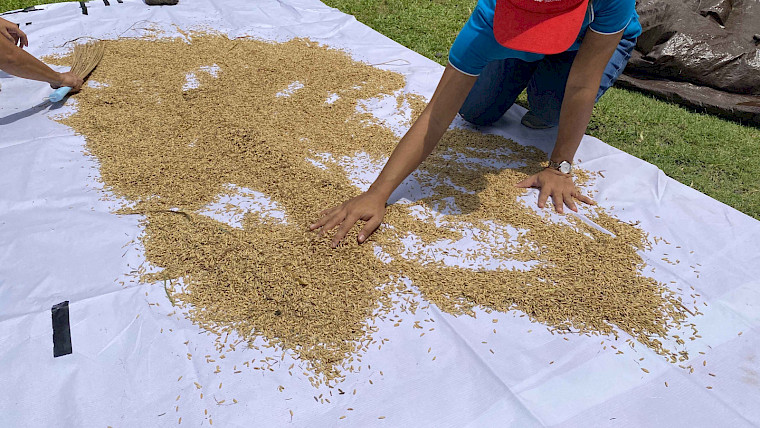
The common drying method involves spreading rice grain on tarpaulins on the ground and leaving it to dry under direct sunlight. During the rainy season, farmers must fold the tarpaulins and move the rice grain when it rains, making the process labor-intensive. Additionally, this method requires large open spaces, which are becoming rarer in Indonesia and forcing farmers to dry grain in public areas that are exposed to dust and animal contamination. Thus, there is a need for an efficient drying process that can adapt to unpredictable weather and protect rice grain from contaminants.
The solution
What we tested
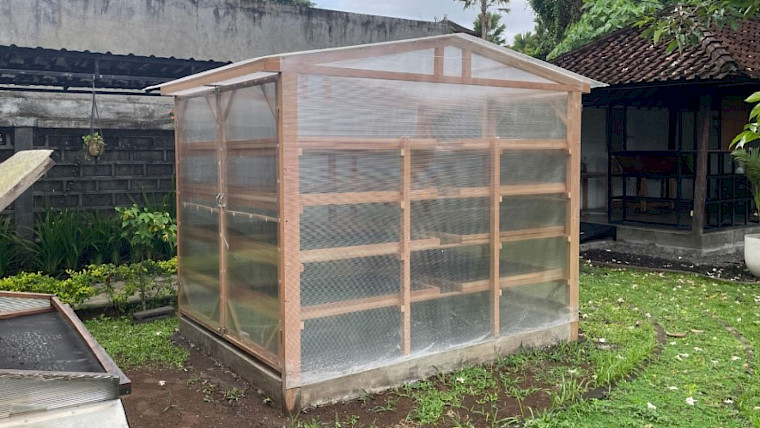
Kopernik built a solar dryer to help farmers dry rice grains faster, keep grains cleaner by reducing exposure to debris and animal dirt, and reduce effort by eliminating intermediary steps in the drying process, all while utilizing available space.
Project design
How we ran it
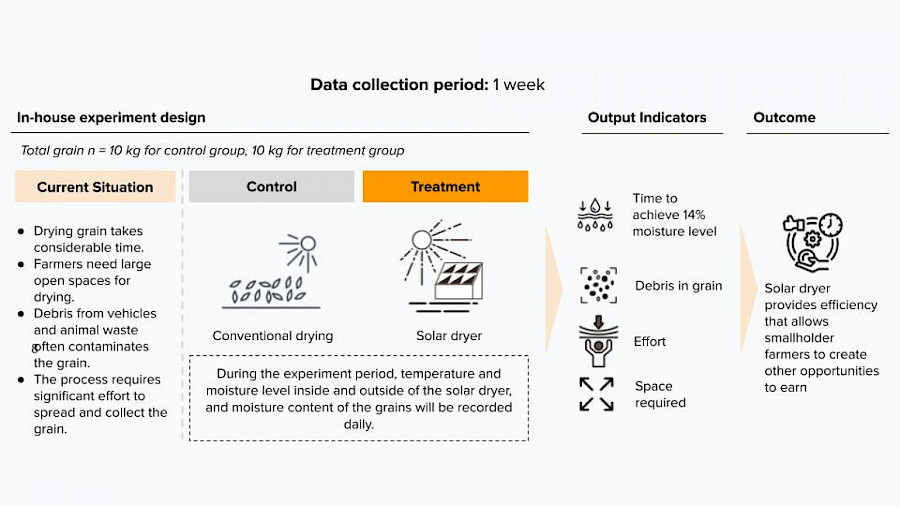
This in-house experiment on drying rice grains spanned over the course of one week. We compared the performance of the solar dryer with the current floor drying method, which involves spreading the rice grains on tarpaulins on the ground.
We used a total of 20 kg of rice grains: 10 kg for the control group (floor drying using tarpaulin) and 10 kg for the treatment group (using the solar dryer). The rice grains dried in the solar dryer (treatment group) were divided into four trays to ensure an equal surface area for drying. Each tray weighed 2.5 kg and was arranged vertically from Tray 1 (top) to Tray 4 (bottom).
The experiment focused on four indicators: time to achieve a moisture level of 14% (based on Standar Nasional Indonesia or SNI), the amount of debris present in rice grain (on a scale of 1 to 5), the number of steps performed during the drying process, and the space required per batch (in meter-square). We used a humidity and temperature sensor device to record the humidity and temperature on the tarpaulin and inside the solar dryer, and a grain moisture meter to measure moisture content. All of the data were recorded daily: once in the morning before drying and once in the afternoon after a whole day of drying.
For both groups, the drying process was stopped after the grain moisture meter indicated a moisture level under 14%. However, the moisture meter we used was unreliable because it was not designed to measure the moisture content of rice grains. To further verify that moisture content met the standard of under 14%, rice grain samples from both groups were sent to the agricultural laboratory at Warmadewa University in Denpasar, Bali.
Results
What we learned
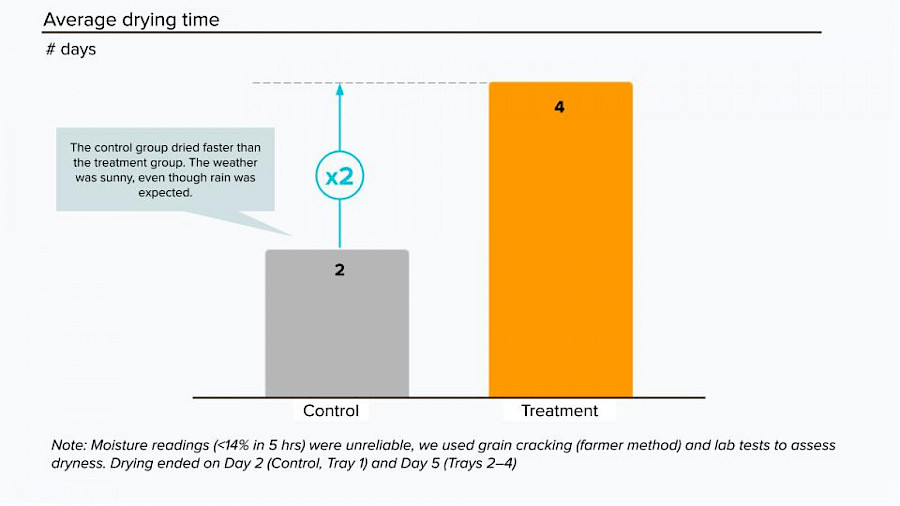
In the control group (using tarpaulin), rice grains dried evenly and reached the desired moisture level in two days. In contrast, rice grains in the solar dryer took longer to dry. While those in the top tray (Tray 1) achieved the desired dryness in two days, grains in the lower trays (Tray 2, Tray 3, and Tray 4) required four days. As a result, the average drying time for the solar dryer group was four days—twice as long as the control group.. It is important to note that despite the rainy season setting, the drying process in this experiment occurred entirely without rain, which sped up floor drying under direct sunlight. All of the rice grains dried in this experiment had a moisture content below 14%, meeting the required standard based on the laboratory results.
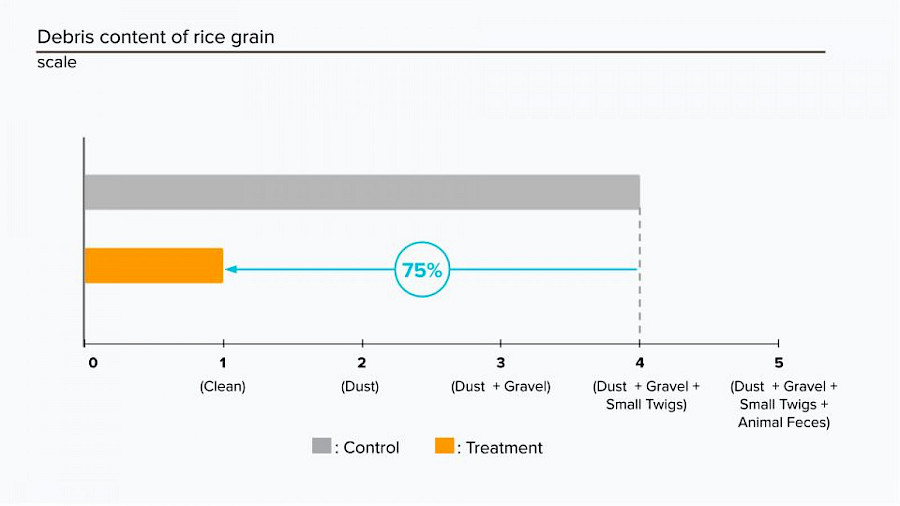
To determine whether the solar dryer is more effective at keeping contamination away from the rice grains, we compared rice samples from both groups. The rice dried in the solar dryer was much cleaner at the debris content level 1 (contains no debris) than the rice dried on the tarpaulin at the debris content level 4 (contains dust, gravel and small twigs). This was due to the solar dryer being a closed system, which helped prevent animal contamination. Additionally, the nets in the trays acted as filters, removing debris originally brought by the rice, further ensuring the rice dried in the solar dryer was cleaner (see picture 2).
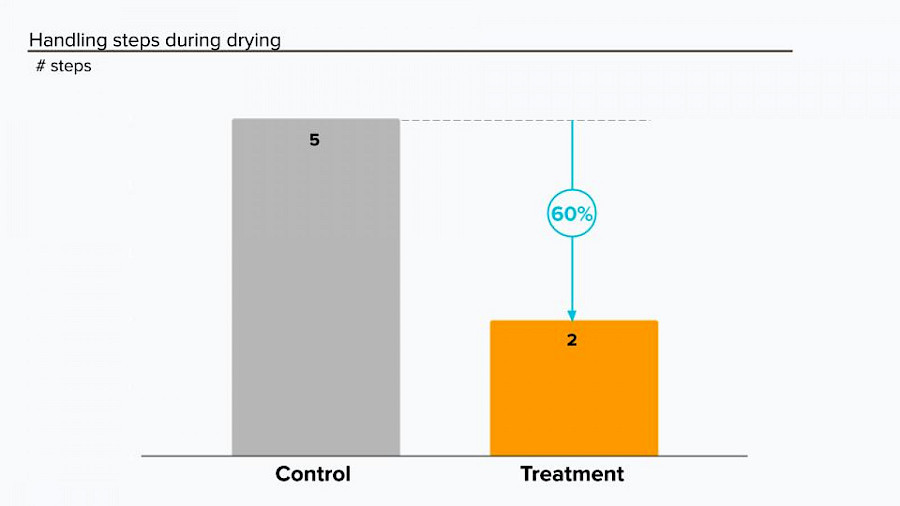
The drying process for floor drying requires five steps: one to set up at the beginning, one to collect and pack at the end of day 1, one to set up on the morning of day 2, one to collect at the end of day 2, and one to pack the rice for storage at the end of day 2. If it rains during this process, additional steps are needed. In contrast, rice dried using the solar dryer only requires two steps: one to set up at the beginning and one to pack for storage at the end. If it rains, no additional steps are needed when using the solar dryer.
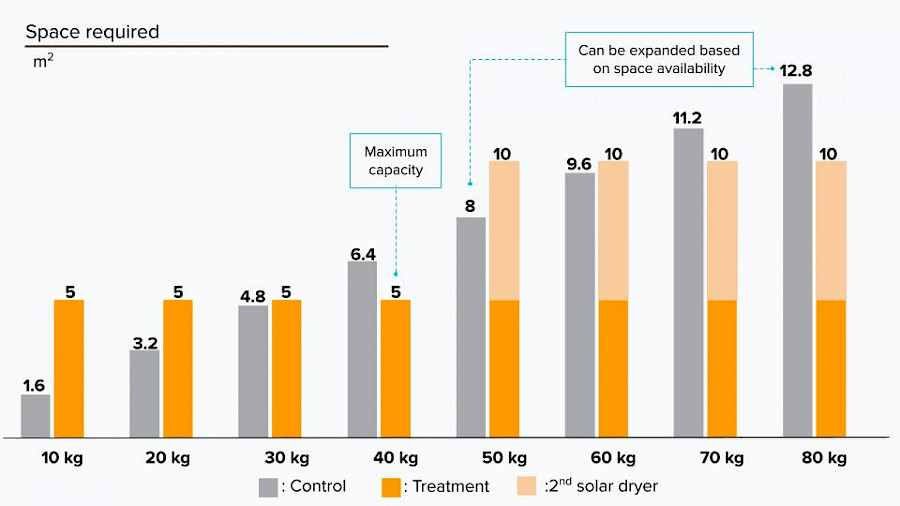
The solar dryer has a limited capacity, with each tray holding a maximum of 2.5 kg of rice. The current solar dryer used in this experiment can hold 40 kg of rice, occupying 5 square meters. This means that to dry more than 40 kg, the rice must be dried in batches increasing the overall drying time, or another solar dryer is required. On the other hand, floor drying requires more space for the same amount of rice when the dryer is at full capacity, but it is more space-efficient for smaller batches. Additionally, it can be expanded easily, making it more versatile for drying larger quantities of rice.
Conclusion
Both the floor tarpaulin and solar drying methods effectively reduce rice grain moisture to meet SNI standards. In dry conditions, the solar dryer took twice as long as floor drying. However, it produced cleaner grains and required less labor. While the solar dryer is more space-efficient when used at full capacity, floor drying is better suited for small batches and can be more easily scaled up, as it does not require constructing additional units.
Additional considerations
The use of a solar dryer to dry rice grain may be more effective compared to floor tarpaulin drying when it rains. However, the full advantages of protecting rice grain from the rain were not able to be directly measured in this experiment because we experienced unusually dry and hot days during the experiment period, despite conducting the experiment during the height of the rainy season in Bali. In terms of cost, building a solar dryer is more costly compared to the cost of purchasing tarpaulin for floor drying.