

Solar dryer for small fish
Ineffective fish drying process
Summary
We tested the effectiveness of two solar dryer prototypes designed for drying small fish during the rainy season in Aceh Jaya, Aceh.
Why we rated it this way
Among the two solar dryer prototypes, the one equipped with a solar collector was found to be effective in drying small fish (such as anchovies and small shrimp) during the rainy season.
The problem
What we found
Indonesia is the second-largest fish producer after China, with fish production reaching 25.32 million tons in 2019. There are approximately 5 million fishermen in Indonesia (KKP, 2019), and over 60% of them are small-scale fishers. Small-scale fishers usually sell their catch locally, either fresh or as salted and dried fish after further processing (SEAFDEC, 2017).
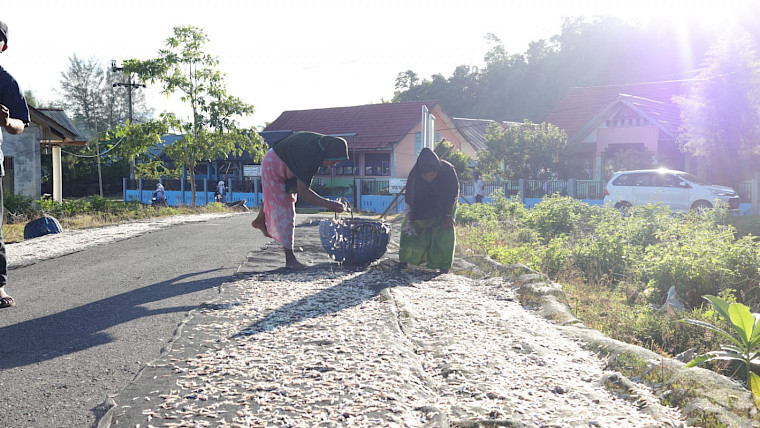
Aceh is a province located on the coastal area, with almost three hundred thousand square kilometers of ocean territory, rich in marine and fisheries resources. Lhok Kruet, a village located along the coast, is mostly inhabited by fishing communities. Aside from fishing, the villagers, mostly women, also produce dried anchovies and small shrimps.
The existing traditional method of drying anchovies and shrimps involves spreading them on net sheets on the ground under the sun, commonly known as floor drying. However, this method poses a challenge during the rainy season, as the products can easily spoil and need to be discarded. A simple solution is needed to effectively dry these commodities during the rainy season.
The solution
What we tested
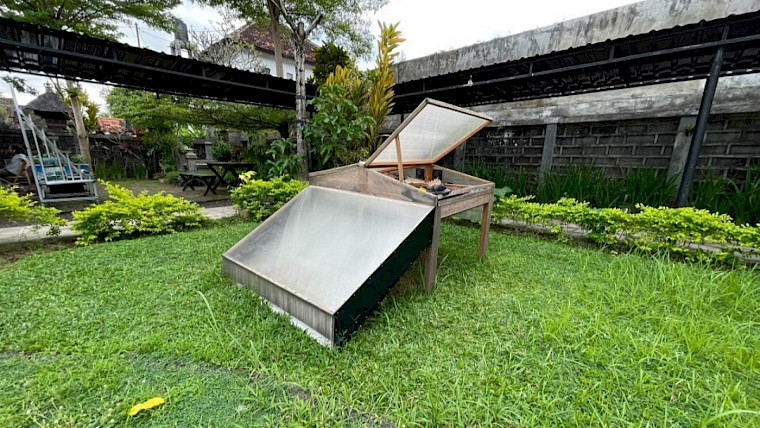
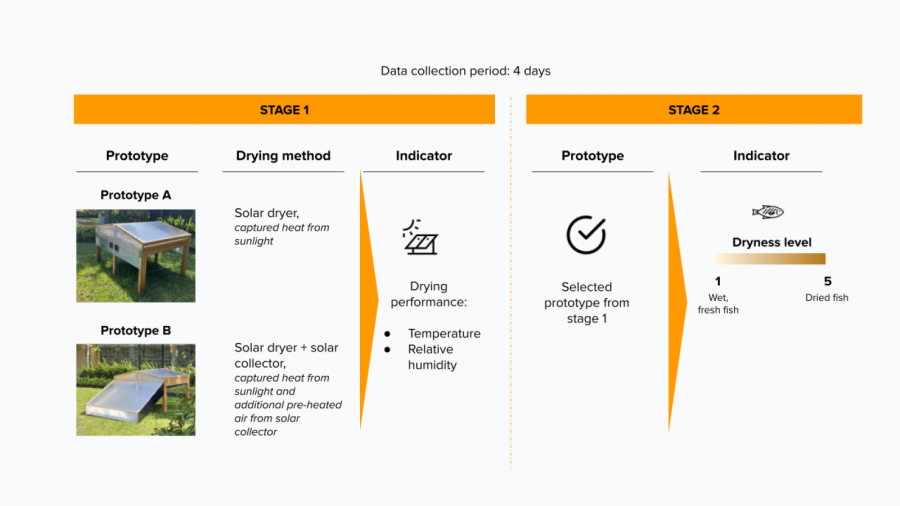
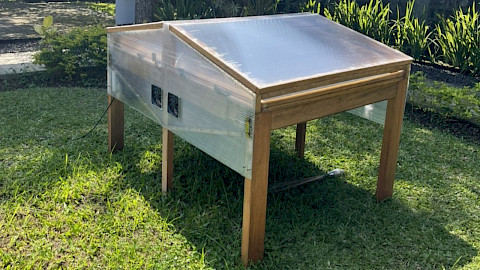
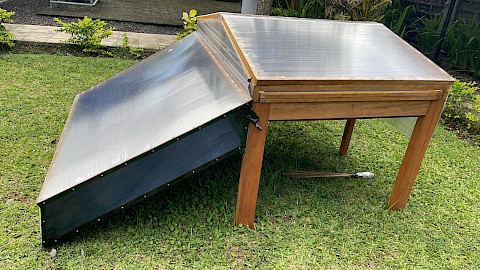
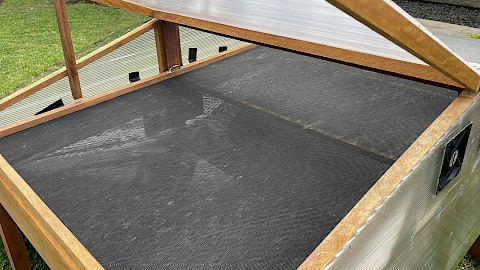
In collaboration with YABUMI, a local organization in Aceh that supports women in coastal areas, Kopernik designed and developed two different types of solar dryers for small fish, such as anchovies and small shrimps, to enable their drying during rainy conditions. Prototype A consists of a solar dryer, while prototype B includes a dryer and a solar collector (a metal sheet conductor used to trap and distribute heat).
This prototyping stage was conducted at Kopernik’s office in Bali, where we tested and compared the effectiveness of the two solar dryers by measuring their inside temperature and relative humidity. In this experiment, we did not compare the prototype with current practice of floor drying, as the weather conditions differ from those in the field. Currently, there is no drying process conducted in Aceh to accommodate drying of fish while it is raining.
Project design
How we ran it
This experiment consists of two stages. Firstly, we assess the performance of the dryers without fish by examining two parameters:
Inside temperature: The standard temperature for fish drying ranges between 45 to 80 °C.
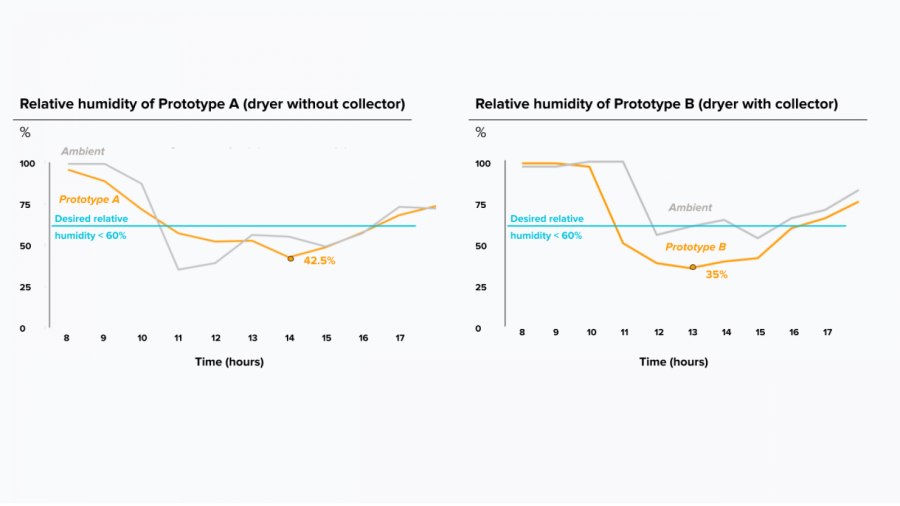
Relative humidity: Ideally, the relative humidity for drying air should be below 60% (AEE INTEC, 2004)
The more effective prototype is then selected and utilized in a fish-drying experiment.
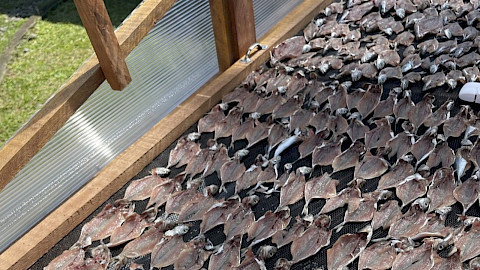
In the second stage, using the chosen prototype, we dry small fish (4 to 7 cm in size), similar to large sized anchovies, as an alternative to actual anchovies and small shrimps, as these were unavailable in the local markets at the time of the experiment. We analyze the level of fish dryness by visual observation using a non-standardized quantification.
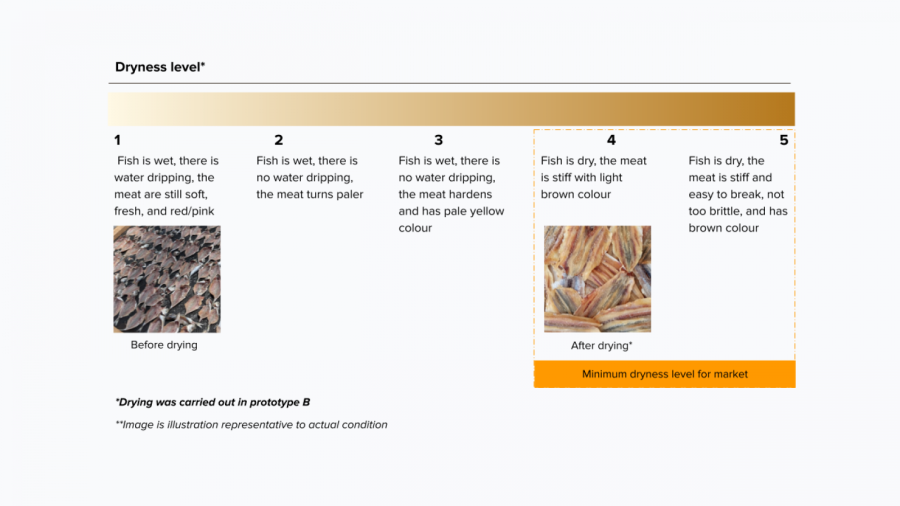
The five-scale dryness level is based on visual observation, where each score represents the following condition:
1 - Fish is wet, there is water dripping, the meat is still soft, fresh, and red/pink
2 - Fish is wet, there is no water dripping, the meat turns paler
3 - Fish is wet, there is no water dripping, the meat hardens and has pale yellow color
4 - Fish is dry, the meat is stiff with light brown color
5 - Fish is dry, the meat is stiff and easy to break, not too brittle, and has brown color
The desired level of dryness suitable in the market is a minimum of 4.
The technology
Results
What we learned
Dryer performance
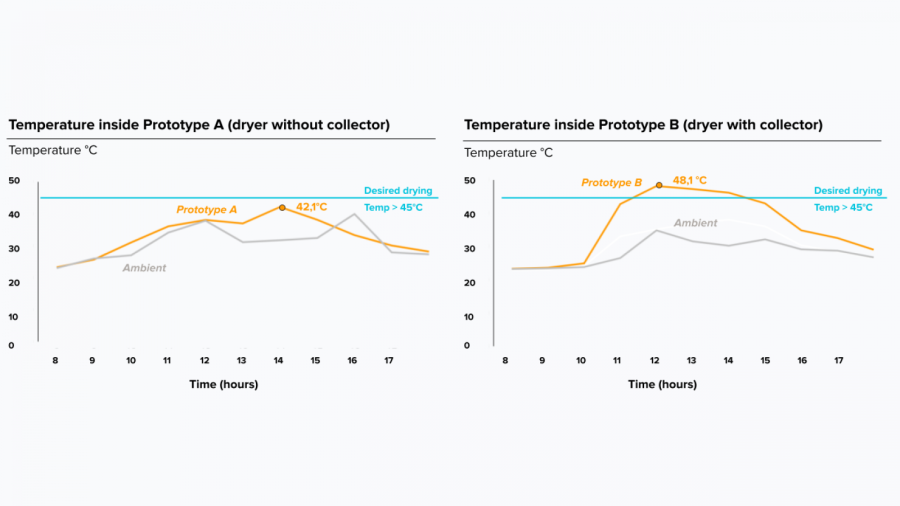
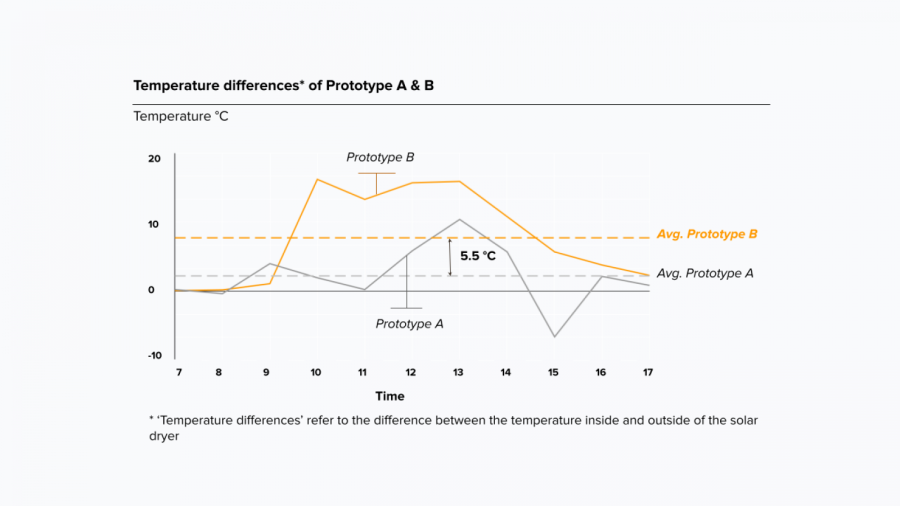
In this initial stage, the results indicate that prototype B maintained a temperature above 45°C for several hours (between 11:30 AM and 2 PM), while prototype A failed to reach this temperature level, instead maintaining its highest range of between 38°C and 42.1°C.
In addition, Prototype B, on average, generated a temperature difference 5.5°C higher than prototype A. The peak temperatures recorded were 48.1°C for prototype B and 42.1°C for prototype A.
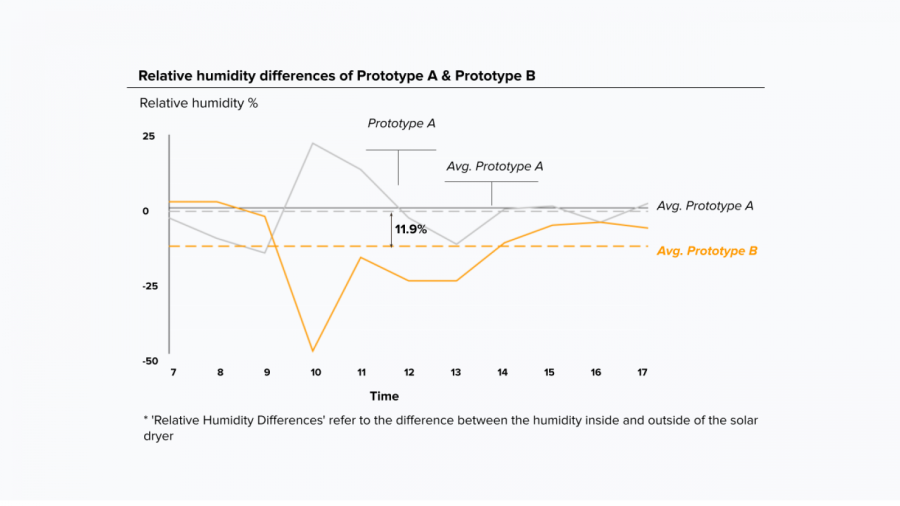
Similarly, Prototype B exhibited a 11.9% lower relative humidity difference with the ambient conditions (-13.8%) compared to Prototype A's relative humidity difference of -1.27% . The solar dryer with a solar collector showed a steadier shift/change in temperature and relative humidity.
Dryness level
Based on these results, we continued the fish drying experiment using Prototype B which demonstrated better drying performance. In the initial drying process, the fish was wet with water dripping and the meat was still soft, fresh, and red/pink (score 1). After two days of drying, the fish was considered fully dried, with the stiff meat and in a light brown color (score of 4). A weight reduction from 7.35 kg of wet fish to 1.45 kg of dried fish (80.3% reduction) was also recorded. This reduction is slightly higher than that in existing research results using similar dried Punti small fish, which decreased the weight by 72.5% over three days. (World Fish, 2015)
Conclusion
The experiment demonstrated that Prototype B - a solar dryer equipped with a solar collector, successfully reached the desired temperature range required for fish drying, between 45 and 80 °C, while keeping relative humidity levels below 60%. This resulted in the fish reaching a level of dryness suitable for market. Furthermore, Prototype B exhibited superior heat retention capabilities. Therefore, Prototype B is deemed as an effective solution for drying small fish.
Based on these results, Kopernik will proceed to conduct pilot testing of a larger-scale solar dryer with coastal women’s groups in Aceh Jaya, Aceh.