

Training for a Community-based Business
Limited funds for the operations and maintenance of a desalination facility
Summary
Kopernik designed and delivered a tailored business training program to a community-based business in Nusa Penida, Bali. The objective of the training was to increase the management’s business skills and ensure the sustainability of the grant-funded water desalination facility that provides clean and safe drinking water for the community.
Why we rated it this way
Tailored business training improved the management team’s customer service, communications, time management and problem solving capacities. The training also increased water sales by 53% during the training period, and by 49% after the completion of the training, as compared to sales prior to the training.
The problem
What we found
Nusa Penida is an island located on the southeast coast of Bali, with a population of 45,000 people that welcomes around 130,000 tourists annually (in the pre-pandemic period). (Central Bureau of Statistics, 2019). The influx of tourists results in a significant increase in demand for drinking water.
Given the climate and the geography of the island, saltwater intrusion makes much of its groundwater undrinkable and the local residents have been collecting rainwater as their main source of drinking water. In recent years climate change has resulted in less frequent rainfalls, and increase in tourist arrivals has led to an increased scarcity of drinking water.
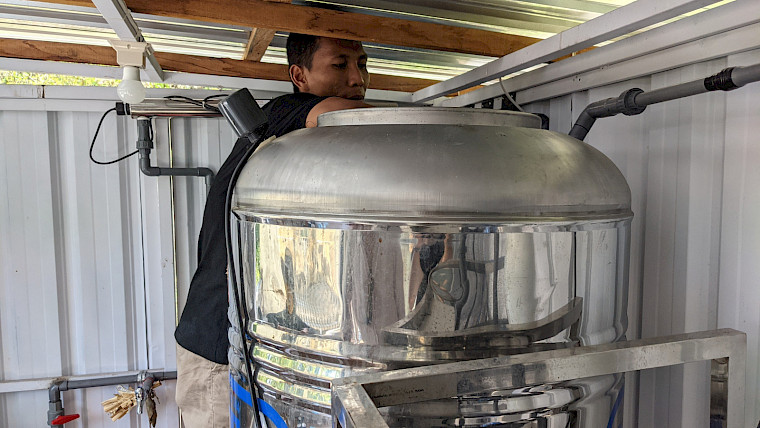
To address this problem, in 2021, Kopernik built a seawater desalination facility in Nusa Penida through the Waste for Water program. To ensure the financial sustainability of the facility, a community-based business was established to sell clean and affordable drinking water to the local population.
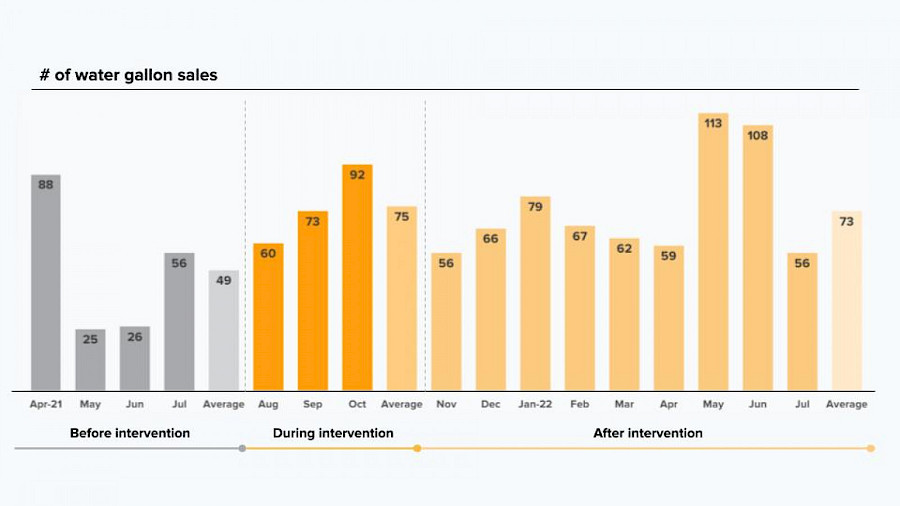
While the business unit showed promising sales initially 88 gallons in the first month, the sales dropped significantly to an average of 36 gallons per month in the three month period after the program ended. This was concerning because low sales mean that the business unit does not have sufficient funds to sustain itself (e.g. to purchase replacement parts). Additionally, if the desalination facility is underutilised, there is at risk of malfunction due to sediment buildup - which would not occur if the machine was running regularly.
Discussions with members of the business revealed that one of the main reasons for the low sales was limited capacity in running a business itself - including promotion of the business, management and coordination as well as bookkeeping.
The solution
What we tested
To address the capacity gap in running a business, Kopernik designed and delivered a training program for the business to improve their basic business skills and increase water sales.
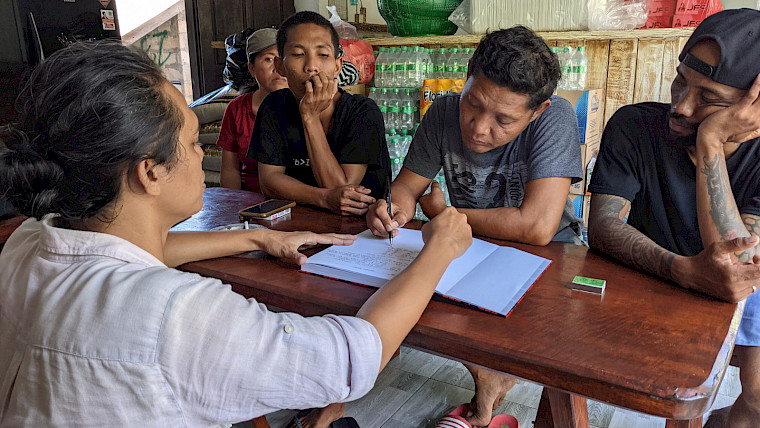
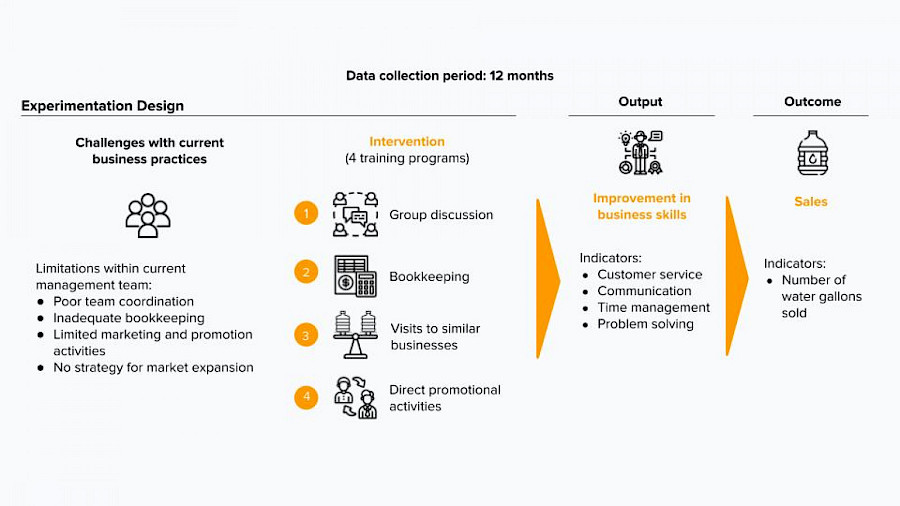
The training content was co-created with a local business mentor and the management team, and was tailored to the business’ specific needs. The training program consisted of group discussions, bookkeeping training, visits to similar businesses, and direct promotional activities.
Project design
How we ran it
The training was conducted over a three month period from August to October 2021. To measure its impact, we compared the business skills of the management using a survey prior and after the training. We also compared the water sales before the training, during the training (over a 3 month period) and after the training (9 months after its completion).
A limitation of this experiment was that it did not have a control group for comparison, as we were unable to find a comparable community-based water business unit in Nusa Penida. We were therefore only able to collect data from before, during and after the training program of the treatment group to assess the effectiveness of the intervention.
Results
What we learned
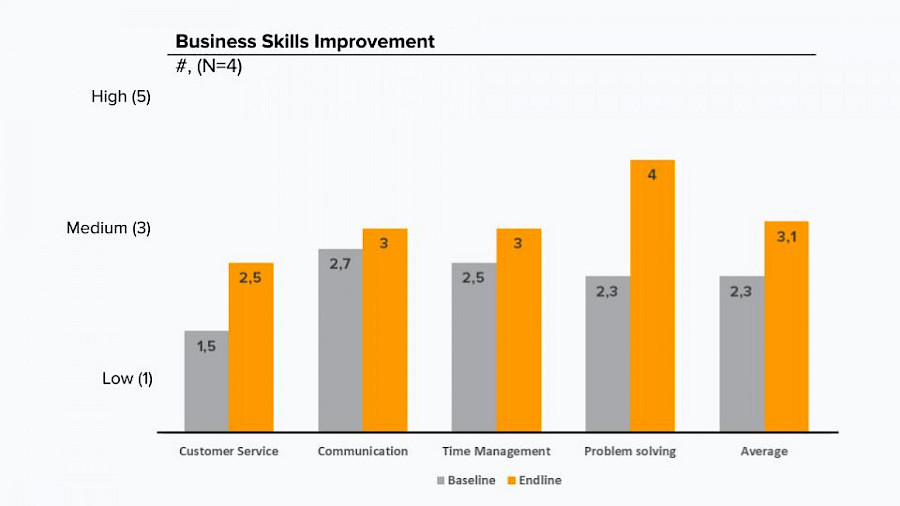
The training increased the management’s business skills across all aspects. The most significant increase was in problem solving skills, measured by the number of ideas and solutions the management came up with prior and after the training. The other areas that showed significant improvement were on the management’s customer service skills, measured by the number of promotional activities conducted.
The training also led the business to increase water gallon sales by 53% (75 gallons sold per month on average compared to 49 before the training) during the three month training period. Nine months after the training period, there was a slight decrease in sales (73 gallons per month on average), but this was still a 49% increase in sales compared to prior to the intervention. Construction near the business location may have contributed to boosting water sales towards the end of the data collection period (May-June 2022).
Conclusion
Tailored business training improved the management team’s customer service, communications, time management and problem solving capacities. The training also increased the water sales by 53% during the training period, and by 49% after the completion of the training, as compared to the sales prior to the training being conducted.
The ‘moderate’ rating was given to this solution because the average number of sales after the training was lower compared to the average number of sales during training. In order for the sales to continue to maintain or grow its revenue in the longer term, the business unit may need further assistance beyond the tailored business training provided.