

Rohingya Refugee Crisis Emergency Response Phase Two
Jan 22, 2019 Project Leader sarahwilson Duration: Three Months
This project is managed by Kopernik Solutions along with trusted partner organisations on behalf of our client.
Help provide health services and light desperately needed for Rohingya refugees fleeing to Bangladesh.
Project type
- Test Potential Solutions
- 2. Zero Hunger
The problem
The solution
The 900,000+ Rohingya people in Cox’s Bazaar continue to live on an empty plot of wetlands and will remain there for the foreseeable future. The conditions are extremely difficult, made more so by the monsoon rains. Energy is not available to this growing group meaning that they are living in the dark, clinics cannot cool medicines or see patients at night, families cannot charge their phones to locate loved ones, and women and children are at high-risk at night.
The expected impact
Four more Solevolt Solar Home kits will be distributed by Kopernik to mobile health clinics in Cox’s Bazaar. These solar systems will provide lighting to clinics, as well as an electricity supply to power medical equipment. The installation and management of these systems will be overseen by the International Organisation for Migration (IOM) who are the cluster lead on health for the Rohingya crisis.
The project results
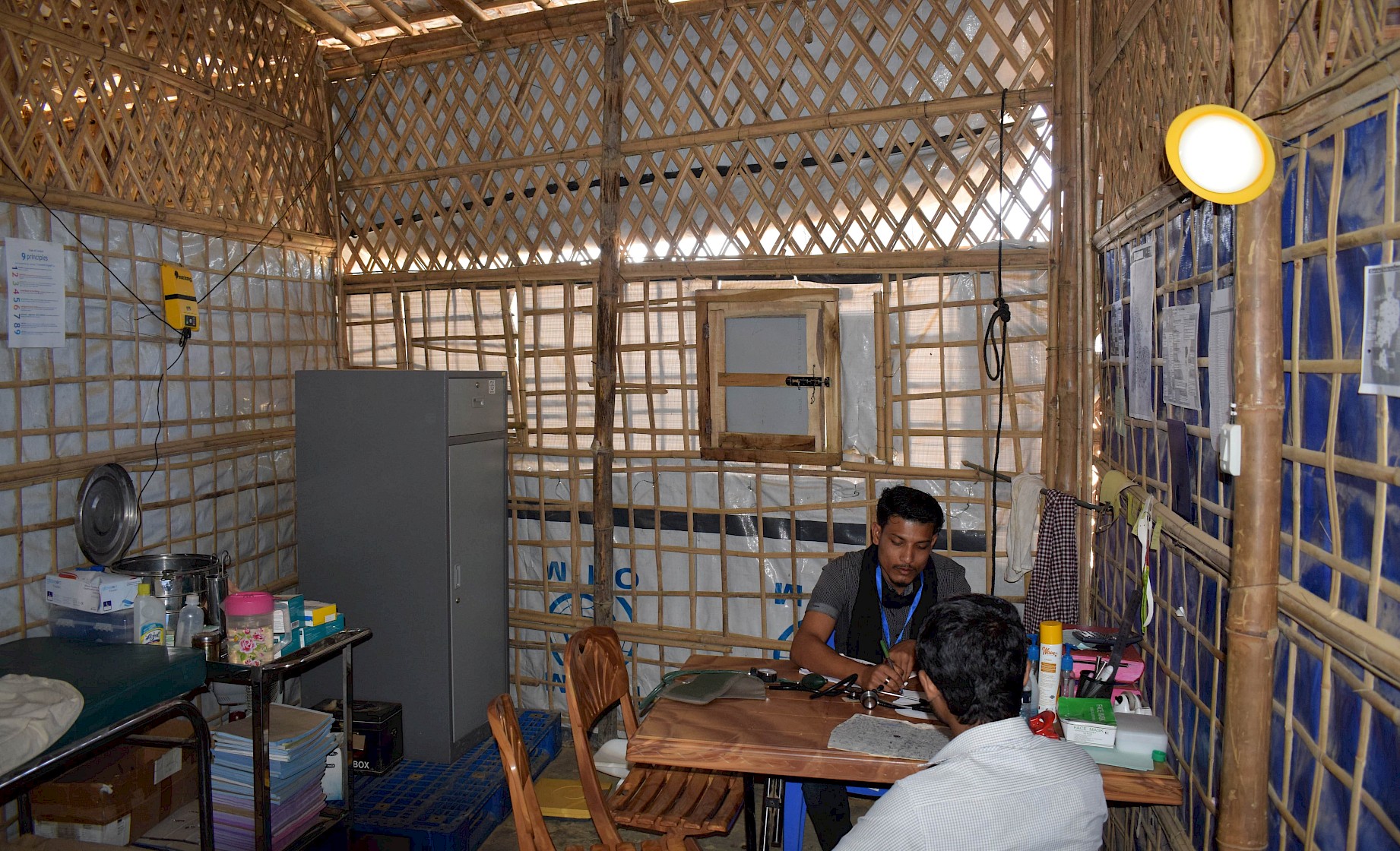
Due to supply issues Kopernik was unable to source the Solevolt home systems used in phase one, and instead chose to distribute Sun King Home 60 systems. These systems are much smaller but still offered lighting, device charging, and 24 hours of run-time per charge. The lower cost of these systems and the fact that they were already in-country and didn’t require international shipping allowed for a significant increase in the number of systems distributed, from four to 40 (compared to the initial distribution plan).
Kopernik, together with IOM, successfully distributed the 40 Sun King Home 60 kits to 21 health facilities in remote areas without electricity, and also as a backup power supply in facilities that offer 24/7 services. In addition, some kits were distributed for use by Mobile Medical Teams (MMT). The MMTs provide lifesaving primary health care services to people affected by floods, cyclones, and monsoons. The presence of these solar systems in the health facilities has further increased health access to the people living in Cox’s Bazaar - especially during emergencies - and have also been useful in providing security lighting at night.
One of the greatest impacts of the solar lamps has been their use in conducting emergency birth deliveries at health centres. The lights have allowed medical staff to maintain suitable lighting when they close the doors and windows of the medical centre for privacy, and at night. They have also been useful in providing backup lighting to newly constructed semi-permanent centres, a contingency system for use during emergencies.
So far no serious challenges with the technology have been identified other than their limited capacity, these systems are not as strong as the Solevolt Enterprise systems which could fuel medical equipment. However, shortly after their installation, Kopernik’s in-country partners reported that “The lights are very efficient. They’re working well and have been providing adequate light without going off”.Show project location
Project cost
| Type | Description | Amount |
|---|---|---|
| Technology | Costs associated with purchasing & shipping the technology | $3,300 |
| Project Implementation and Monitoring & Evaluation | Costs associated with project management, data collection, analysis and reporting | $859 |
| Processing Fees | Cost of transferring payments internationally & processing online donations (5%) | $40 |
| Administration Fee | A contribution to Kopernik's operational costs (15%) | $0 |
| Total | $4,199 |
01 / 01