

Black plastic mulching mat
Lack of effective and affordable methods to control weed growth
Summary
We tested the effectiveness of a black plastic mulching mat for suppressing weed growth in a cacao plantation in Yapsi, Papua.
Why we rated it this way
The black plastic mulching mat significantly suppressed weed growth in the cacao plantation compared to areas without it.
The problem
What we found
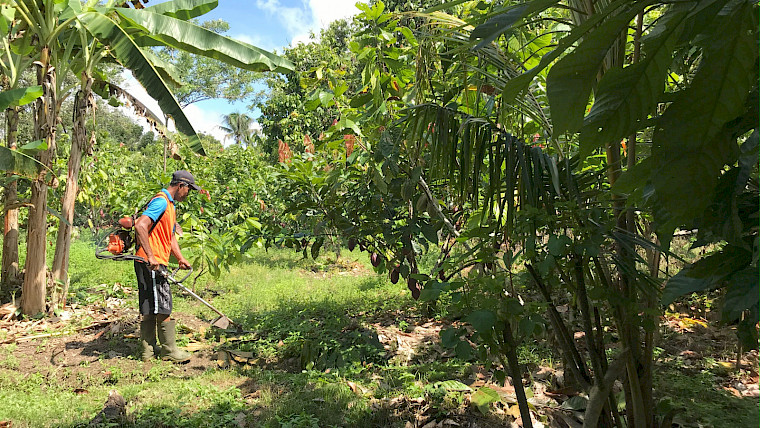
Cacao plantations in Taja Village, Yapsi District, Jayapura Regency, are typically large, with each farmer managing at least 1 hectare. Located 150 km from the capital city of Jayapura, the region's high precipitation encourages rapid weed growth. According to research by Yualinita (2016), cited in Widnyana et al., weeds can reduce cacao yields by 12–80%. To mitigate this, farmers must clear weeds regularly, usually on a monthly basis.
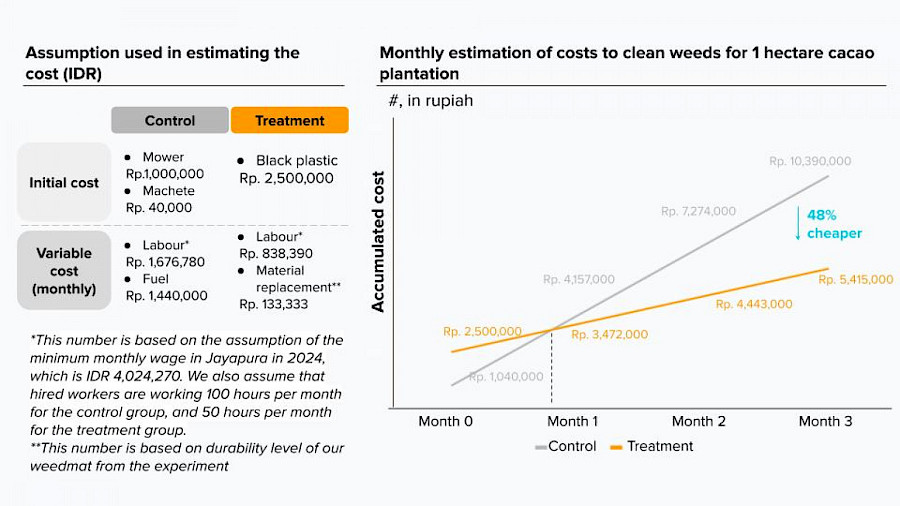
However, the size of the plantations often prevents farmers from fully managing to clear the weeds from the entire area. Weed control requires significant time and resources. Farmers primarily use mowers, a process that takes four days to complete and consumes approximately 3 liters of gasoline per day. This amounts to about 12 liters per month, costing around Rp. 1,440,000 (USD 89). As such, farmers in Taja Village need a weed management solution that is more affordable, replicable, and accessible. For smaller cacao farms, farmers use machetes as their main method of managing weeds.
Previously, Kopernik tested the effectiveness of the mulching method in coffee (not cacao) plantations by comparing a biomaterial mulching mat made from coconut husks with a commercial mulching mat. Results indicated that the commercial mat was more effective at suppressing weed growth than the biomaterial mulching mat. However, its limited availability in the field locations reduced accessibility for farmers. To address this limitation, Kopernik has continued exploring alternative materials that are more accessible for farmers.
The solution
What we tested
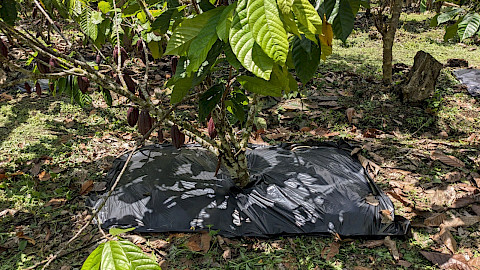
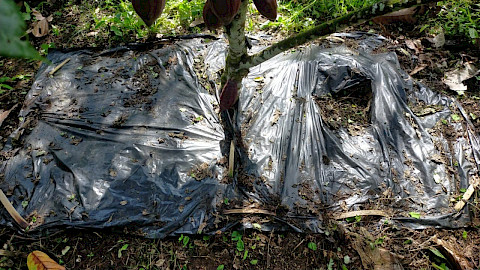
One of the potential materials for use as a mulching mat is a thin black plastic sheet, which serves universal functions such as waste storage and packaging. This type of material is readily available in both urban and rural areas. By repurposing it, we aim to use it as a weed-mulching mat. This approach aims to offer a cost-effective and easily replicable solution to weed management challenges faced by local farmers.
Project design
How we ran it
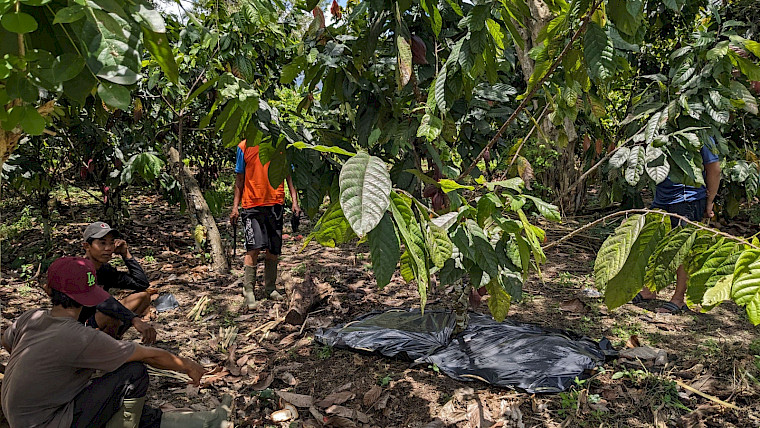
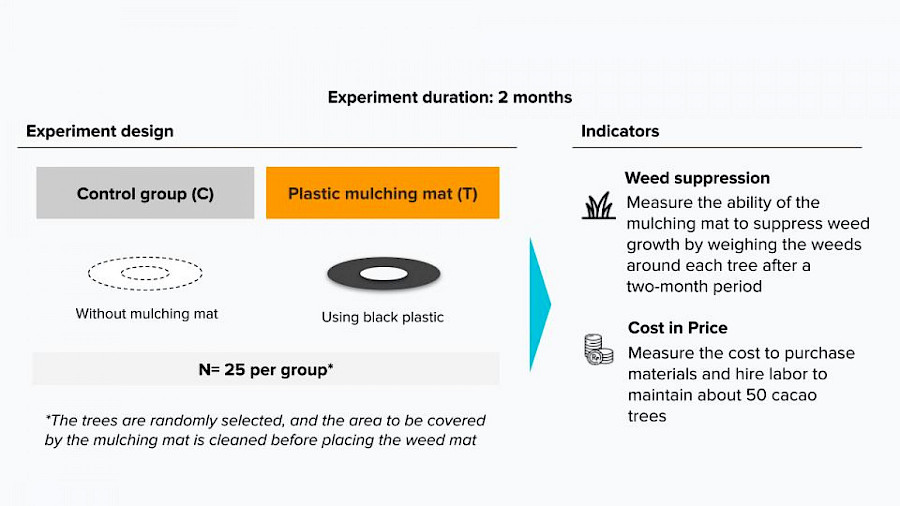
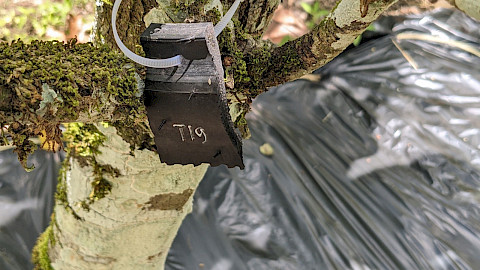
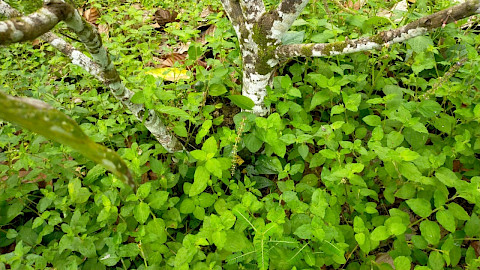
We aimed to assess the effectiveness of black plastic mulching mats in suppressing weed growth in a cacao plantation. We randomly selected 25 cacao trees for each of the Control and the Treatment Groups (50 trees total). We then cleared all weeds within an area of approximately 1 x 1.5 meters surrounding the base of the cacao tree. Each tree was tagged for easy monitoring (e.g., C20 for control group tree #20 and T1 for treatment group tree #1). We then placed the black plastic mulching mats around the treatment group trees, securing them with sharp bamboo stakes to keep them firmly placed on the soil.
In this experiment, we did not test the commercial mulching mat due to the unavailability of these materials in the Papua region. Instead, we focused on comparing cacao trees with black plastic mulching mats and those without, as detailed below:
- Control group: Cacao trees without black plastic mulching mats.
- Treatment group: Cacao trees with black plastic mulching mats.
In a previous experiment testing the effectiveness of biomaterial mulching mats using qualitative data (visual analysis), we encountered challenges in data collection and analysis. This previous approach required taking photos from the same angle and at the same time to ensure comparability, which was difficult to achieve consistently. To address these challenges, we decided to measure weed suppression by weighing the weeds growing within the base area (1x1.5 meters from the trunk).
We therefore used the following indicators to assess effectiveness:
- Weed suppression: Measured weed weight per tree after two months.
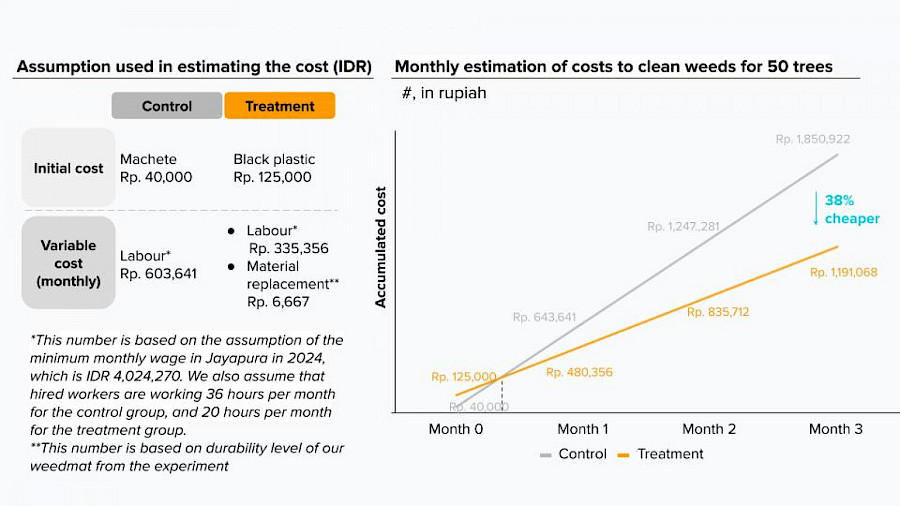
- Financial cost: Measured material and labor costs for maintaining 50 cacao trees.
The technology
Results
What we learned
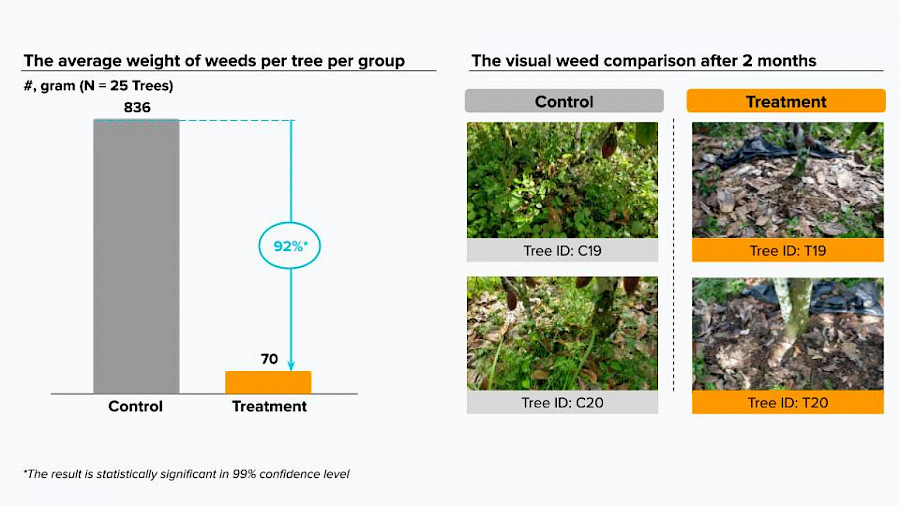
Using black plastic weed mats, the treatment group showed a significant reduction in weed growth, with an average weed weight of only 70 grams per tree, compared to 836 grams in the control group—a 92% reduction. This result is statistically significant at a 99% confidence level, demonstrating the effectiveness of weed mats in reducing weed growth.
During the two-month data collection period, four black plastic mulching mats (16%) were damaged by external factors, such as boar and chicken activity. However, the remaining 21 mats stayed intact until the experiment's end.
Conclusion
The experiment demonstrated that using weed mats reduced weed growth by an average of 92% compared to the control group. Although some mats were damaged by animals, the majority remained intact and effectively controlled weed growth. Additionally, using weed mats eliminated the need for frequent visits to the plantation, though it required a higher initial investment. Overall, the mats proved to be an effective—albeit more costly at the outset—solution for managing weeds in cacao plantations, reducing both labor and ongoing maintenance needs.
Additional considerations
After two months of observing weed mulching mats, we found that approximately 16% had been broken and needed replacement. The black plastic material was relatively thin and easily damaged by animals near the plantations, such as chickens and other wildlife.
Farmers expressed that the mulching mats would be particularly useful for young cacao plants, typically 3–6 months after planting the seedlings. According to the farmers, young cacao plants are more vulnerable to weed growth compared to mature plants.
It should be noted that the mats are made of plastic, and their use on a mass scale requires responsible disposal and recycling strategies to minimize negative environmental impacts.