

Black Soldier Fly Larvae-based Animal Feed
Inconsistent supply of animal feed
Summary
We tested the viability of black soldier fly (BSF) larvae as a feed alternative for duck breeders in Bali.
Why we rated it this way
BSF larvae were found to be a more nutritious duck feed compared to concentrate. However, further testing on a larger scale is needed to investigate the economic viability of this solution.
The problem
What we found
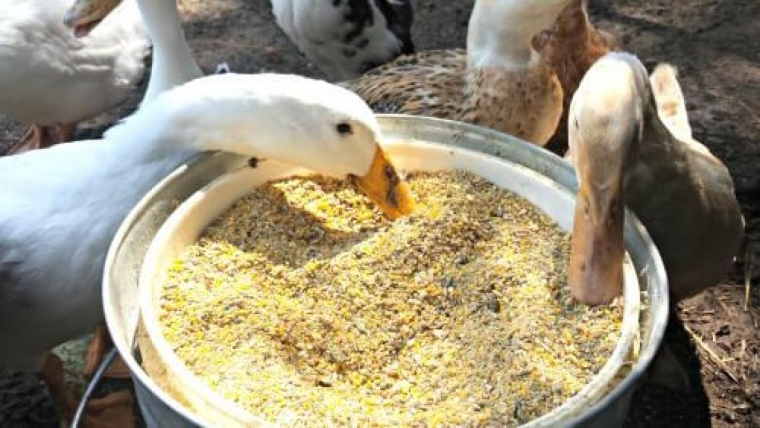
The livestock industry contributed US$18.35 billion to the total Indonesian gross domestic product (GDP). Duck production in particular plays an important role in providing meat and eggs in the diet of people in Bali. Duck breeders in Bali often ship high-protein feed (concentrate) from Java, making them vulnerable to excessive shipping fees and price fluctuations. There is a need to explore a nutritionally comparable feed alternative to ensure duck breeders’ income security.
The solution
What we tested
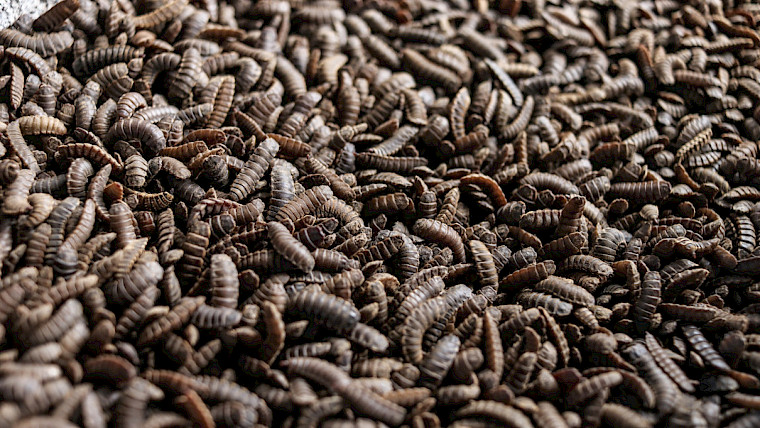
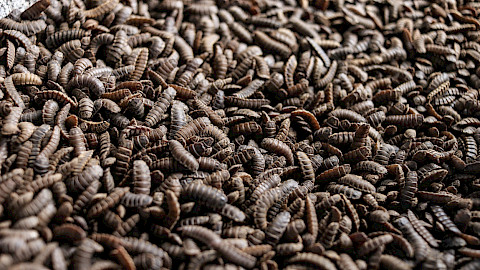
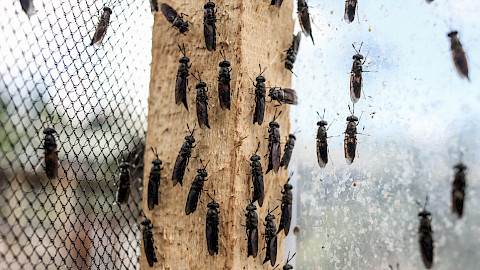
Kopernik tested black soldier fly (BSF) larvae, a type of insect that feeds on organic waste, as a locally sourced duck feed alternative to the current duck feed (concentrate). Research has shown that BSF larvae contain up to 42 percent protein and 35 percent fat (Sheppard, 1994), rendering them as a highly nutritious alternative for animal feed. In this experiment, we investigated the viability of BSF larvae as duck feed.
Project design
How we ran it
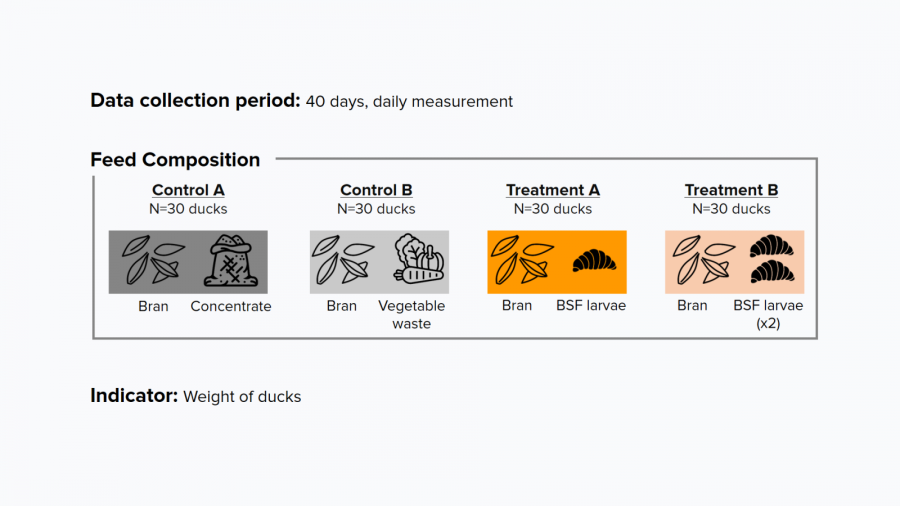
From July to October 2018, we partnered with Black Soldier Fly Farm Bali in Tabanan to test four feed compositions, which were:
- Control A: bran and concentrate (current feed practice)
- Control B: bran and vegetable waste (current practice by small, subsistence duck owners)
- Treatment A: bran and BSF larvae in the same amount of concentrate
- Treatment B: bran and double amount of BSF larvae as treatment A (to explore more variants in the experiment result)
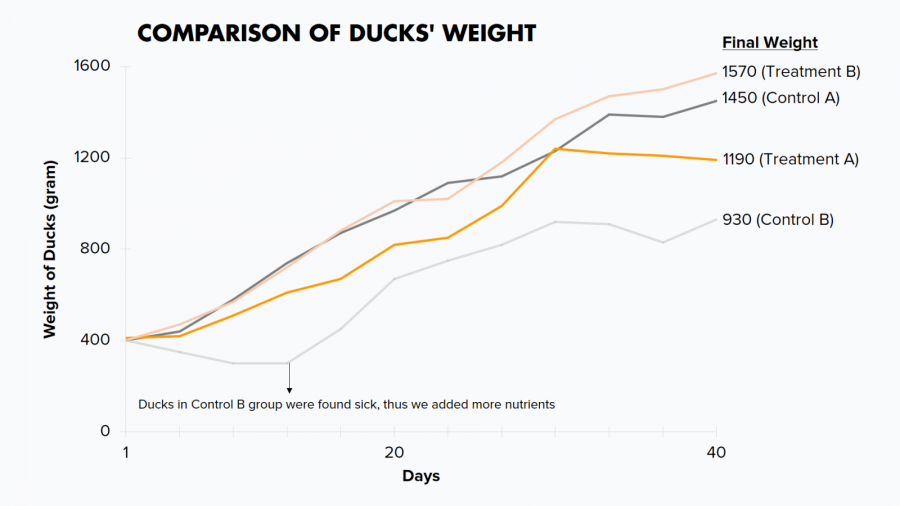
Each feed combination was fed to 30 ducks (a total of 120 ducks among four groups). The main indicator measured for each group was the weight of the ducks. The data was collected every four days over a 40-day period, the standard time for ducks to grow to maturity. We also sent a sample of BSF larvae to the laboratory to measure its nutritional value.
The technology
Results
What we learned
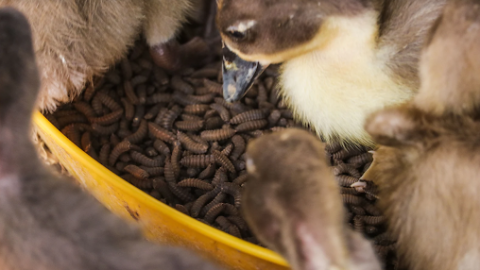
We found that BSF larvae were a nutritionally comparable alternative to the current duck feed, indicated by the weight of ducks in the Treatment B group (i.e. fed with double portions of BSF larvae) that were the heaviest among other groups. (On the tenth day, a duck in Control B group died. Therefore, we took out a duck from each group and thus had 29 ducks per group).
The lab results showed that BSF larvae had higher nutritional values compared to the current duck feed. BSF larvae had 61% protein, 27% fat, and 31% crude fiber content while the common concentrate had 37-38% protein, 2-3.5% fat and 6% crude fiber content.
Conclusion
This experiment found that BSF larvae are a healthy and nutritionally comparable feed alternative to the current duck feed used in Bali. Based on the results of this experiment, Kopernik will further investigate the commercial viability of adopting BSF larvae as animal feed in an integrated facility that has sufficient food waste supply.
Read more
Reports and references
Putri, Tungga and Kirana Nadhila. (2019). Promoting Sustainable Animal Feed: Black Soldier Fly Larvae.