

DIY Plastic Processing Tool
Rapidly increasing plastic waste
Summary
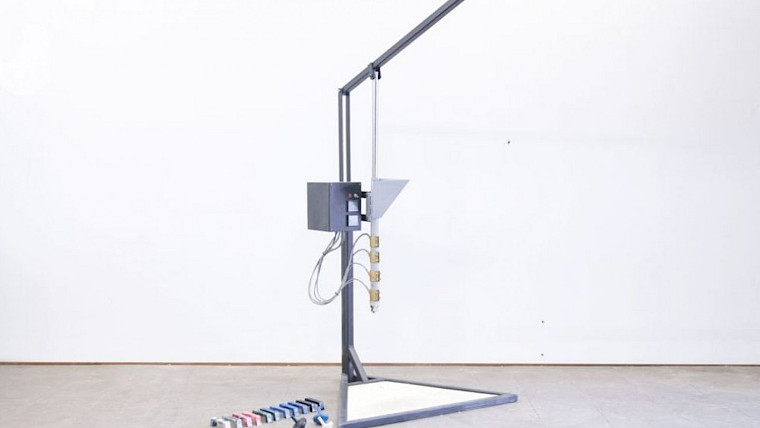
We built and investigated the business potential of a DIY plastic injection machine designed by Precious Plastic that can be used by community-level recyclers in Bali to produce recycled products from plastic waste.
Why we rated it this way
The products made from the plastic injection machine could be sold at a profit, and the machine has potential to provide local businesses with an incentive to up-cycle plastic waste.
The problem
What we found
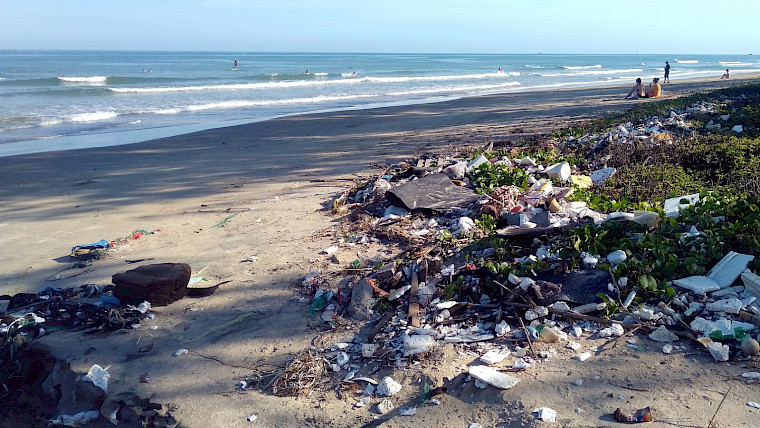
Indonesia is the second largest marine plastic polluter where each year more than 1.3 million tons of plastic waste end up polluting the ocean. Bali alone produces 268 tons of plastic waste daily and only a small fraction is being recycled. Although there are various models for plastic waste disposal, each has its own challenges. For example, private companies who collect and dispose of plastic waste or up-cycle typically require significant investment and plastic waste often does not reach those facilities for many reasons, including the absence of an efficient supply chain. Individual waste collectors who scavenge valuable plastic waste from dump sites and sell it to aggregators, on the other hand, earn far too little to get a large amount of plastic waste into recycling streams. To bridge the gap, there is a need for small-scale, low investment options to recycle plastic waste that offer economic incentives for community-level recyclers.
The solution
What we tested
We investigated the business potential of using a low-cost DIY injection machine designed by Precious Plastic to create value-added products, in order to improve the management of plastic waste.
Project design
How we ran it
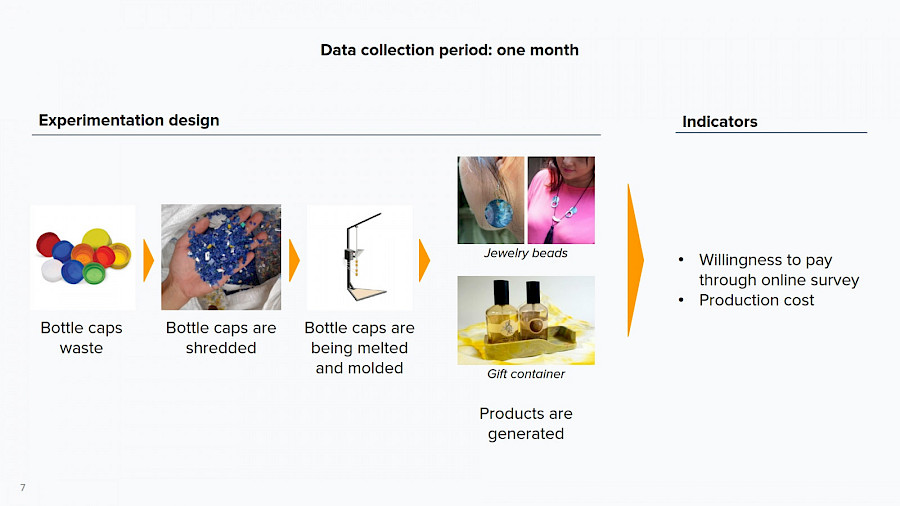
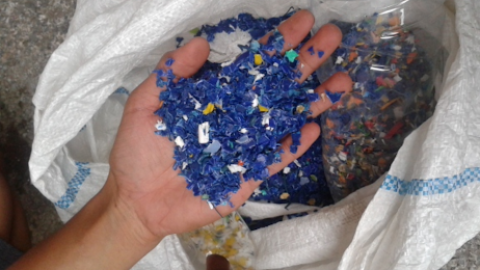
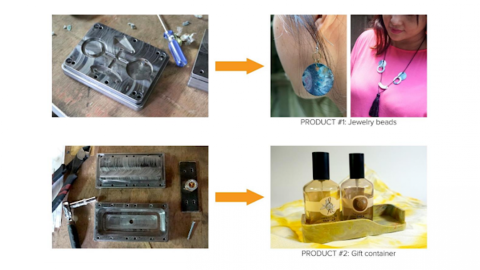
From February to March 2018, we built and used the DIY injection machine in a local factory space in Bali to make gift containers and jewelry beads. The production costs included raw materials (plastic), pre-treatment (sorting, cleaning and shredding plastic bottle caps), electricity to heat up the injection machine, and labor.
We took photos of these products and then conducted an online survey with 50 respondents in Bali to determine their willingness to pay the jewelry beads and gift containers.
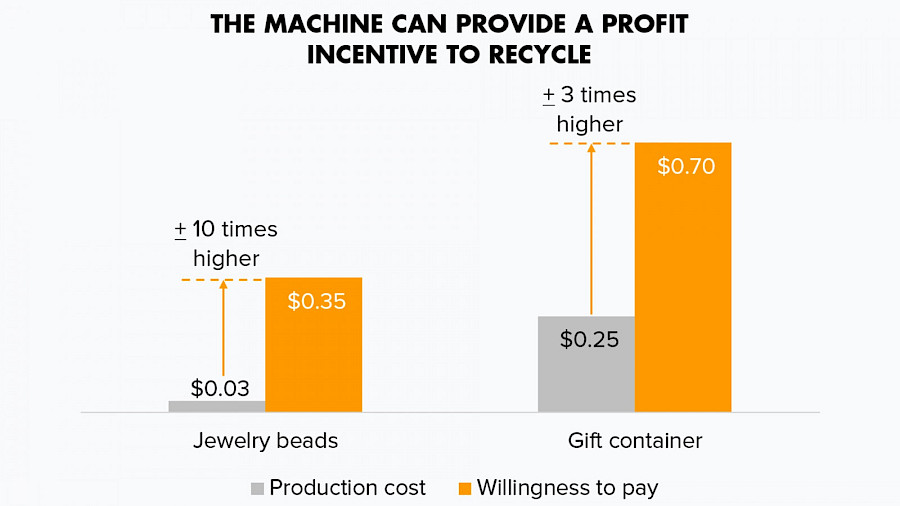
We then compared the production cost with the potential selling price of each product (based on the willingness to pay study) to determine potential profitability of running a business using a DIY injection machine.
The technology
Results
What we learned
The online survey results showed that people’s willingness to pay for the jewelry beads was US$0.35 (IDR5,000) or 10 times the production cost (US$0.03 or IDR500), and the gift container could be sold at US$0.70 (IDR10,000) or roughly three times the production cost (US$0.25 or IDR3,500).
Conclusion
The results of this experiment showed that Precious Plastic’s DIY injection machine has some potential to provide a business opportunity in recycling plastic waste by local businesses.
Additional considerations
The production cost excluded the initial investment cost of US$430. If we take both the initial investment and production cost into account, the break even point would be reached after selling 1,720 pieces of jewelry beads or 956 units of the gift containers.
Despite the modest potential of business opportunity, the experiment showed that the machine can only produce 6-7 units of gift containers and 24-28 jewelry beads per hour due to the manual nature of the machine’s operation, limiting the potential for economies of scale.
Although the machine can convert plastic waste into potentially valuable products, it only processes certain types of plastic. Findings from the experiment confirmed that different bottle caps, originating from different manufacturers have different optimal melting temperatures. Consequently, mixing the caps requires an adjustment to the working temperature and therefore slows down the production process.
It is also important to note that melting plastic releases volatile organic carbons (VOCs), toxic fumes that are very dangerous. Immediate effects are severe irritation to the eyes, nose and lungs and prolonged exposure to fumes of any synthetic plastic with no safety precautions can lead to cancer, birth defects and illnesses.
Read more
Reports and references
Ningrum, Nanis. (2018). Increasing The Value Of Plastic Waste: The Injection Machine Project Report.