

Ergonomic Weaving Tool (2)
Discomfort and pain during the warping and weaving process
Summary
We tested the ergonomic impact of the ergonomic weaving tool for women weavers in Adonara and Lembata, East Nusa Tenggara.
Why we rated it this way
The ergonomic weaving tool was easy to use for warping and moderately easy to use for weaving. The tool reduced pain during both warping and weaving.
The problem
What we found
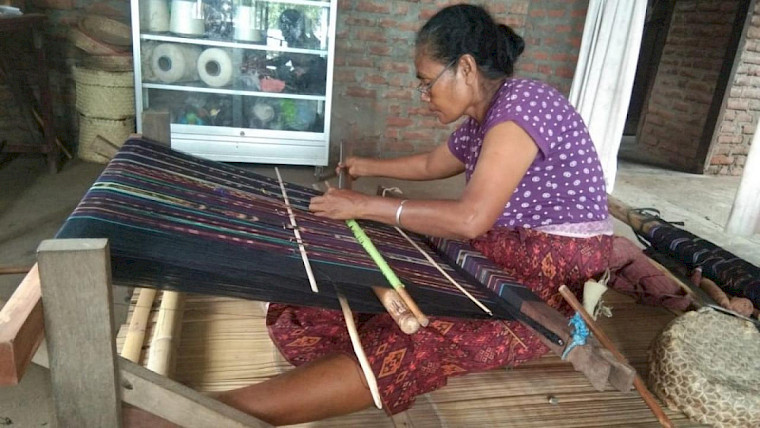
Weaving has been part of Indonesia’s heritage for centuries, representing local cultures and traditions. In Adonara and Lembata, there are more than 1,000 women weavers, most of whom have been weaving from a young age (PEKKA, 2012) using a traditional weaving tool with a back-strap loom. The tool requires the weavers to be seated on the ground with their legs stretched out in front. This method has resulted in prolonged discomfort and pain throughout the entire body leading to musculoskeletal problems especially in the lower back, hip, and leg areas. Musculoskeletal pain becomes more severe as the women get older. This causes complications for women in performing their daily duties, carrying heavy loads and farming. In the long term, the pain can lead to severe health problems for the weavers (ETWA, 2010).
The solution
What we tested
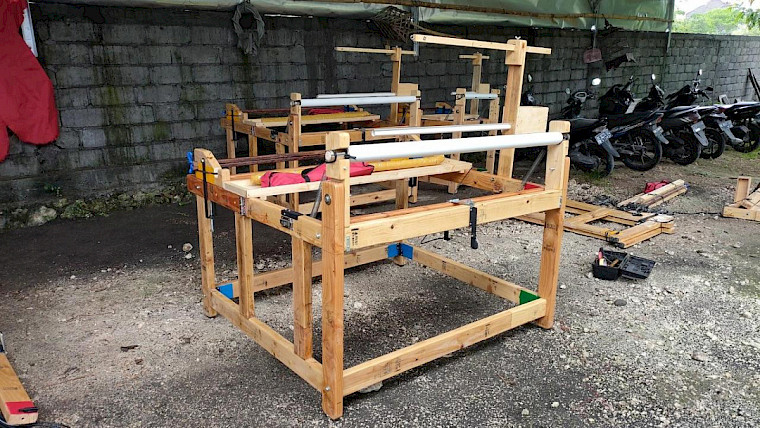
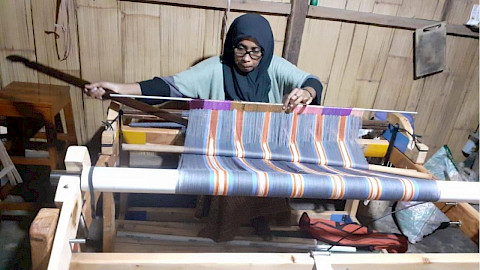
During the first stage of the ergonomic weaving tool (1) experiment, we developed a weaving tool prototype without altering the traditional weaving technique. We removed the tension control on the backstrap loom and replaced it with a swing arm and lever mechanism. The tool was elevated above the ground to allow for a better sitting position during the weaving process. We found that the ergonomic weaving tool was easy to use to produce woven cloth. The prototype was able to improve the weaver’s experience by reducing pain.
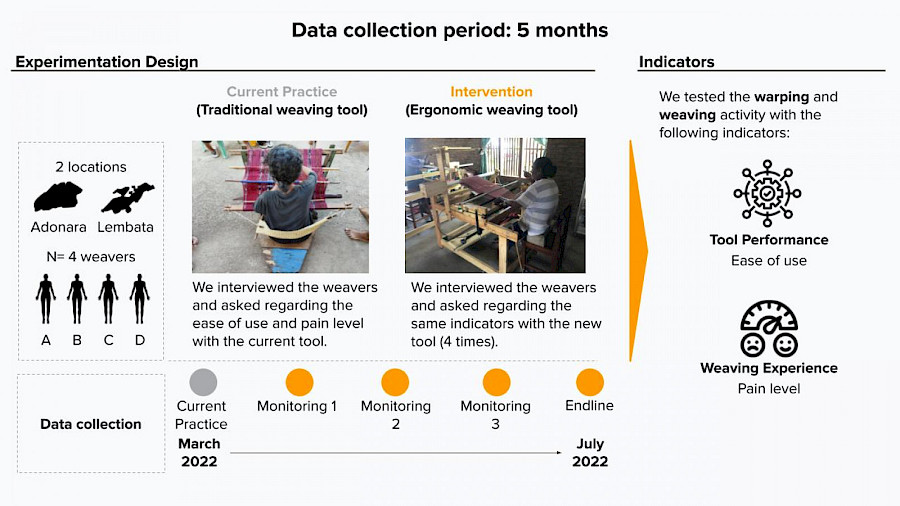
During the pilot stage, we tested the ergonomic impact of the weaving tool with four weavers in Adonara and Lembata. The four weavers used it for two activities;
- warping (combining the yarn to form a base), and
- weaving (interlacing the warp and weft to form fabric).
To measure the ergonomic impact, the four weavers used the ergonomic weaving tool for five months in parallel with using their traditional weaving tool for their daily weaving practice.
Project design
How we ran it
Initially, we planned to test the ergonomic weaving tool with four weavers, two from Adonara and the other two from Lembata. However, due to personal commitments, two weavers discontinued participating in this experiment in the middle of the data collection period. Therefore, we continued the data collection process with only the remaining two weavers.
During the pilot testing stage, we measured two activities from the weaving process:
- warping or neked - a process to combine the yarn to form a base.
- weaving - a process to interlace the warp and weft to form fabric.
We first collected data on the ease of use and pain level using their traditional weaving tool (as the current practice). We then asked the weavers the same questions, three times during a four-month period while they were using both the traditional and ergonomic tools. At the end of the experiment, we conducted an endline survey with all weavers.
We spoke with the weavers via phone to collect the data, asking about the ergonomic weaving tool’s performance as well as the weaving experience during warping and weaving. The 5-month data collection period was important to capture the dynamics and transition from the traditional weaving tool to the ergonomic weaving tool.
The technology
Results
What we learned
Warping:
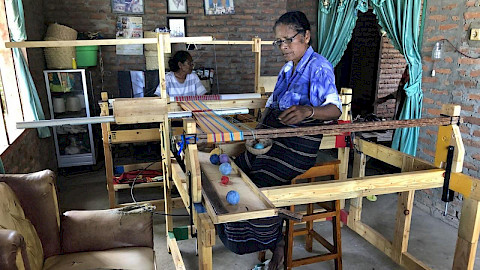
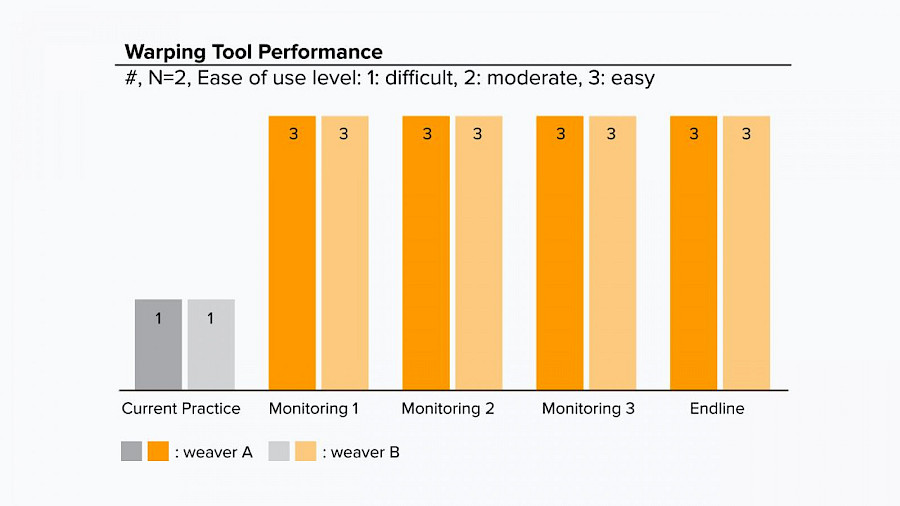
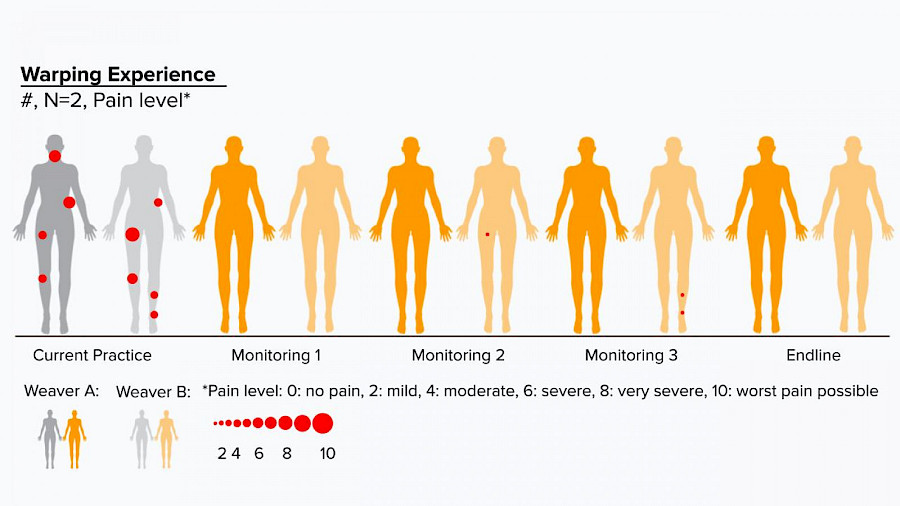
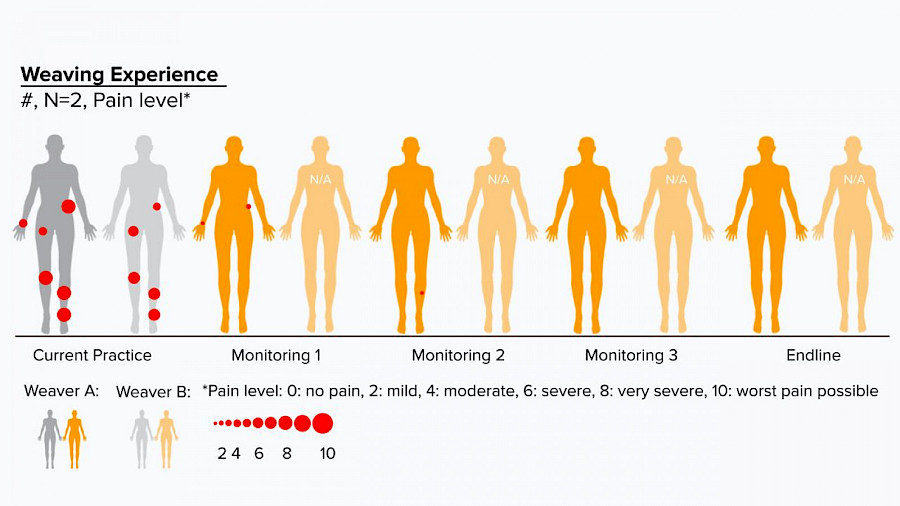
We found that the ergonomic weaving tool has a positive ergonomic impact for weavers during the warping process. The tool improved both weaver A and B’s warping experience since it was much easier to use (Level 3: easy to use) compared to the traditional one (Level 1: difficult). The weavers learned very quickly how to use the new tool for warping. In addition, the elevated structure supported weavers to warp in more comfortable positions (such as sitting, standing, or stretching their legs). The tool eliminated nearly all pain in the waist, buttocks, and knees, which was present while using the traditional weaving tool.
Weaving:
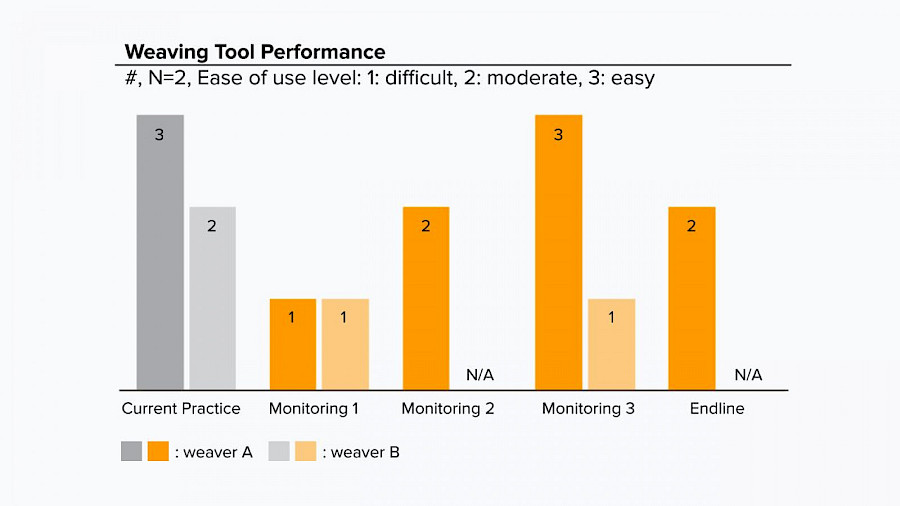
When they first began to use the new tool, both weavers A and B found it difficult (level 1; difficult) to weave using the ergonomic weaving tool as compared to the traditional tool (level 3; easy and level 2; moderate). This was because the rotator block hindered and slowed down the movement of the beater piece or surit, affecting the weaver’s willingness to use the ergonomic weaving tool for the weaving process.
Weaver A, who continued to use the ergonomic weaving tool, eventually became used to the new tool . She adapted and adjusted her hands and body position from sitting to standing as needed, to prevent the beater piece from hitting the rotator block. These dynamic movements reduced the pain she experienced in the wrist, waist, and calf, while weaving using the traditional weaving tool.
Meanwhile, weaver B rarely used the ergonomic weaving tool for weaving due to issues with the rotator block. She continued to find it difficult (level 1; difficult) to use the ergonomic weaving tool for weaving. (N/A; data not applicable).
Conclusion
In this pilot testing stage, we found that prototype 2 was easy to use for warping (combining the yarn to form a base), and was also able to improve the weaver’s experience in reducing pain during warping, but it was not on par with the traditional tool when it comes to ease of use for weaving, Prototype 2 was however able to reduce one of the two weavers’ pain in several parts of their body during weaving.