

Expanding Offline Market Channels for Micro-Businesses
Limited market access and revenue for micro-businesses
Summary
We provided support for women to sell homemade dishwashing soap products through local kiosks - known as warung in Indonesia- in order to enable women-led microbusinesses and homeworker groups to expand their customer base and increase their sales.
Why we rated it this way
New market channels increased the sales of homeworkers and women-led microbusinesses by 73%.
The problem
What we found
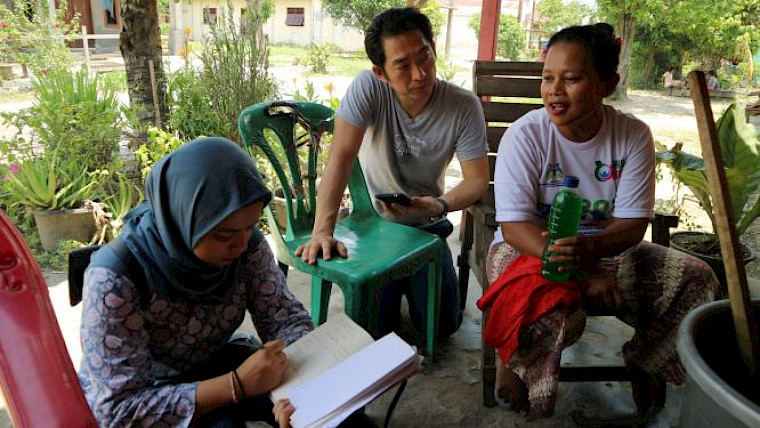
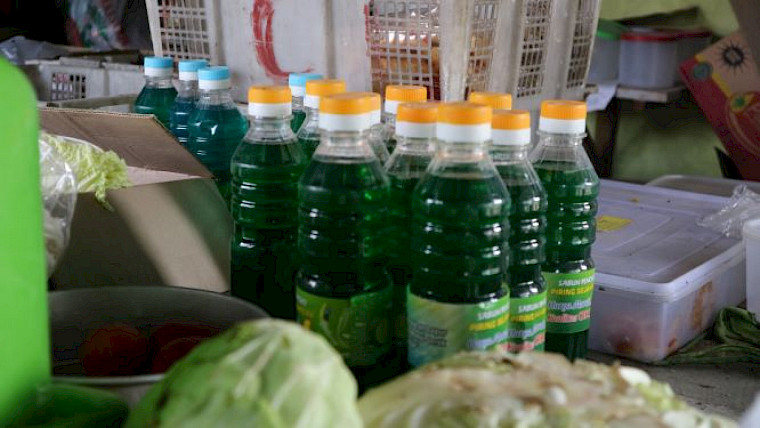
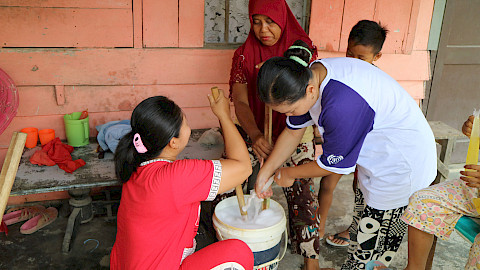
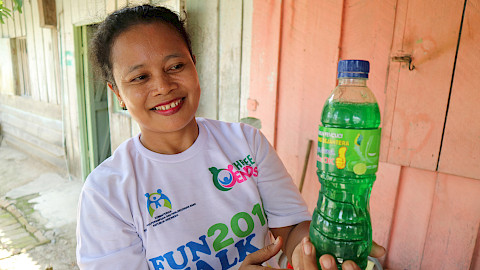
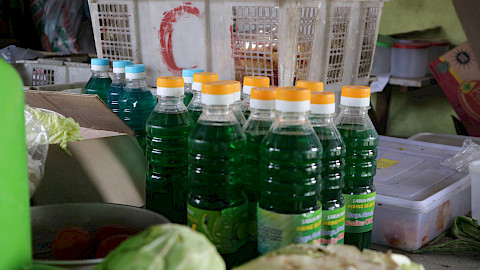
In Indonesia, there are 57 million micro, small, and medium enterprises (MSMEs) with more than 60% led by women. These women-led micro-enterprises often start as a way to complement their low incomes as home workers. One of the home worker groups comprises of 10 women who gather bi-weekly to produce homemade dishwashing soap. The quality of this product is similar to dishwashing soap available in the wider and high-end market, giving their product a competitive advantage. However, with very basic packaging, coupled with the low purchasing power of their current customer base and their limited sales methods and network (which comprises of door to door sales to people in their neighborhood, and exhibition events), their efforts have resulted in limited sales and profit.
The solution
What we tested
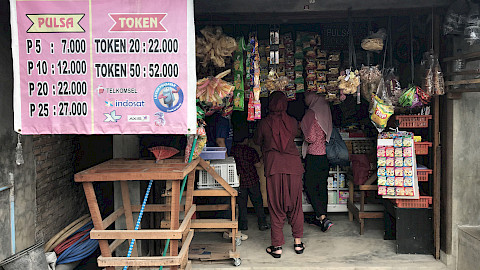
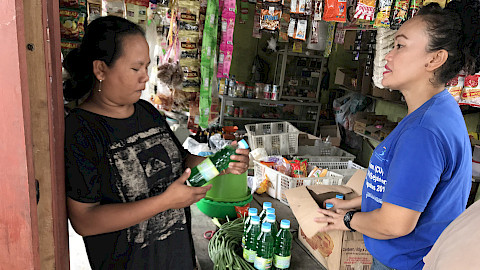
Kopernik trained homeworker groups to identify and establish partnerships with local kiosks in their neighborhoods, in order to create alternative market channels and broaden their consumer base beyond door-to-door sales. We tested the effectiveness of this solution to generate higher sales - and therefore a higher income for the workers - and compared it to the current method of selling door to door which requires more time and effort.
This intervention is part of the MAMPU program, the Australia-Indonesia Partnership for Gender Equality and Women’s Empowerment.
Project design
How we ran it
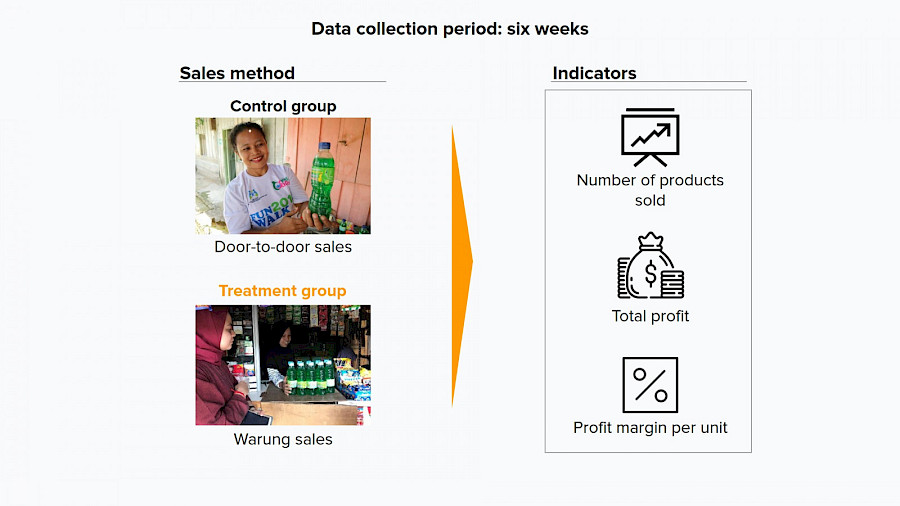
Kopernik worked with BITRA, an Indonesian NGO supporting women-led microbusinesses. We supported a home worker group in a village in the outskirts of Medan, North Sumatra. The group was producing homemade dishwashing soap products at their homes, and selling them door to door. We helped the group to identify the main benefits of their products and worked with them to develop promotional materials to be advertised in small stores in their neighborhoods. We supported the women to identify stores that had good potential for collaboration, and to approach them to propose a partnership where their products would be sold at the stores. We compared the sales and effort required for both sales methods - stores vs the current door to door method - over a 6 week period, from mid-July until the end of August 2019.
The technology
Results
What we learned
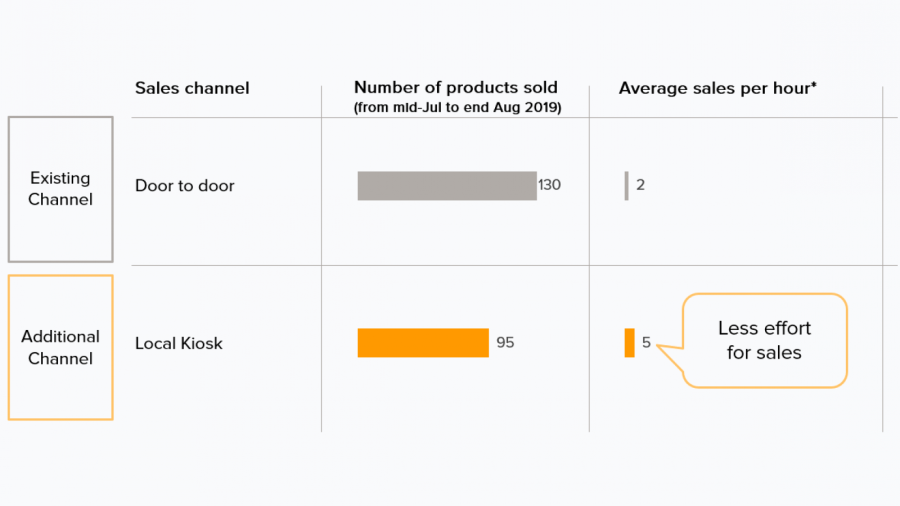
The establishment of the additional sales channel through local kiosks resulted in a 73% increase in the number of products sold (95 bottles), while reducing the effort required (time spent per bottle sold) by 66%, as compared to the conventional door to door sales method.
Conclusion
The results show that providing training to women homeworkers and women-led microbusinesses and identifying alternative market channels through which they can sell their products increased product sales by 73%.