

Improving Coffee Post-Harvest Processing And Market Access
Lack of coffee post-harvest processing and limited market access
Summary
We conducted an experiment with farmers in Tabanan, Bali to test an improved post-harvest processing of coffee beans and to connect farmers to new buyers to help them gain a better price
Why we rated it this way
The improved post-harvest processing of coffee beans and access to new buyers were found to be effective in gaining a higher price for dried coffee beans.
The problem
What we found
Coffee is one of Indonesia’s largest export commodities. In 2019, Indonesia exported 279,961 tons of coffee with an economic value of US$815 million (Bureau of Statistics, 2019), and 96.6% of coffee plantations are owned by smallholder farmers. Bali is the tenth largest coffee producing region in Indonesia and has 71,857 coffee smallholder farmers. Tabanan regency, which is the largest coffee producing area in the province has approximately 9,585 ha of coffee plantations.
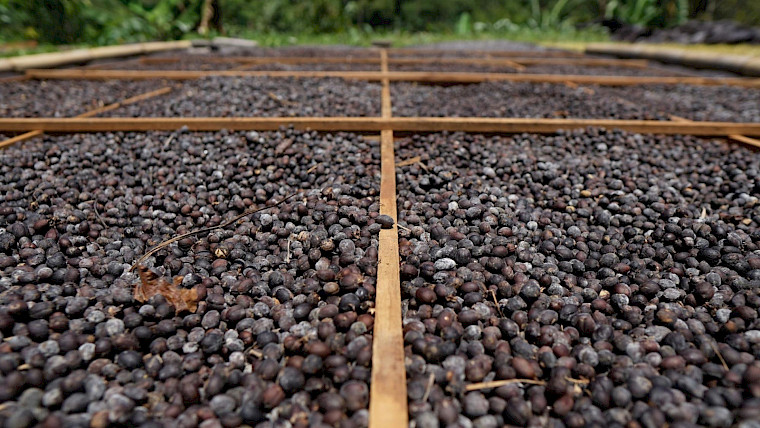
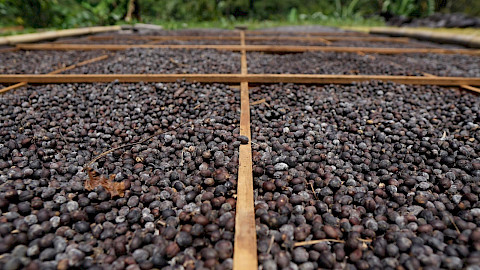
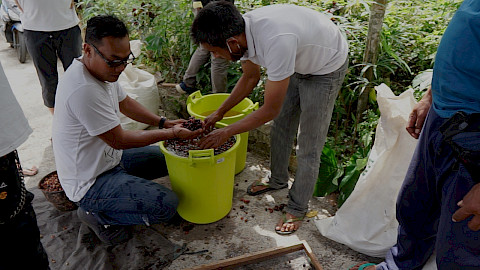
Currently, smallholders in Tabanan dry beans using a natural process - where coffee cherries are picked from the coffee trees and placed on a tarpaulin on the ground to dry - and sell them to local middlemen with relatively low price. Many farmers are unaware that honey processed beans - where red beans are first sorted using a water floating method and then opened with a hulling machine before drying - are highly desired by premium coffee buyers and have a higher price in the market. Unfortunately, the market information gap is due to their limited access to new buyers, and their reliance on the local middlemen.
This issue requires attention and is critical to address, as it affects farmers’ income. Therefore, improved post-harvest processing of coffee beans and access to new buyers are required to increase their income.
The solution
What we tested
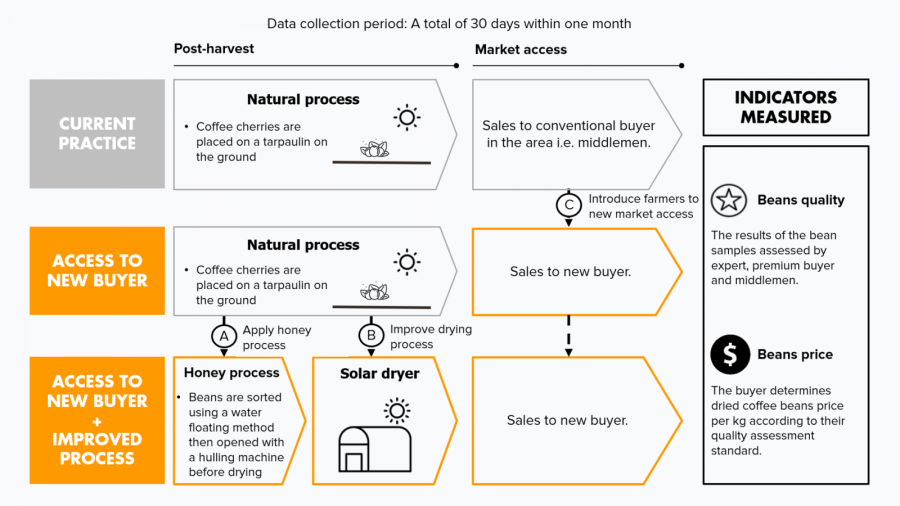
In past projects, Kopernik focused on helping farmers improve their drying process. We introduced a low-cost solar dryer, testing a number of prototypes for several commodities and adjusting the design accordingly. We found that the solar dryer improved the drying efficiency where it significantly reduced the time and effort required by farmers during the drying process, as well as provided protection during the rainy season.
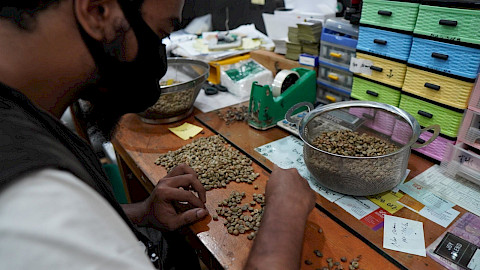
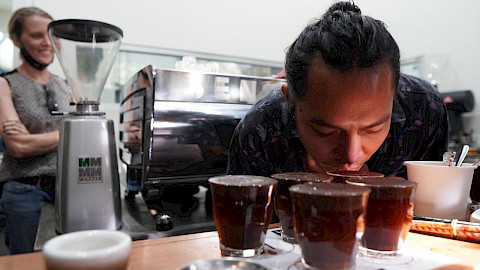
In this experiment, we tested an improved post-harvest processing - honey process. Then, we sent samples of the dried beans to new buyers to assess the bean quality and the price that they were willing to pay.
We compared the bean quality and price from the current practice and the improved process.
Project design
How we ran it
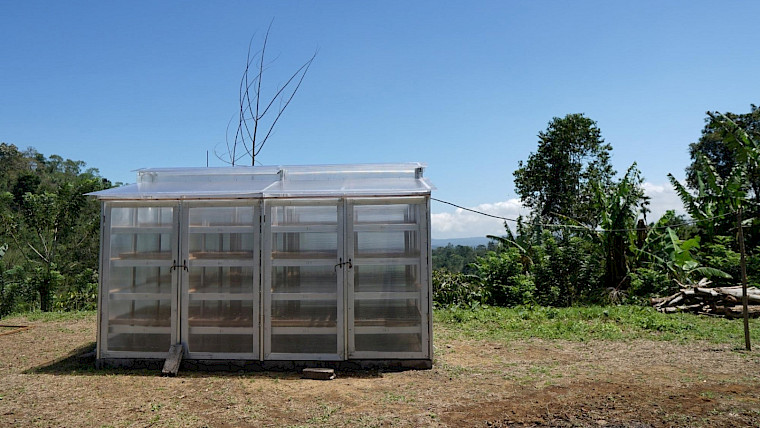
In this experiment, We partnered with two farmers in Sanda village, Tabanan. The data collection was conducted for 30 days. Upon completion of the drying process, we randomized the beans from each group for sampling purposes.
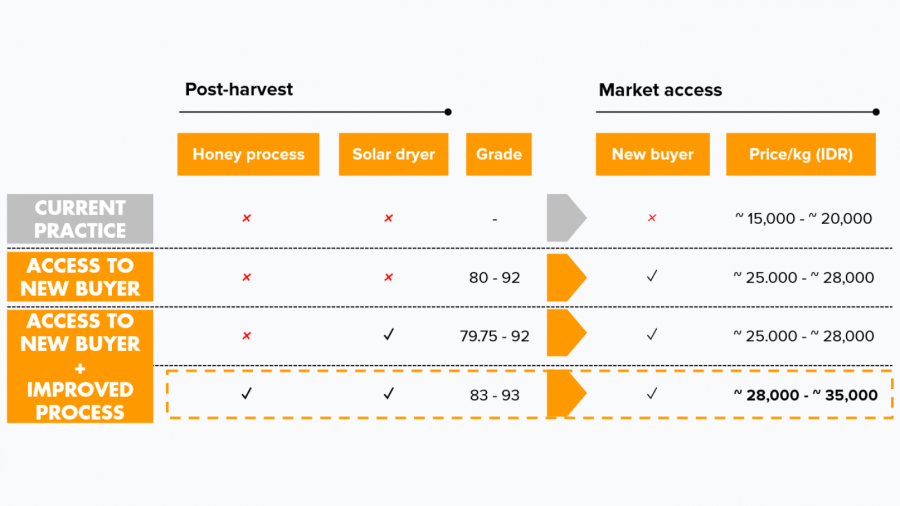
To receive information of dried beans quality and its price, we sent the samples from each group to new buyers from the different process chains as follows:
- Current practice: coffee cherries dried using floor drying + sales to conventional buyer
- Access to new buyer: coffee cherries dried using floor drying + sales to new buyer
- Access to new buyer + Improved process: Honey process coffee cherries dried using solar dryer + sales to new buyer
The technology
Results
What we learned
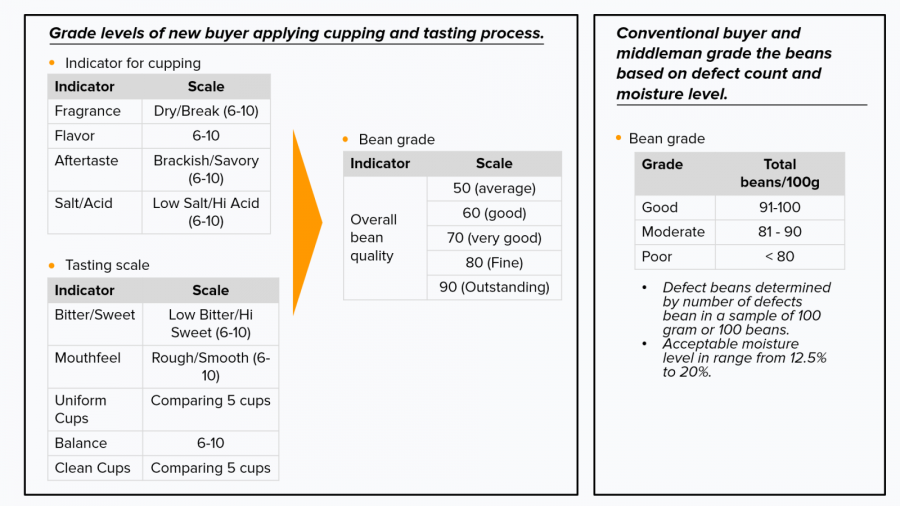
The results of the experiment showed that the improved process led to a higher price of coffee beans. By adding the honey process and being dried properly using the solar dryer, this resulted in better beans quality. As honey process beans were preferred by the new buyers (who are premium buyers), they were willing to buy for the price of IDR 28,000 - IDR 35,000/kg compared to natural process beans for the price of ~IDR 25,000/kg. The buyer considered the honey processed beans to be ‘fine robusta’ - a highly valued and sought-after quality of coffee.
Conclusion
This experiment found that the improved process - where we introduced the honey process and provided access to new buyers - was able to significantly increase the price of coffee beans for the farmers in Tabanan.