

Insulated Container and Reusable Ice Packs
Wastage of marine resources due to inefficient storage methods
Summary
We tested the performance of a Cooling Solution – consisting of gel packs and an insulated rice bucket – as an alternative method (the currently used method is ice inside an uninsulated bucket) to maintain the freshness of fish for fish sellers in Sikka, East Nusa Tenggara.
Why we rated it this way
An insulated bucket with gel packs is an accessible and affordable solution for mobile fish sellers to preserve the freshness of fish.
The problem
What we found
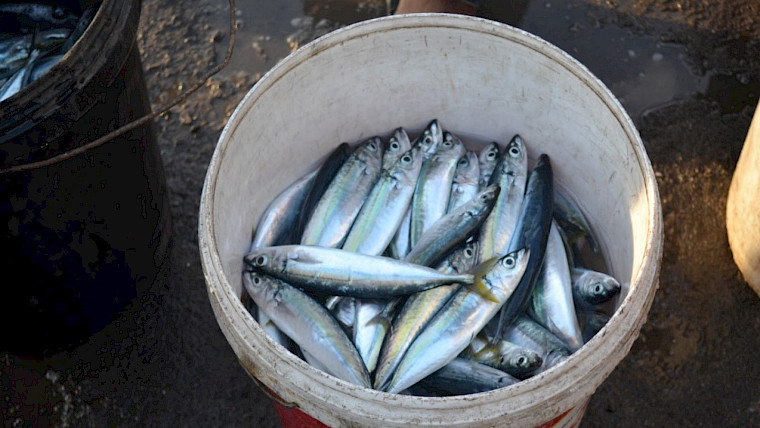
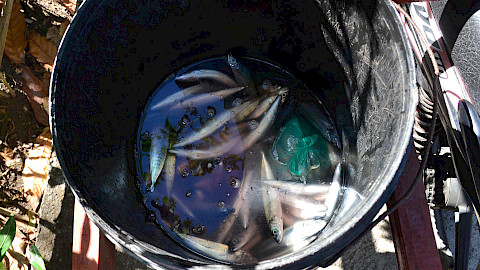
Seafood is one of the main components of the Indonesian diet, with 85 percent of fisheries sector production in the country serving the local market. A common method of selling fish to consumers in East Nusa Tenggara is via mobile fish sellers who transport fish on their motorbikes in two open buckets. These are often repurposed paint buckets that are attached to the back of their motorbikes. These buckets typically contain crushed ice and seawater - a commonly used chilling process. To maintain freshness, fish should ideally be kept at around 0°C. However, the current method does not keep the fish at a sufficiently low temperature, resulting in fish spoilage.
The solution
What we tested
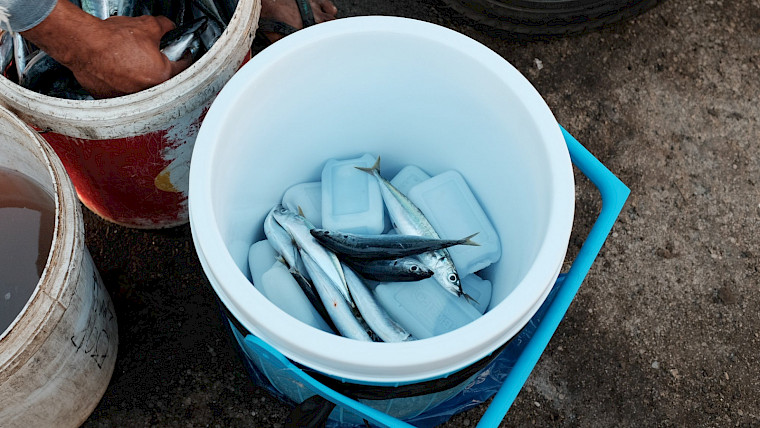
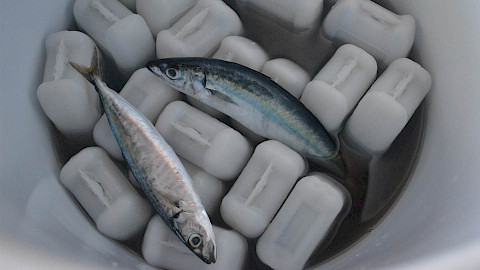
Kopernik tested a Cooling Solution consisting of an insulated rice bucket and gel packs to improve fish preservation. The insulated bucket maintains a lower temperature inside the bucket, while gel packs replace ice. The insulated bucket container is made from food grade polypropylene with polyurethane foam inside to maintain hot or cold temperatures. The gel packs are able to be refilled every two years to maintain optimal performance.
Project design
How we ran it
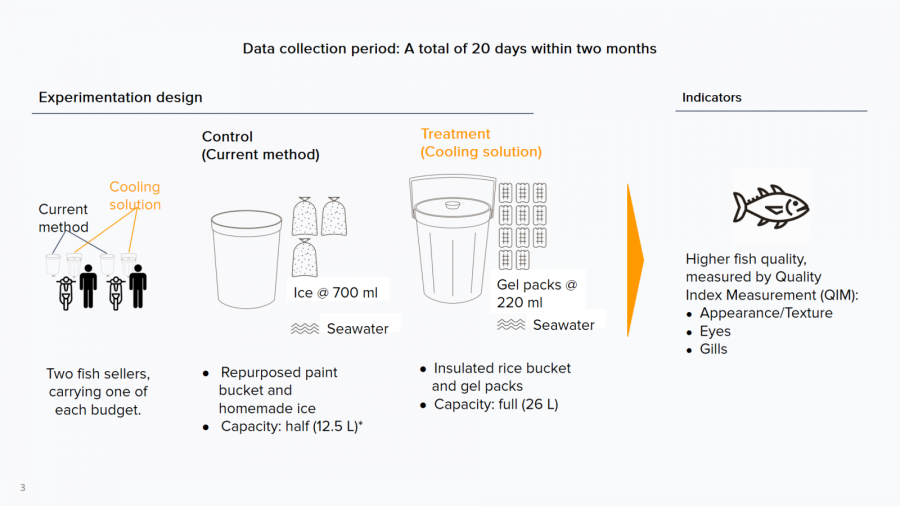
The experiment was conducted between July and August 2019 in Sikka, East Nusa Tenggara. We worked with two mobile fish sellers in Maumere to test the effectiveness of this solution. The treatment group (insulated bucket, with seawater and gel packs) was compared to the control group (open bucket with ice and seawater). For both groups, we measured the seawater temperature and fish freshness, with each of the fish sellers conducting their sales activities using both methods. In assessing fish freshness, the Quality Index Method (QIM), recommended by FAO, was used to measure several sensory parameters.
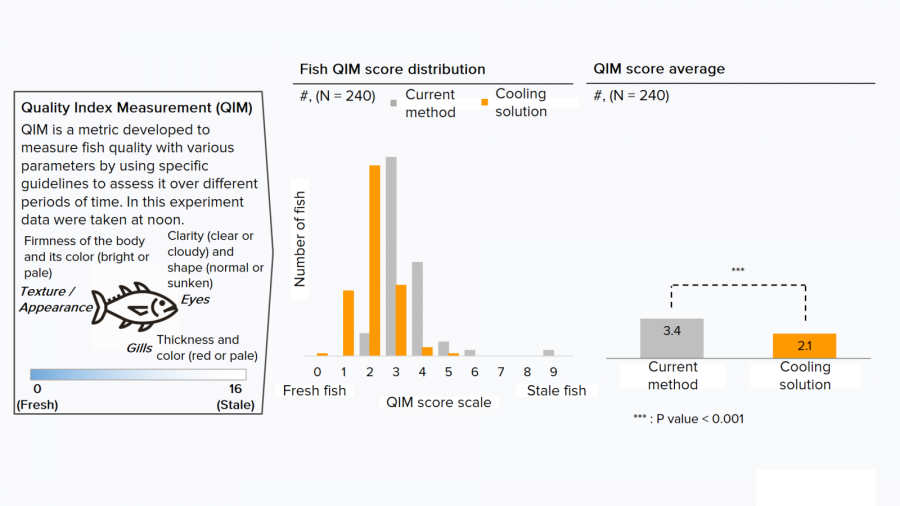
The QIM score for this experiment ranged from 0 (fresh fish, edible) to 16 (rancid fish, inedible). We collected data on fish quality for 20 days by assessing the eyes, texture, and gills from both storage methods at noon - the time when fish sellers typically finish their sales activities. This was with the assumption that all fish purchased in the morning were of the same quality. In total, we assessed 240 fish from both storage methods.
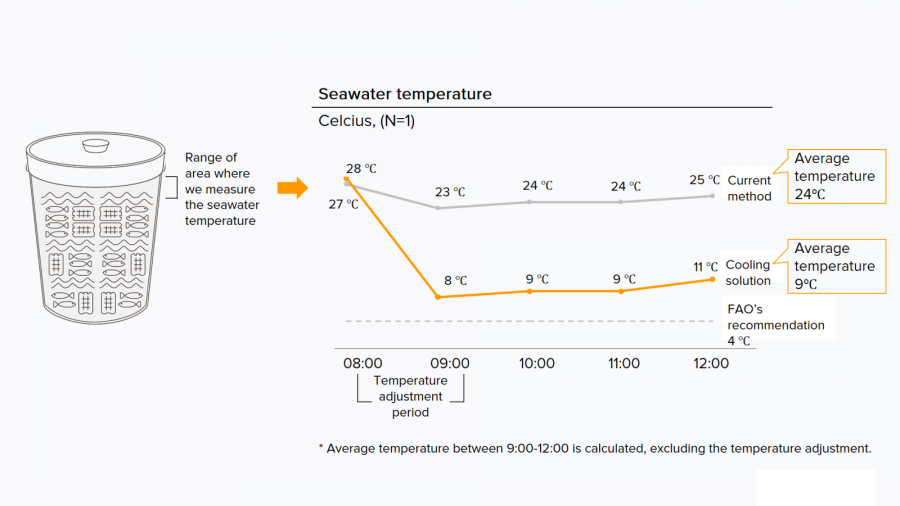
The seawater temperature was recorded hourly during the sales period of one day.
The technology

Results
What we learned
The Cooling Solution maintained an average temperature of 9°C which is significantly lower than the current storage method which had an average temperature of 24°C.
The experiment found that the Cooling Solution was more effective in maintaining the freshness of fish as compared to the current method. The mean QIM score for the Cooling Solution was 2.1, as compared to the currently used method, which had a mean QIM score of 3.4 (the lower the QIM score, the fresher the fish).
Conclusion
Repurposing locally-available insulated rice buckets, the mobile fish sellers were able to keep the fish at a much lower temperature (9°C) when combined with frozen gel packs. The fish QIM score was 2.1, on average, resulting in fresher fish than the current method used, which had a QIM score of 3.4.
Additional considerations
From an economic perspective, the fish seller using the Cooling Solution recorded an average increase in daily net income of 38% compared to the seller using the current storage method. This increase was not directly linked to the higher quality or freshness of fish, because the selling price is set by the fish sellers after purchasing the fish at the market, regardless of the quality of the fish. The net income increase can be attributed to the insulated bucket being able to hold a larger volume of fish because it has a lid and the fish seller can store more fish inside, as compared to the currently used method.
Despite having a larger volume of fish to sell, there was no significant increase in the time it took the fish sellers to sell all the fish, meaning they sold more fish in the same period of time.
The upfront investment for an individual fish seller to purchase the Cooling Solution is significant because a freezer is required to freeze the gel packs. A freezer typically costs IDR 2,200,000 in Sikka. In order to address this upfront investment requirement, a cooperative of fish sellers could share the costs of technology and operations.
Read more
Project profile
Reports and references
Saraswati, Made Sania and Mochamad Dwi Ergianto. (Unpublished). Improving Fish Preservation: Cooling Solutions for Fish Sellers Project Report.
Kopernik Insights
Lougovois, V. P., Kyranas, E. R., & Kyrana, V. R. (2003). Comparison of selected methods of assessing freshness quality and remaining storage life of iced gilthead sea bream (Sparus aurata). Food Research International, 36(6), 551-560.