

Modified Ahotor Oven - Alternative Fish Smoking Technology
Unsafe and inefficient fish smoking process
Summary
We tested the effectiveness of the Modified Ahotor Oven, an alternative fish smoking technology, to improve safety and efficiency of fish smoking in Kendate, Papua, Indonesia
Why we rated it this way
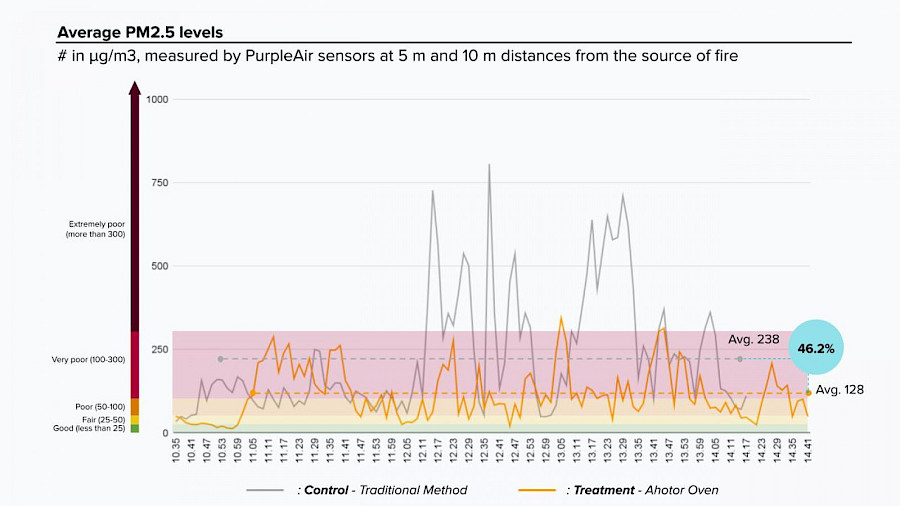
The Modified Ahotor Oven effectively lowered the PM2.5 level by 46.2% and reduced the amount of wood by 38.9% compared to the traditional fish smoking process.
The problem
What we found
Jayapura is one of the main tuna-producing areas in Papua Province, with annual output of around 17 tonnes. Most coastal communities in Jayapura sell their freshly caught fish directly to buyers who come to their villages. In some areas, such as Kendate village, fish is also smoked to preserve it and increase its market value. Smoked fish is commonly sold in traditional markets, either eaten immediately or prepared as part of a meal.
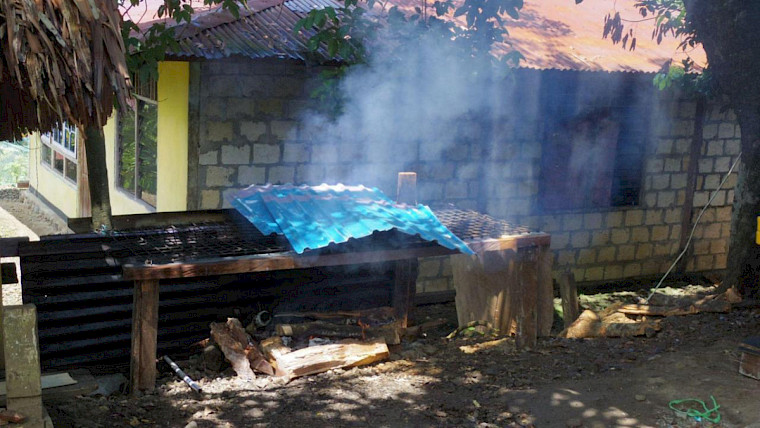
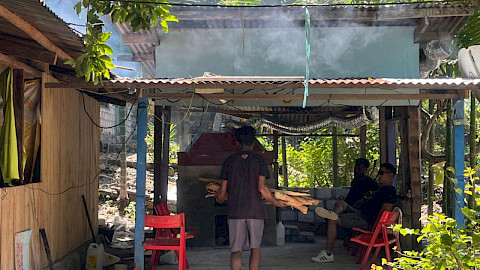
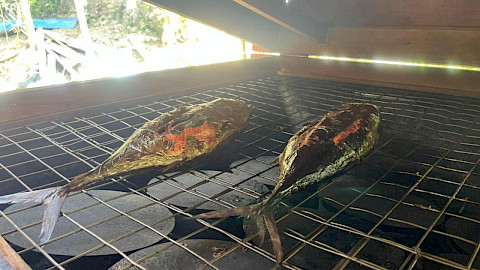
The current smoking process uses a traditional open wood stove system, where fish is placed on a wire mesh above a small fire and covered with a metal sheet. This process can take up to 24 hours and is often left unattended. It produces heavy smoke, which contributes to household air pollution, and poses health and safety risks such as eye irritation and shortness of breath. Additionally, it requires large amounts of firewood, resulting in high fuel consumption.
The solution
What we tested
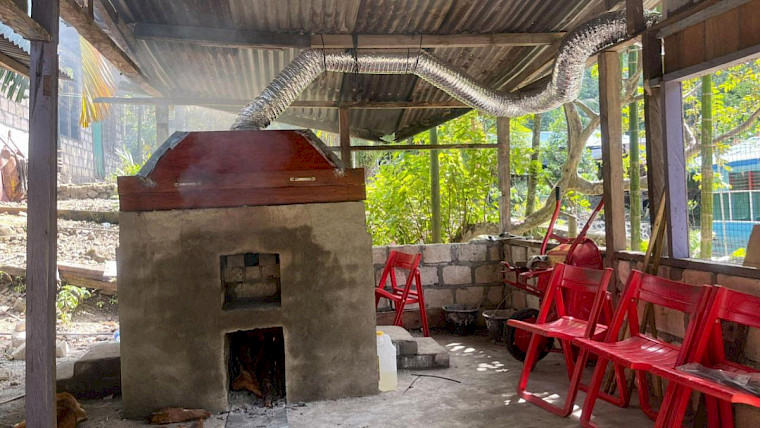
The Ahotor Oven was originally developed and used in Ghana to improve the quality and competitiveness of smoked fish through clean smoking technology. In collaboration with the Fablab Kanda Nishikicho Japan, we modified the original design by using locally available materials, replacing burnt bricks with yellow bricks for the combustion chamber and substituting sandcrete blocks with concrete bricks for the outer chamber. We retained the oven’s six key features: the fuel entrance, combustion chamber, primary and secondary air inlets, liquid collector, and liquid exit. Additionally, we added a chimney to vent smoke and gases, ensuring proper air circulation.
Project design
How we ran it
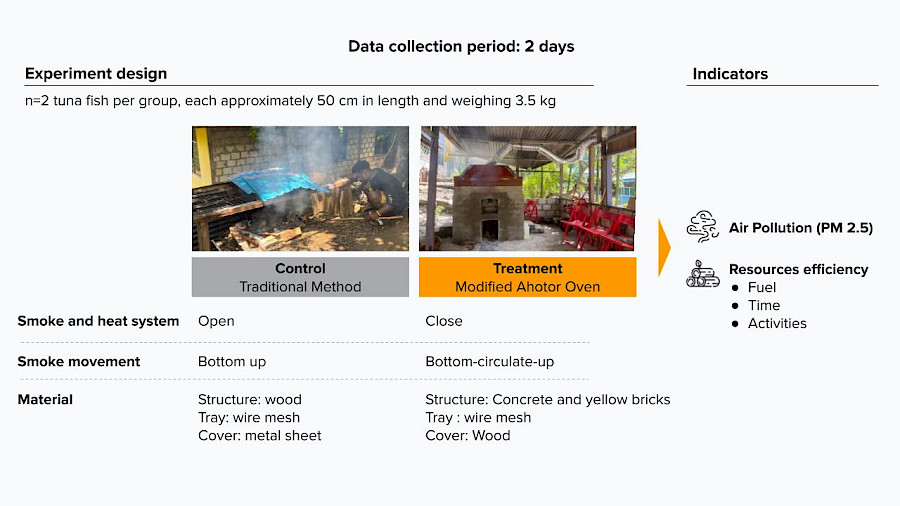
We compared two groups: a control group using the traditional fish smoking method, and a treatment group using the modified Ahotor Oven as an alternative fish smoking technology over 2 days in November 2024.
The traditional method uses an open smoke and heat system with bottom-up smoke movement, featuring a wooden structure, a wire mesh tray, and a metal sheet cover. The modified Ahotor Oven incorporates a closed smoke and heat system with bottom-circulate-up smoke movement, a structure made of concrete and yellow bricks, a wire mesh tray, and a wooden cover.
To evaluate the performance of the modified Ahotor Oven in improving the safety and efficiency of the fish smoking process, we compared the following two indicators:
- Air Pollution (PM2.5)
We use PM2.5 level or particulate matter less than 2.5 μm in diameter, as an indicator of Air Pollution. PM2.5 levels were measured using two PurpleAir sensor units placed at distances of 5 m and 10 m from the fire source. Data was recorded every two minutes. - Resource Efficiency
This indicator is represented by three data points: 1.) Fuel: total weight (in kg) of wood logs required to complete the smoking process, 2.) Time: total hours needed to complete the smoking process. 3.) Activities: list of activities and time spent performing activities required during the fish smoking process.
The technology
Results
What we learned
After conducting the experiment over two days, we observed the following results:
Air Pollution (PM2.5)
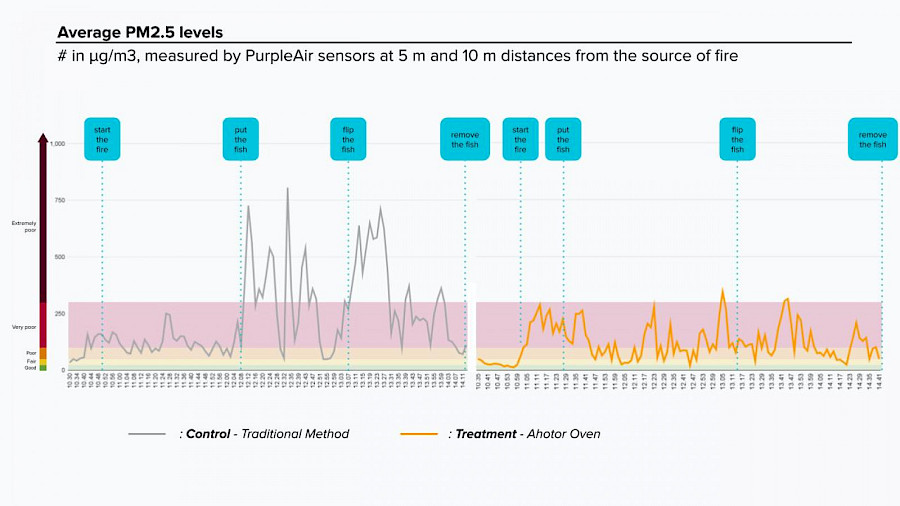
During smoking, PM2.5 levels in both the control and treatment groups exceeded the WHO's recommended safe limit for PM2.5 of 15 μg/m³ for a 24-hour average. The control group reached extremely poor levels, while the treatment group fluctuated between poor and very poor levels. On average, PM2.5 levels measured throughout the smoking process - from the start of the fire to the removal of the fish - fell into the very poor category for both groups. The control group recorded 238 µg/m³, while the treatment group showed a 46.2% lower level of 128 µg/m³. However, individual data points showed sharper contrasts - the control group frequently exceeded the extremely poor level (>300 µg/m3), whereas the treatment group exhibited lower fluctuations, remaining within the poor to very poor range.
In the control group, PM2.5 levels spiked when water from the fish dripped onto the embers particularly during placement and flipping. In contrast, the treatment group’s levels, though variable, remained significantly lower. The oil tray feature prevented water and oil from dripping onto the embers, avoiding sudden spikes during handling.
Resource Efficiency
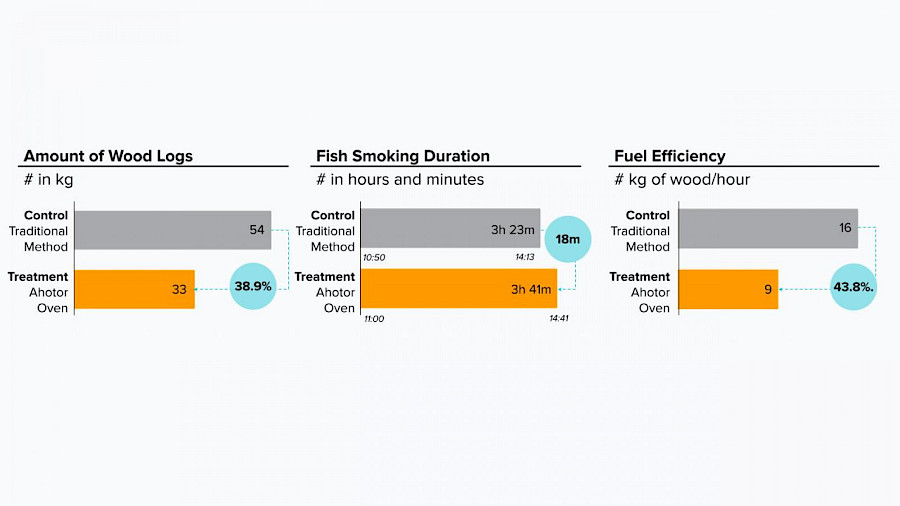
- Fuel: We used rambutan wood logs as the fuel and bundled them in 3 kg units for easy measurement. The control group used a total of 54 kg of logs to start the fire and required no additional logs during the smoking process. Meanwhile, the treatment group used 38.9% less wood compared to the control group - only 33 kg. It required 15 kg of fuel to start the fire, followed by incremental additions of 3 kg, 6 kg, 3 kg, 6 kg, and 3 kg. The treatment group used fewer wood logs and operated for a longer smoking duration, consuming 9 kg of wood per hour. In comparison, the control group consumed 16 kg of wood per hour despite a shorter smoking duration. This makes the treatment group 43.8% more fuel-efficient.
- Time: Both the control and treatment groups had almost similar smoking durations. The control group followed the community’s practice of smoking fish for 3 hours, while the treatment group, based on previous Ahotor oven tests, required a slightly longer duration of 3.5 hours. To be more precise, the control group took 3 hours and 23 minutes to smoke the fish, while the treatment group required 18 minutes longer, which was 3 hours and 41 minutes to achieve the desired level of doneness.
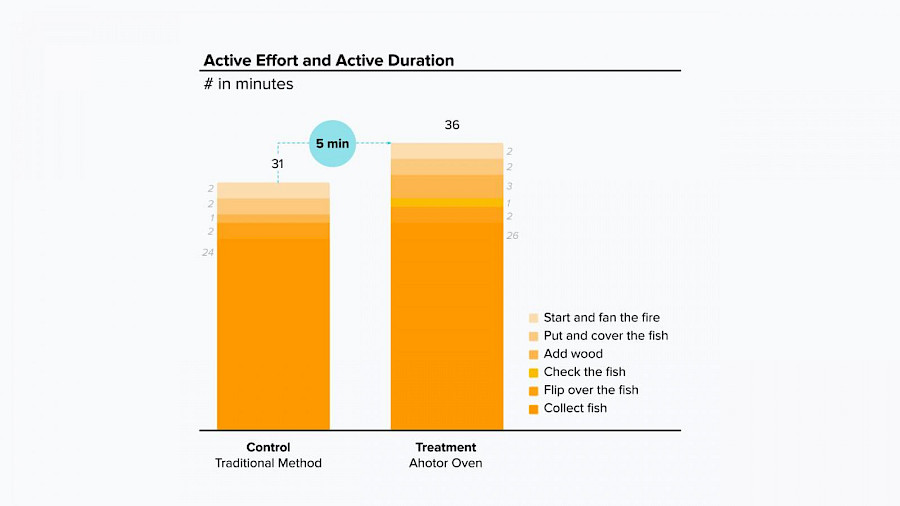
- Active Effort: The control group required a total of 31 minutes of active effort, from starting and fanning the fire to collecting the fish. Meanwhile, the treatment group took 36 minutes (5 minutes longer). This additional time was needed to repeatedly add wood logs due to the small tray capacity, whereas the control group used a large amount of logs from the beginning. In the treatment group, the process involved 15 kg of logs to start the fire, followed by sequential additions of 3 kg, 6 kg, 3 kg, 6 kg, and 3 kg. Additionally, the treatment group required slightly more time and effort to check the fish during smoking, as the fully closed cover limited visibility and required manual effort to open and push aside.
In summary, the Ahotor Oven outperformed the traditional smoking method by producing lower PM2.5 levels, reducing the number of logs, and achieving higher fuel efficiency to complete the smoking process.
Conclusion
The Ahotor Oven outperforms the traditional smoking method by reducing the PM2.5 levels by 46.2%, decreasing fuel consumption by 38.9%, and lessening the total smoking duration by 18 minutes resulting in a 43.8% reduction in fuel usage. However, it requires 5 additional minutes of active effort during smoking due to its design. Further improvements are needed to enhance usability, including adjusting the oven’s height, reducing the size and weight of the cover, and refining the design of the air circulation chamber.
Additional considerations
Based on testimonials from enumerators who operated both methods during data collection, both were generally considered easy to use. However, the treatment group with the Ahotor oven reported minor challenges, such as difficulty turning the fish due to uneven heat distribution and the oven’s taller height. In contrast, the control method involved simpler tasks like maintaining a fire, making it less complex but potentially less efficient and consistent than the Ahotor oven.
Additional challenges noted with the Ahotor oven included discomfort caused by its height, a heavy cover lacking a secure mechanism to keep it open, and a secondary air inlet that unintentionally directed smoke toward the user’s face. To improve usability, future adjustments to the oven’s height and the cover material are needed.
Despite these challenges, further organoleptic assessment of the resulting smoked fish revealed clear advantages of the Ahotor oven. It received higher overall scores and excelled in texture and taste. The assessment also showed that fish smoked using the Ahotor oven was more preferred by panelists, highlighting its potential to deliver superior product quality when used under optimal conditions.
In addition, the cost to build an Ahotor oven is IDR 14,680,000 (USD 921, based on Bank Indonesia’s 2024 average selling exchange rate of USD 1 = IDR 15,926). This includes materials and labour cost for two people over three days of construction.