

Palmyra Leaf Cutter
Inefficient processes in basket weaving
Summary
We tested the performance of a leaf cutter prototype to produce more uniform leaf strips, faster, than the current tools used by weavers in Solor Island, East Nusa Tenggara.
Why we rated it this way
The palmyra leaf cutter prototype was unable to produce a higher volume, and more consistent leaf strips than the manual cutting tool currently used.
The problem
What we found
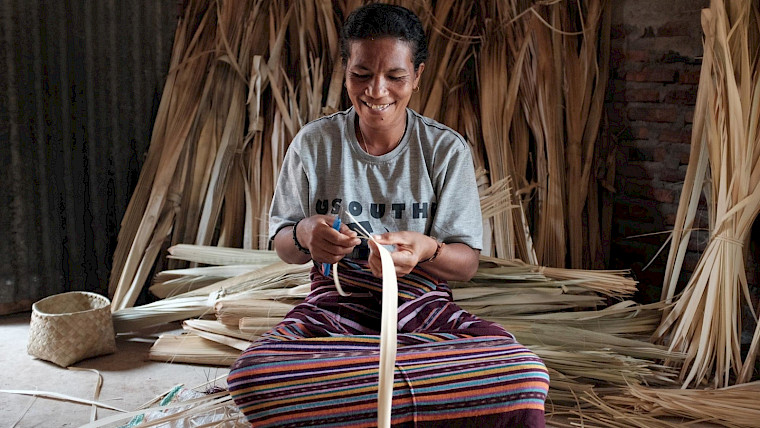
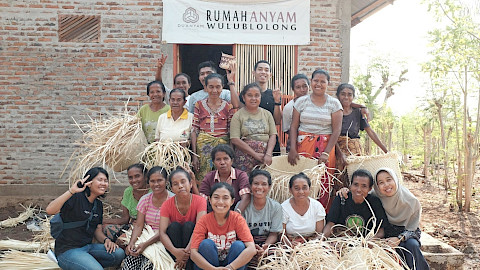
Indonesia is the fourth-largest exporter of palmyra leaf basketware in the world, with a total export value of US$57M absorbing 1.38 million workers in the industry. East Nusa Tenggara, and in particular East Flores, is one of the largest producers of basketwear in Indonesia as the raw materials are locally available and are not season-dependent. DuÁnyam, a social enterprise working with 900 weavers across East Flores, stated that their challenge is the inefficient process of cutting palmyra leaves into strips using a manual cutting tool leading to inconsistency in the width of the strips – affecting the quality of the end product. Therefore, a better tool is needed to help Du’Anyam’s weavers improve the cutting process and the ultimate quality of the end product.
The solution
What we tested
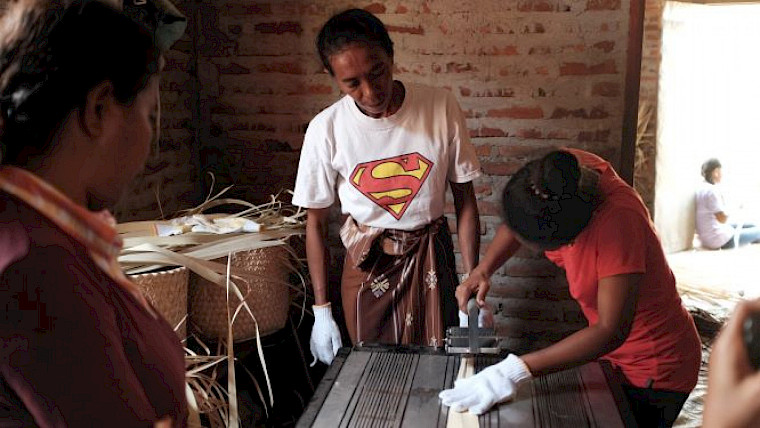
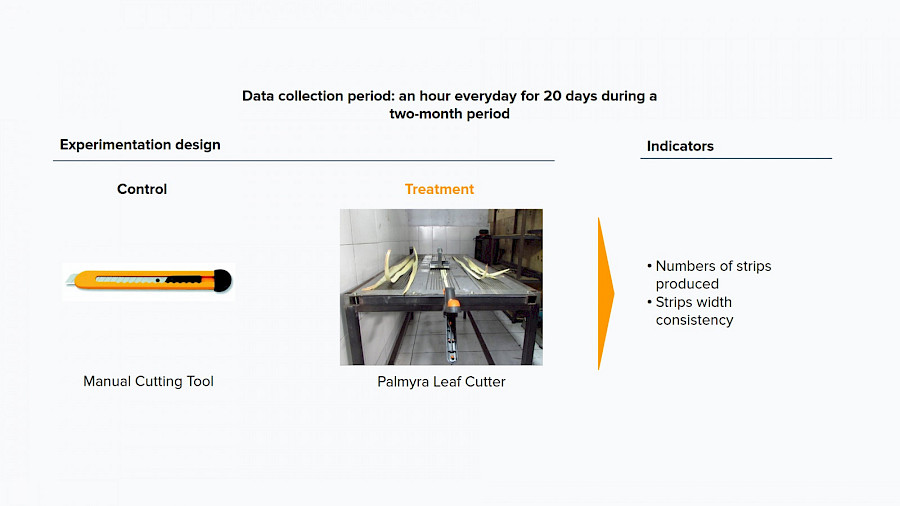
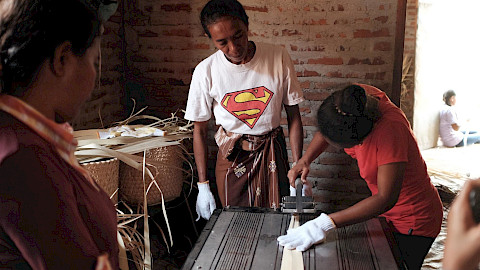
Kopernik partnered with DuÁnyam to develop a customized palmyra leaf cutter at their weaving center in Solor Island, East Flores. We tested and compared the performance of the leaf cutter to the manual cutting tool by measuring the quantity of leaves produced and the width consistency over a specified timeframe.
Project design
How we ran it
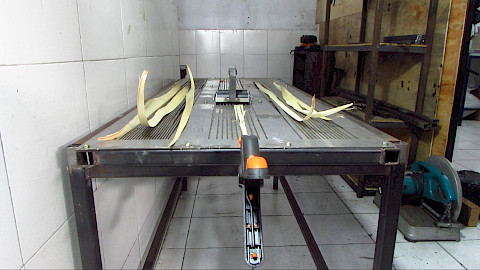
We designed a palmyra leaf prototype to meet the requirements of:
-
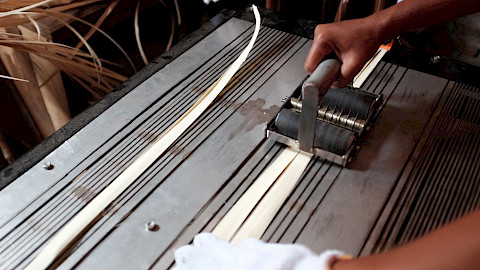
Producing more strips than the manual cutting tool by making a plate with several metal lanes and using a clamp to stack leaves to enable cutting of multiple leaves at the same time.
-
Producing strips with a consistent width (5mm and 7.5mm width size) by using a steel-strengthened metal surface to guide the cutting process.
We compared the number of strips and consistency of width produced by the prototype leaf cutter with those produced by the manual cutter over the course of 20 days during February and March 2019. Each day, we measured the quantity of strips cut per hour and the width consistency of leaf strips.
The technology
Results
What we learned
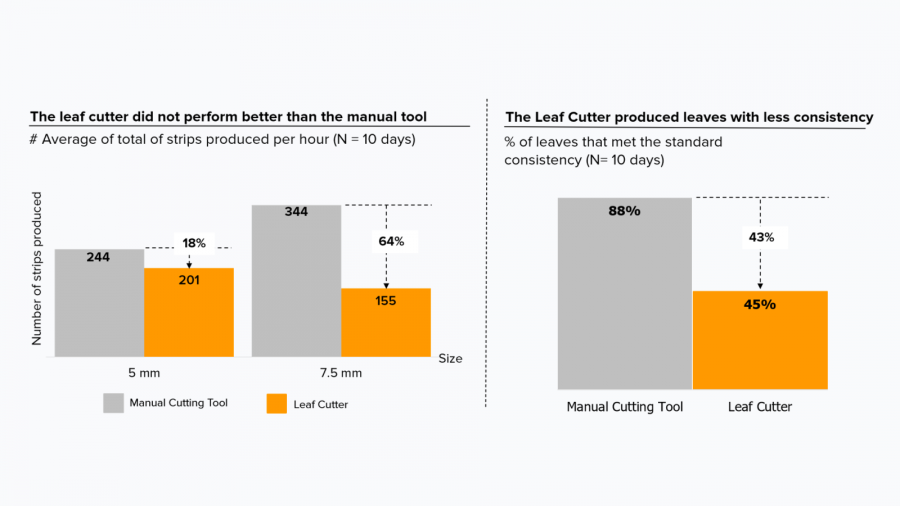
We found that the palmyra leaf cutter prototype generated fewer strips than the manual cutting tool in the specified timeframe. It produced 18% fewer 5mm strips and 64% fewer 7.5 mm strips per hour than the manual cutting tool. This was because the plate and clamp failed to cut multiple leaves at once.
In terms of width consistency, the cutter produced 43% less consistent strips than the manual cutting tool due to the uneven surface of the metal lanes.
Conclusion
The results of the experiment showed that the palmyra leaf cutter was unable to produce more strips than the manual cutting tool and those produced were less consistent in width. A much more improved leaf cutter is needed to produce a higher volume and consistent strips than the manual cutting tool.
Read more
Project profile
Reports and references
Putri, Riesa Eka and Made Sania Saraswati. (2020). Improving Processing Technologies: Palmyra Leaf Cutter Phase One Project Report.