

Portable Honey Filter
Inefficient honey filtering process
Summary
We tested a custom-built honey filter to assist honey farmers in extracting forest honey more efficiently in Flores, East Nusa Tenggara.
Why we rated it this way
The Honey Filter is effective in extracting honey faster and increasing the amount of honey collected.
The problem
What we found
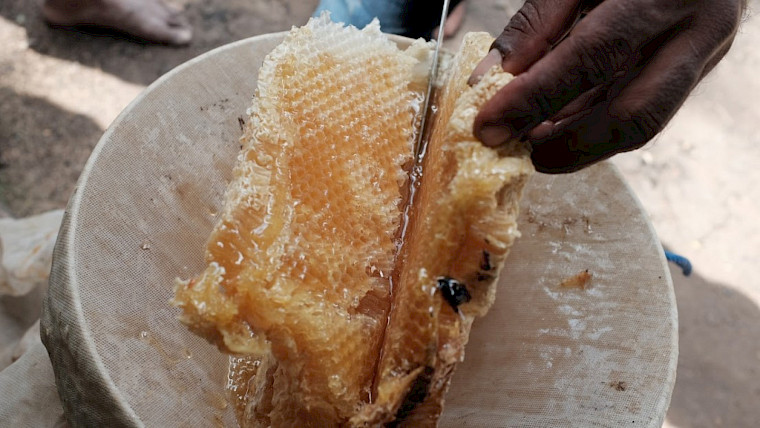
The demand for honey in Indonesia is reaching 4,000 tons per year, while only 1,500 tons are being produced domestically per year. Honey production from Flores Island in East Nusa Tenggara province reached 133 tons in 2015. The natural production of forest honey in the district of East Flores alone could potentially reach 22 tons annually but less than 30% of the potential harvest is collected and processed. One of the challenges faced by honey collectors is the inefficient process to extract the honey from the forest. Traditional practices contribute to losses during the filtration process. An improved extraction tool can simplify the honey extraction process and save farmers' time while increasing their productivity.
The solution
What we tested
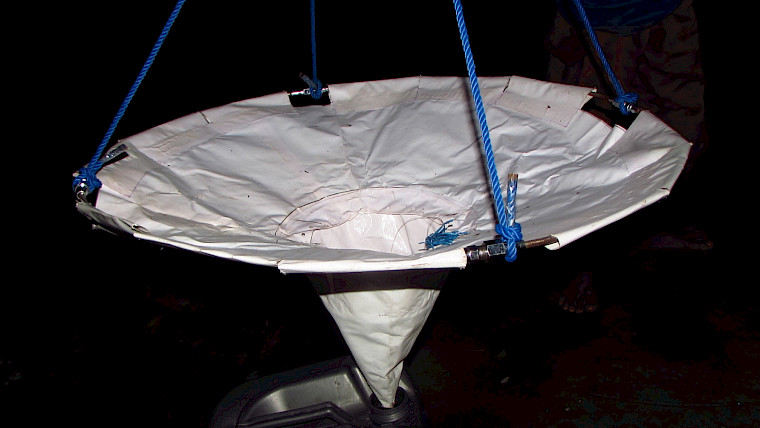
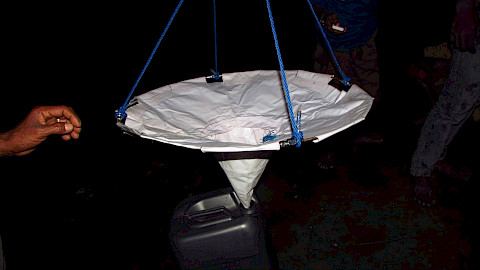
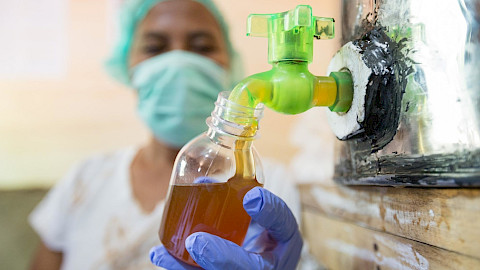
We developed the Honey Filter prototype to improve the honey extraction process. The filter needed to be light and easy to carry into the forest. We compared the filter to the current tools used by farmers to evaluate the time efficiency in extracting honey and the quantity of honey extracted.
Project design
How we ran it
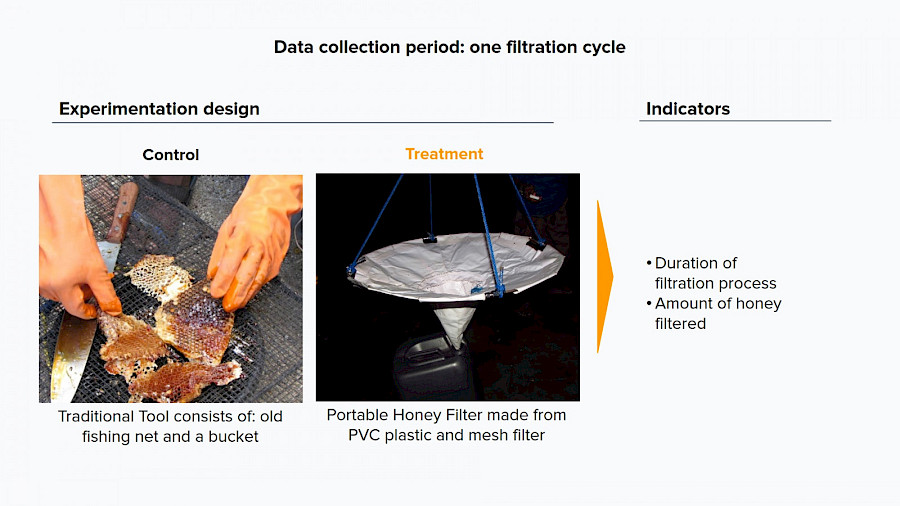
We tested the lightweight Honey Filter prototype with honey collectors for one cycle of the filtration process of 6.4 kg of honeycomb. We filtered the honeycomb using the honey filter prototype and the traditional method simultaneously on a harvest trip in February 2017.
To understand the performance of both methods, we collected data on the duration of the process and the amount of honey filtered.
The technology
Results
What we learned
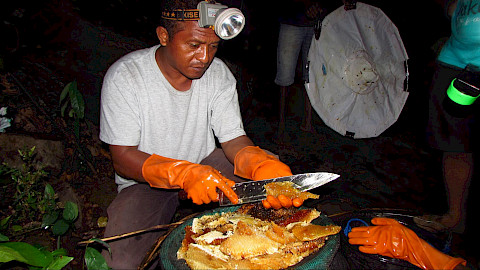
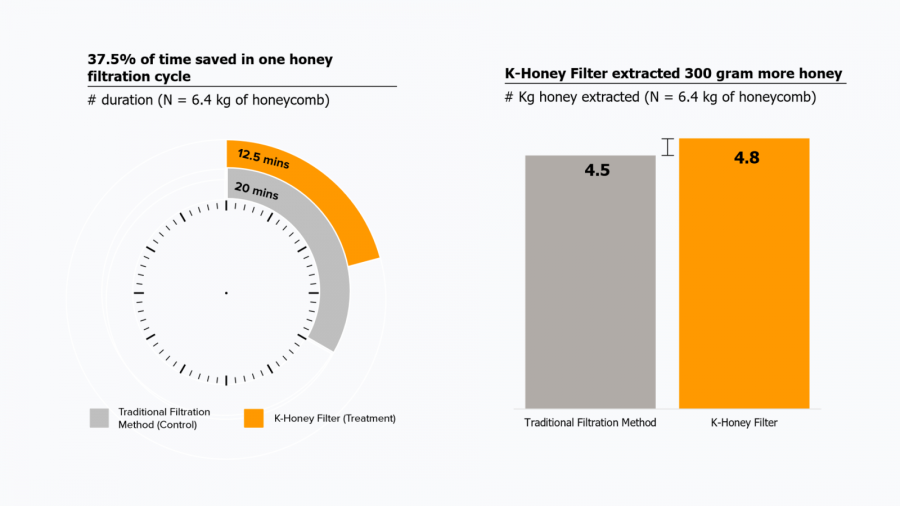
The findings demonstrated that the Honey Filter was 37.5% faster than the traditional filtration method. For an average honeycomb weighing 6.4 kg, the Honey filter produced 4.8 kg, which is 300 grams more honey than the traditional method which produced 4.5 kg of honey.
Conclusion
The experiment showed that the Honey Filter made the honey extraction process faster and produced more honey than the traditional method. Further refinement to the product design is needed and Kopernik is making adjustments in the subsequent prototype of the honey filter.
Read more
Project profile
Reports and references
Rachman, Abdul. (2017). Improving Processing Technologies: Forest Honey Filter Phase One Project Report.