

Pulau Plastik - Behavior Change Campaign
Lack of awareness of the impact of single-use plastics on the environment
Summary
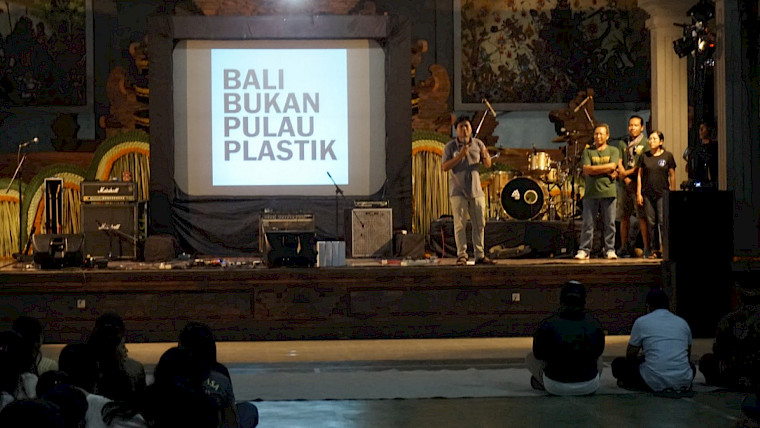
Pulau Plastik (Plastic Island) is a behavior change campaign to tackle the issue of single-use plastic in Bali. Pulau Plastik leverages popular culture and includes a video series to increase awareness about the hazards of single-use plastic and to change people’s behavior around single-use plastic usage.
Through community screenings and events, and the distribution of Pulau Plastik content, the main goals of this campaign are to:
1. Change people’s behavior so they begin to refuse, reduce, reuse, and recycle single-use plastic.
2. Support the implementation of government policy concerning single-use plastics
Why we rated it this way
The Pulau Plastik series showed an increase in the awareness and knowledge about the challenges of single-use plastic pollution among those who watched it. However, this only had a short-term impact, suggesting that more sustained engagement and interventions are required for these changes to be maintained.
The problem
What we found
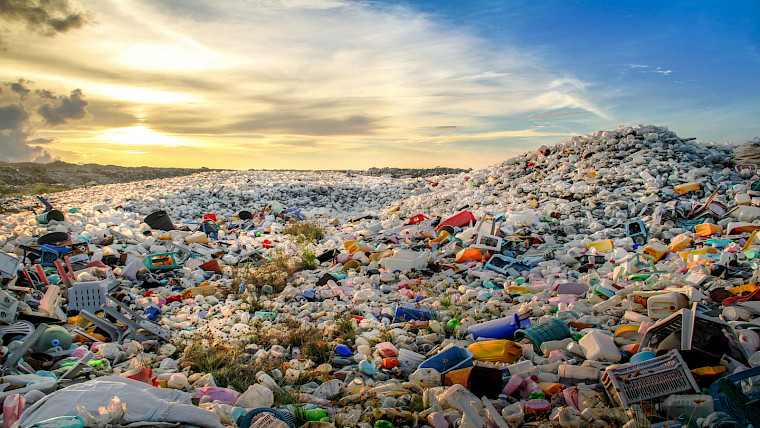
Indonesia is the fourth most populous country in the world and the second largest contributor to marine plastic pollution. A 2015 study of ocean plastic waste, estimated that Indonesia generated 3.2 million tonnes of plastic in 2010, with 0.48–1.29 million tonnes ending up in the oceans.
Single-use plastic packaging is very popular in Indonesia, including in Bali, with plastic bags, food packaging, bottles and hygiene product sachets used heavily across the island. According to the environment ministry, Indonesians consume a million plastic bags per minute.
In November 2017, a “garbage emergency” was declared in Bali after many of the beaches popular with tourists were inundated with trash. In response to this growing problem, the island has had some great examples of community responses, a number of ongoing local initiatives aimed at recycling and composting and a recent government policy banning plastic bags, straws and styrofoam to be rolled out throughout 2019. However, there remains much to be done in improving local communities’ understanding of the issue and getting them to actively engage in both partaking in and advocating for solutions.
The solution
What we tested
Four video episodes of a Pulau Plastik ‘edutainment series, which explore the issue of waste management in Bali and what challenges are being faced by Bali community groups and the government. The series highlights best practices and sustainable solutions that the audience is encouraged to engage with, with specific solutions and calls to action in each episode. The series adopts a socio-cultural approach and examines the role of Balinese traditions and spirituality around the issue of single use plastic, environmental pollution as well as use behavior science techniques to enable a shift in attitudes and behavior towards better plastic waste management.
Project design
How we ran it
The initiative consisted of:
1. The production of a four-part video series
2. Community screenings
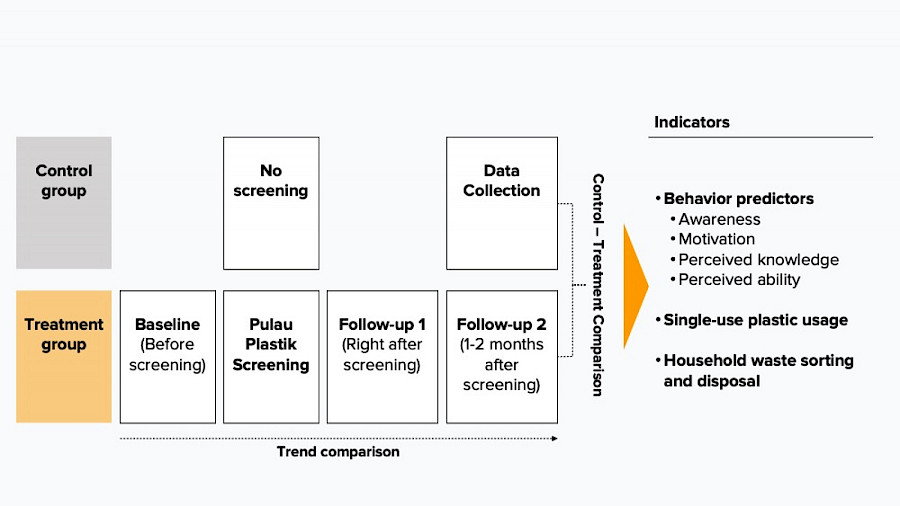
3. Impact assessment through audience survey (baseline, follow up 1 & follow up 2)
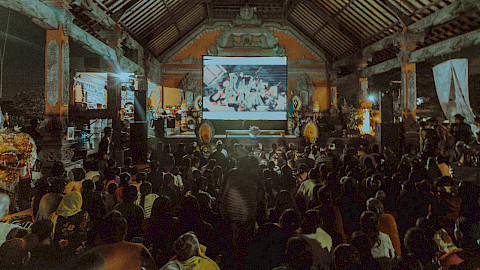
More than 100 screenings were conducted in 2019, with more than 15,000 people attending the screenings. The target population of the impact assessment was the audience of the Pulau Plastik series screenings which were held in Bali. 80 respondents who watched the series were surveyed for this assessment, which was conducted between September – December 2019 (see additional consideration section for potential selection bias). The respondents were selected from ten screenings held in various locations across Bali which represented different demographic groups (school students, college or university students, villagers, and religious communities), with 5 - 15 respondents from each screening.
We also surveyed 30 respondents as part of the control group — consisting of people who did not watch the Pulau Plastik series. The respondents of the control group are selected based on demographic characteristics similarities with the audience sample (age, education, occupation, and gender proportion). Control group respondents were surveyed at the same time as the audience sample’s second follow-up survey (1-2 months after screening).
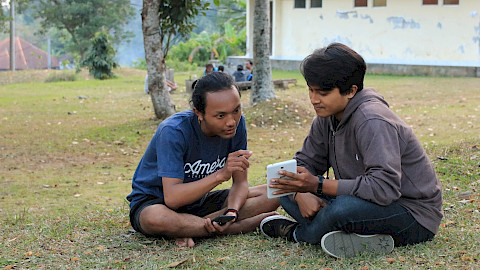
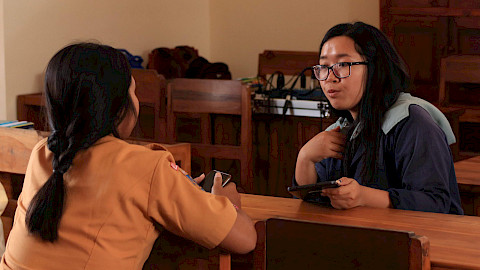
There were three phases of the assessment: Registration & Baseline, Follow-up 1, and Follow-up 2. Each respondent was surveyed across the three phases to measure changes in respondent’s behavior predictors and self-reported changes in behavior.
The technology
Results
What we learned
Awareness and Perceived Knowledge
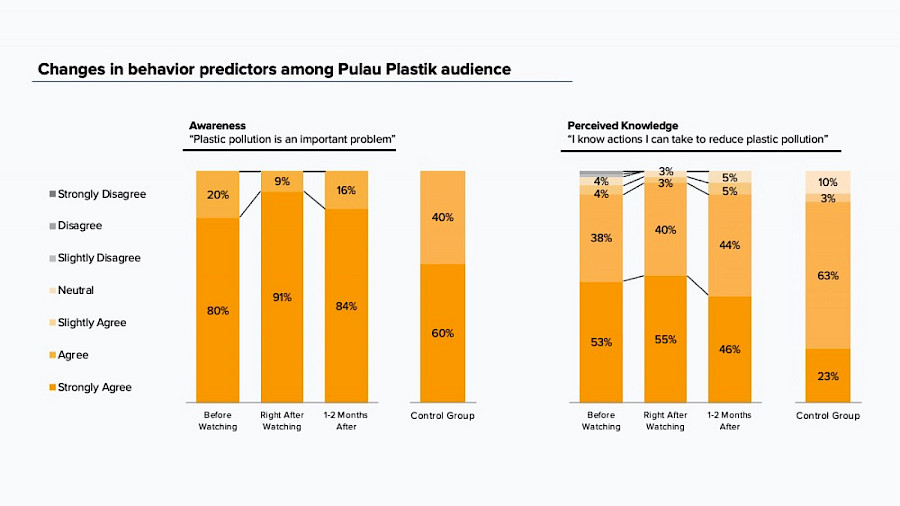
We found that there was some increase in the awareness around the issue of single-use plastic pollution among the audience surveyed, right after they watched Pulau Plastik. Before the screening, 80 percent of respondents strongly agreed that plastic pollution is an important problem, while after watching Pulau Plastik, the number increased to 91 percent.
The survey also indicated that the audience experienced a slight increase of knowledge in actions they can take to reduce plastic pollution. After watching Pulau Plastik, respondents who agreed and strongly agreed that they knew what actions they could take increased to 95 percent, compared to 91 percent before the screening.
However, we also saw that the increase in both awareness and perceived knowledge was not sustained. When we conducted the second follow up survey with respondents, one to two months after the screening, the awareness and knowledge levels dropped down to 84 percent (from 91 percent) and 90 percent (from 95 percent) respectively, suggesting that such changes do not last without continued engagement on the issue with the audience.
In comparison with the control group, the Pulau Plastik audience showed a higher level of both awareness and perceived knowledge even at the follow up survey. At the end of the assessment period, 84 percent of the audience strongly agreed that plastic pollution is an important problem, compared to 60 percent of those in the control group who strongly agreed. In terms of perceived knowledge about actions they could take to reduce plastic pollution, 46 percent of the audience strongly agreed, while only 23 percent of those in the control group strongly agreed they had the necessary knowledge.
Single-use Plastic Usage
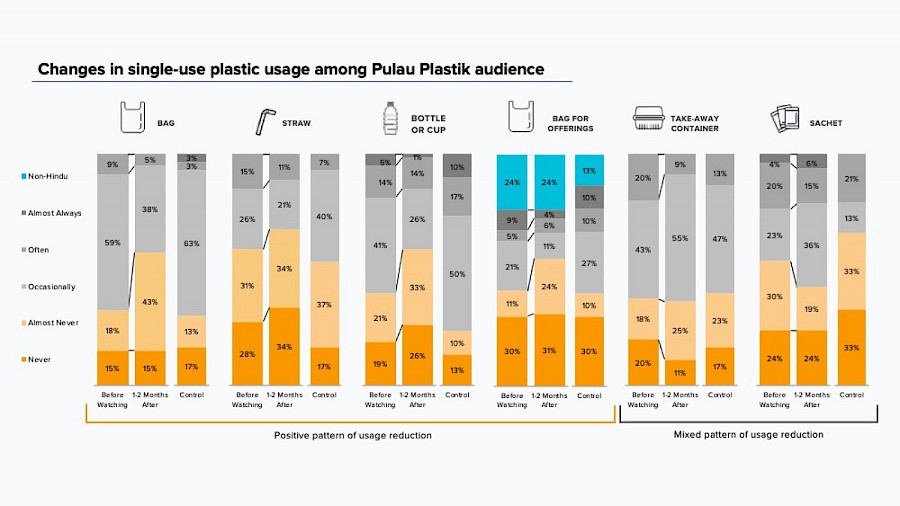
The baseline single-use plastic usage of the audience was similar to those of the control group, except for bottles or cups (where the control group used more) and sachets (the control group used less). After watching Pulau Plastik, the audience used fewer bags, straws and bottles or cups as compared to the control group. But, they used more take-away containers and sachets as compared to the control group.
Based on the respondents’ reports on their single-use plastic usage during the follow up survey conducted one to two months after the screening, we observed a consistently positive pattern of usage reduction of: single use plastic bags, straws, bottles, and cups. The most significant reduction occurred in the usage of plastic bags, where 50 percent of respondents reduced their usage. Followed by plastic bottles or cups, with 34 percent of respondents reporting a reduction in their usage.
On the other hand, this pattern did not occur for take-away containers and sachet usage. For the usage of take-away containers, 11 percent of respondents reduced their usage, 11 percent increased their usage, and the rest (78 percent) stayed the same. For sachet usage, 3 percent of respondents reduced their usage, 14 percent increased their usage, and the rest (83 percent) stayed the same.
Based on the above results, we can see that a drop in awareness and perceived knowledge does not necessarily result in an increase in plastic usage as it appears that the audience still tries to reduce their plastic usage. However, we cannot attribute the reduction in usage directly to Pulau Plastik, given other factors, such as the introduction of government regulations banning certain single-use plastic items in Bali.
Conclusion
The Pulau Plastik series showed an increase in the awareness and knowledge about the challenges of single-use plastic pollution among those who watched it. However this only had a short-term impact, suggesting that more sustained engagement and interventions are required for these changes to be maintained.