

Solar Dryer for Cashews
Inefficient agricultural drying processes
Summary
We modified a solar dryer design to improve the drying efficiency of cashews for a farmers’ cooperative in Ile Padung village, Flores, East Nusa Tenggara.
Why we rated it this way
The solar dryer reduced the cost of electricity required for cashew processing.
The problem
What we found
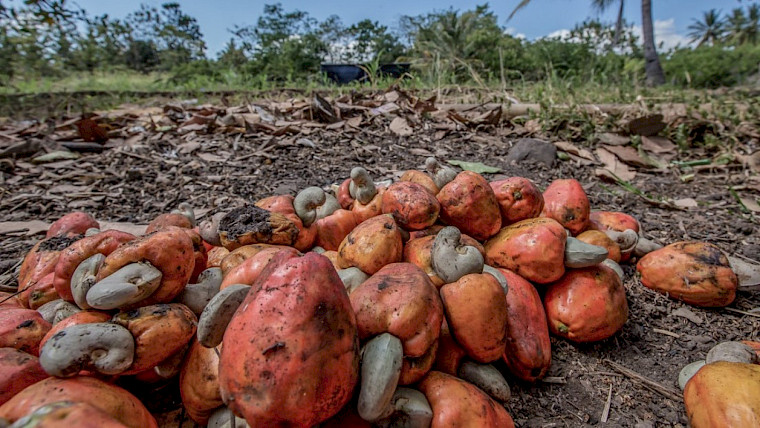
Indonesia is the seventh largest cashew producer, with East Nusa Tenggara being the largest contributor to Indonesia’s cashew production at 7 percent. Cashews require several drying stages during the post-harvest process. Once the cashews are opened from their shell and if they are dried using a commonly used method by spreading them on the ground, they can be exposed to rain and can be easily contaminated by dirt, insects and mould which can spoil the highly valued commodity. Traditional drying also has limitations during the rainy season. Therefore, better drying methods are needed to improve quality, which in turn could help farmers increase their income.
In this experiment, we aimed to address the specific needs of cashew farmers in Ile Padung village where they currently use an electric oven to dry opened cashews with the testa (thin skin) still on. The farmers find this process costly and inefficient due to the frequent power outages in the area that slows down the drying process.
The solution
What we tested
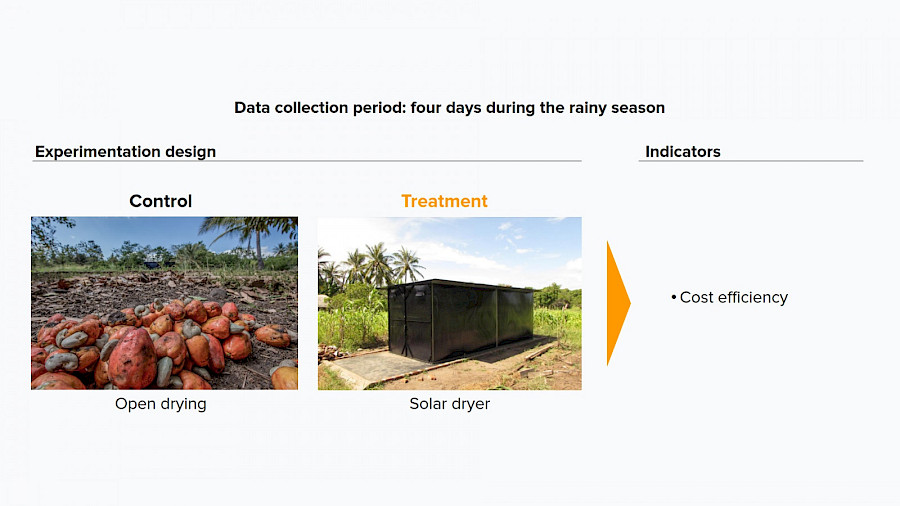
We tested drying cashews with the testa still on (soft skin) using both the modified solar dryer and the electric oven, and compared the results to determine whether electricity costs would be reduced.
Project design
How we ran it
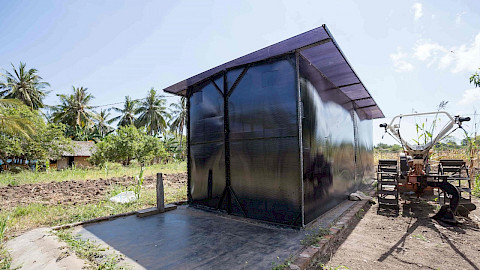
In this project, we built a solar dryer to aid the drying process of cashews covered with testa (soft skin). The solar dryer was a modified design from a previous experiment we conducted with copra, with some adjustments in size and materials. The materials used were accessible locally and more affordable for the farmers. In addition, gravel was added to the base of the dryer to capture heat more effectively. The dryer was designed with four racks, each with seven to 13 layers, allowing farmers to dry a maximum of 300 kg cashews each time.
From July to December 2017, we compared the cost efficiency of drying cashews using:
- Electric oven (control) -- testa covered cashews were dried using the electric oven.
- Solar dryer + electric oven (treatment) -- testa covered cashews were first dried using the solar dryer, followed by final drying in the electric oven to obtain the necessary moisture level.
The technology
Results
What we learned
The dryer was able to achieve a moisture level of 14.6% in five hours, though it was not able to obtain the required moisture level of 10%. The electric oven required 12 hours to dry the cashews to achieve the 10% moisture level. As a result, the farmer combined the two methods to reduce electricity costs, and only used the electric oven for the final drying stage to reach the necessary moisture level.
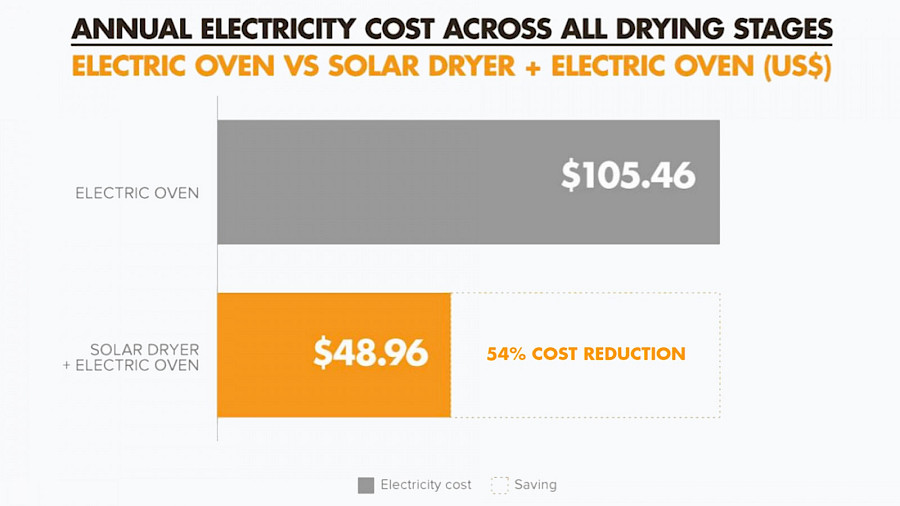
We found that by combining the modified solar dryer with the electric oven to dry the cashews reduced the electricity costs by 54 percent.
Conclusion
The results of the experiment showed that drying cashew using the modified solar dryer combined with an electric oven for the final drying process was able to reduce the electricity costs compared to using only the electric oven.
Additional considerations
The electric oven has a capacity of 40kg which requires 12 hours to dry the cashews to reach the required moisture level. The solar dryer has a 300kg capacity and requires 5 hours to dry at full capacity during the dry season. Based on this experiment, therefore, it was possible to reduce the time needed to dry testa covered (soft skin) cashews by 90 percent by using both the solar dryer and electric oven.
The moisture level of the cashew from the solar dryer reached 14.6% – this is within the global industry standard for cashew processing of 14 to 15%, however the requirement of the farmers in Ile Padung is to reach a moisture level of 10%.
Read more
Project profile
Reports and references
Rachman, Abdul. (2017). Increasing Farmer Incomes: Solar Drying Solutions Phase Two Project Report.