

Aquaponic Food Production
Food insecurity among COVID-19 affected communities
Summary
We tested an aquaponic food and vegetable production system to increase food security for communities affected by COVID-19 in Bali
Why we rated it this way
The system successfully produced a high yield of vegetables (100% of seedlings survived until harvest) and fish (79% of fingerlings reached harvest size), meeting local market standards and household annual consumption needs. However, the system requires a significant initial investment, and the complexity of its ongoing management may be challenging for some communities to sustain.
The problem
What we found
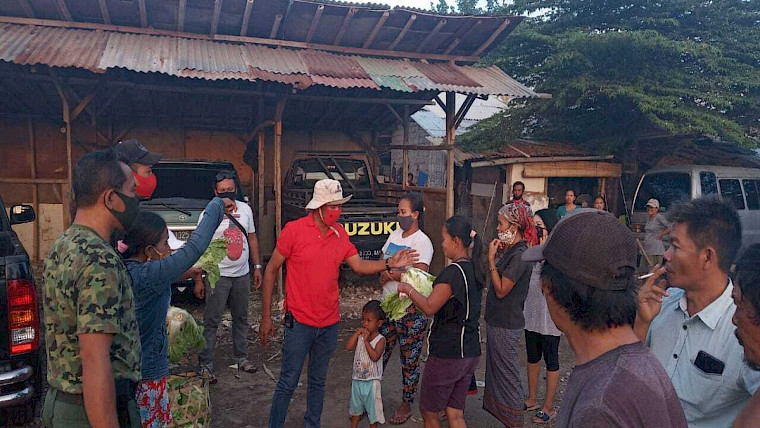
In 2020, communities in Bali were heavily affected by the COVID-19 pandemic. According to Kopernik’s 2020 rapid assessment survey, 81 percent of respondents saw reduced incomes, and half of them permanently or temporarily lost their jobs. Respondents cut their expenses by 34 percent in response, with many cutting food-related expenses. Furthermore, limited space for home gardens or agriculture on family properties limited their ability to grow their own food. The government provided temporary support of IDR 200,000 to each household to buy food via E-warung for six months, but this aid is not sustainable in the event of a prolonged pandemic. Therefore, there is a critical need to support Balinese communities severely affected by COVID-19, with longer-term solutions to ensure food security over time.
The solution
What we tested
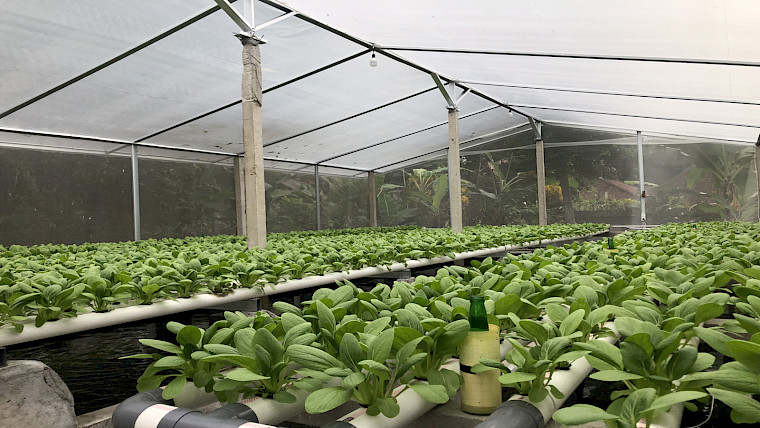
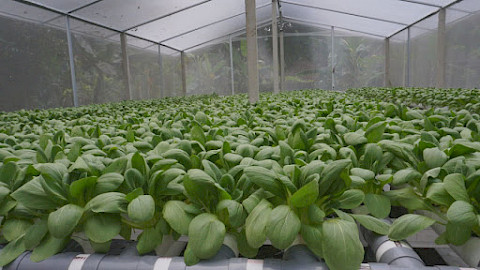
As one of its community support initiatives in improving food security, Kopernik constructed an aquaponic facility to cultivate plants and fish simultaneously. In an aquaponic system, freshwater fish are raised in a pond, and their waste is converted into nutrition for hydroponically-grown plants. Such a solution could provide community members with a consistent source of food (fish and vegetables) for their own consumption or to generate additional income.
We tested the ability of a community-size aquaponic system to maintain an environment suitable for fish and vegetable growth and production. We tracked changes in the pond water’s Total Dissolved Solid (TDS) value and ammonia content, measuring changes in vegetable size and fish weight, and monitoring fish survival rates and vegetable yields.
Project design
How we ran it
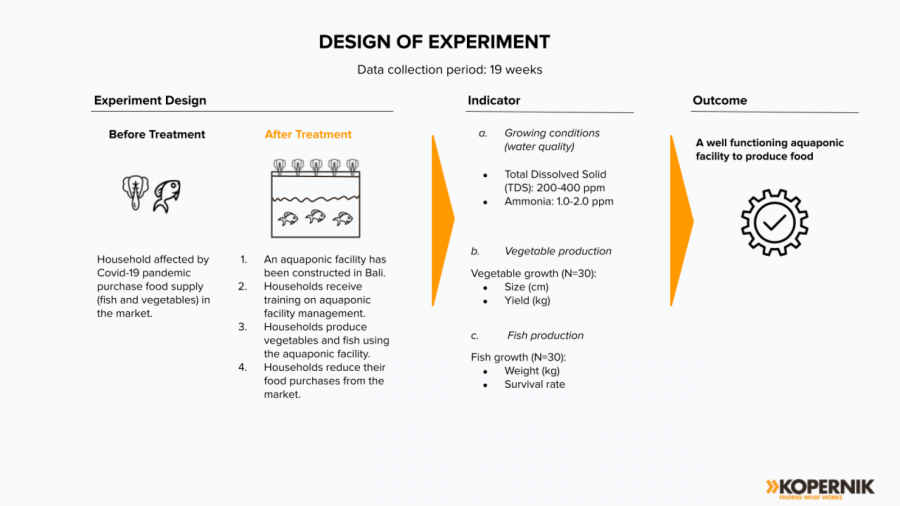
An experiment was conducted to test whether Kopernik’s aquaponic facility could effectively grow vegetables (bok choy) and fish (tilapia), and whether the vegetable and food yields were suitable for consumption and met local market demands.
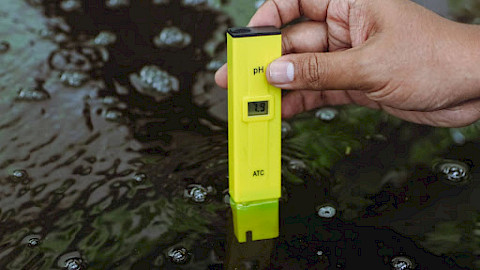
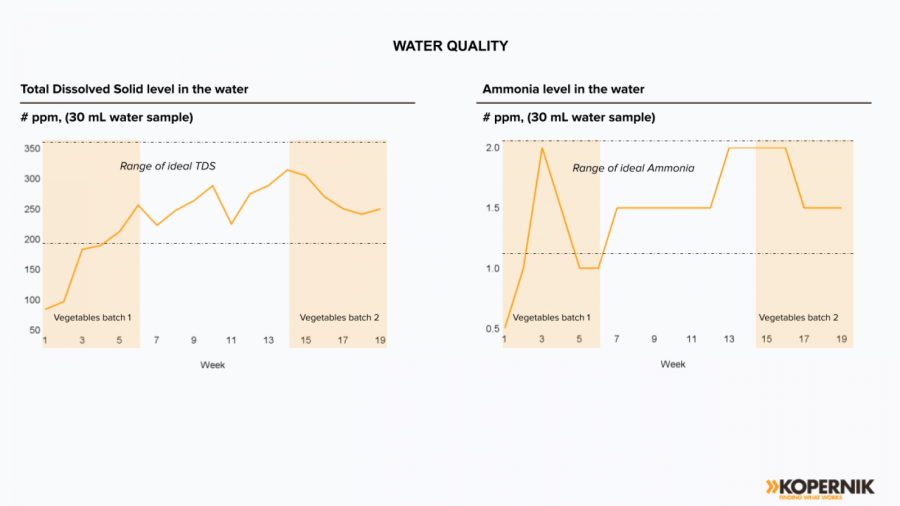
We assessed growing conditions by conducting weekly water quality measurements over a span of 19 weeks to evaluate suitability for both vegetable and fish growth. Each week, a 30 mL water sample was collected from the pond and tested for TDS (Total Dissolved Solids) and ammonia content.
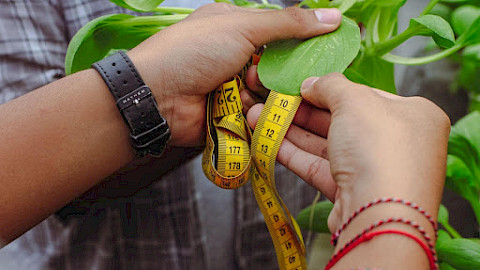
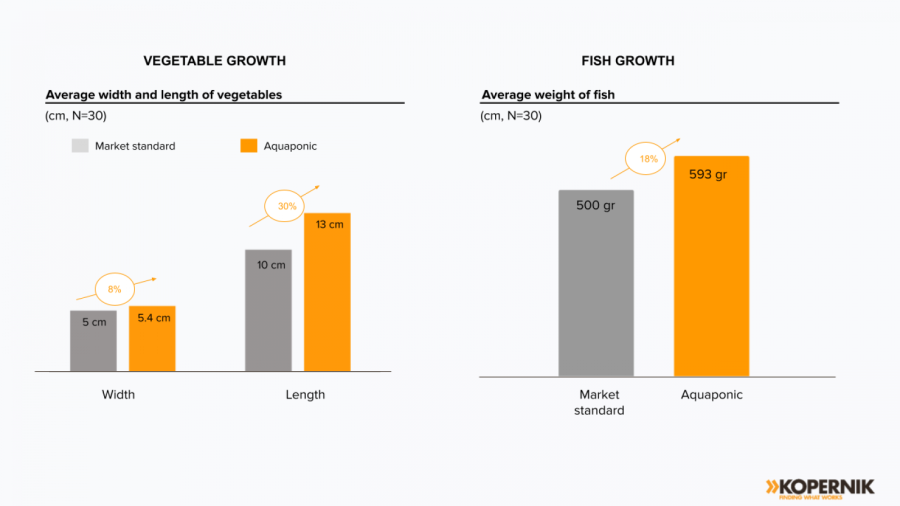
To test the functionality of the aquaponic system, we monitored and evaluated vegetable and fish growth. For vegetable growth assessment, we measured the dimensions of two batches of 30 bok choy plants after a 40-day growth period. We quantified yield by comparing the number of planted seedlings with the number of harvested vegetables.
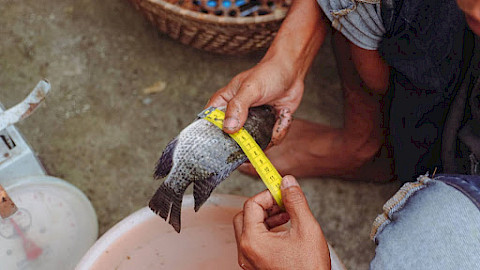
For fish growth evaluation, we recorded fish weight at weeks 9 and 19, followed by harvesting them for consumption. We also calculated the survival rate by comparing the number of fish fingerlings initially introduced, with the number of fish harvested at the end of the experiment.
The technology
Results
What we learned
Growing conditions (water quality)
For the first four weeks of the experiment, we found that the TDS level of the pond water was consistently below 100 ppm and there was a high level of ammonia (more than 2 ppm), indicating that water quality was not ideal for growing fish and plants. To improve water quality, we installed an aerator to dilute the water, stimulate fish growth, and produce a sufficient amount of nutrients for the vegetables. After that, from weeks 4 to 19, the pond water’s TDS and ammonia levels fell to within the acceptable range of 200-400 ppm and 1-2 ppm, respectively.
Vegetable growth
During the first planting cycle, we found that the average size of bok choy was 7.0 cm long and 3.1 cm wide, below the ideal size sold in local markets. Thus, none of the vegetables planted could be harvested for sale. Of the 30 samples, we found that 83% survived while others failed to grow. This was likely due to insufficient nutrients in the pond water, resulting from the smaller-than-expected fish and their limited waste production.
Based on these results, at the beginning of the next planting cycle we added 350 ppm of chemical fertiliser to the pond water to supplement the nutrients from the fish manure. The nutrients from fish waste eliminated the need for excessive amounts of growth-stimulating fertilisers usually applied in hydroponic systems, so we added half the amount conventionally applied. After 40 days, the vegetables grew to an ideal size: across the 30 samples of bok choy measured, the average length was 13.0 cm, and the width of the was 5.4 cm. By the end of the experiment, all of the vegetables that we planted could be harvested and met market requirements.
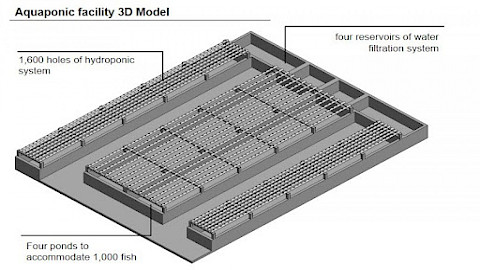
The aquaponic facility could produce 1,500 bok choy plants in a 7mx 12m facility, whereas conventional land farming in similar size could produce 960 plants (planting distance= 30 cm), indicating more efficient use of space in the aquaponic system.
Fish growth
We raised 250 fish fingerlings in the aquaponic pond. By the end of the experiment, the fish raised in the aquaponic facility was large enough to be harvested, with an average weight of 593g and a survival rate of 79%. The weight was considered ideal (400-600g), while the survival rate was almost on a par with the ideal (80%). Most fish deaths occurred in the early weeks due to ammonia poisoning, primarily during the high levels of ammonia present in their early growth stage. After the aerator was installed, the oxygen content increased and ammonia concentration reduced, supporting fish growth and preventing more fish deaths.
Aquaponic production analysis
In one year, an aquaponic system can produce seven cycles of vegetables, yielding 288 kg each, and two cycles of tilapia fish, yielding 160 kg each. This setup can fully supply vegetables (recommended serving: 146 kg per capita per year) and fish (average consumption: 50.49 kg per capita per year) for a household of four.
The initial investment for acquiring materials and constructing the aquaponics system is about IDR 65 million. The operational costs for producing seven cycles of bok choy (yielding 2,106 kg) and two harvests of tilapia fish (yielding 320 kg) are estimated at IDR 8.6 million. In contrast, the total value of the produced yields is estimated at IDR 24 million. This means that the initial investment can be recovered within 4.2 years of operating the aquaponic, making it a viable option for communities to supplement their nutritional intake and income.
Thus, excluding the fixed costs of building the facility (which would likely require external support), the aquaponics system designed by Kopernik could provide the Abiansemal community with an additional income source, along with a self-sustaining and reliable food supply.
Update as of end of November 2024: Three years after the experiment, the aquaponic facility continues to be used by the community and is producing fish and vegetables as expected. Additionally, it is now being used for educational purposes by local university students.
Conclusion
The aquaponics system, while requiring initial investment and careful management, proved effective in addressing food insecurity and generating additional income for the Abiansemal community. It successfully produced high-quality vegetables and fish, meeting local market standards and household needs, and the initial investment could be recovered within 4.2 years. However, the experiment highlighted the importance of water quality management, nutrient supplementation, and careful plant and fish selection for optimal system performance. By addressing these challenges, aquaponics can be a sustainable and scalable solution for food production.
Read more
Project profile
Reports and references
Anggraeni and P D W Sari, (2020), Nursery method of Jatimbulan Tilapia (Oreochromis niloticus) in Pasuruan, East Java, IOP Conf. Ser.: Earth Environ. Sci. 441 012133
Azhari, Deidy. (2018). Kajian Kualitas Air Dan Pertumbuhan Ikan Nila (Oreochromis niloticus) Yang Dibudidayakan Dengan Sistem Akuaponik. Jurnal Akuatika Indonesia.
Lennard, Wilson & Goddek, Simon. (2019). Aquaponics: the basics. aquaponics food production systems. springer open.
Li, et al. (2018). Performance of a pilot-scale aquaponics system using hydroponics and immobilised biofilm treatment for water quality control. Journal of Cleaner Production
Pandaleke, et al (2023) Response of Pakcoy (Brassica rapa L.) Growth and Production to Applications of Various Concentrations of Liquid Organic Fertilizers. Jurnal Bios Logos, Vol. 13 (No.1), Februari 2023
Sallenave, Rosanna. (2016). Important water quality parameters in aquaponics systems. circular 60. NM State University.
Sastro, Yudi. (2016). Teknologi Akuaponik Mendukung Pengembangan Urban Farming. Balai Pengkajian Teknologi Pertanian (BPTP) Jakarta.
Somerville, Christopher, et al. (2014). Small-scale aquaponic food production integrated fish and plant farming. Rome. Food and Agriculture Organisation of the United Nations.