

Cacao Pod Breaker (1)
Slow performance and unsafe extraction of cacao beans from the pods
Summary
We tested the performance of a simple cacao pod breaker designed to break two cacao pods simultaneously in Tabanan, Bali.
Why we rated it this way
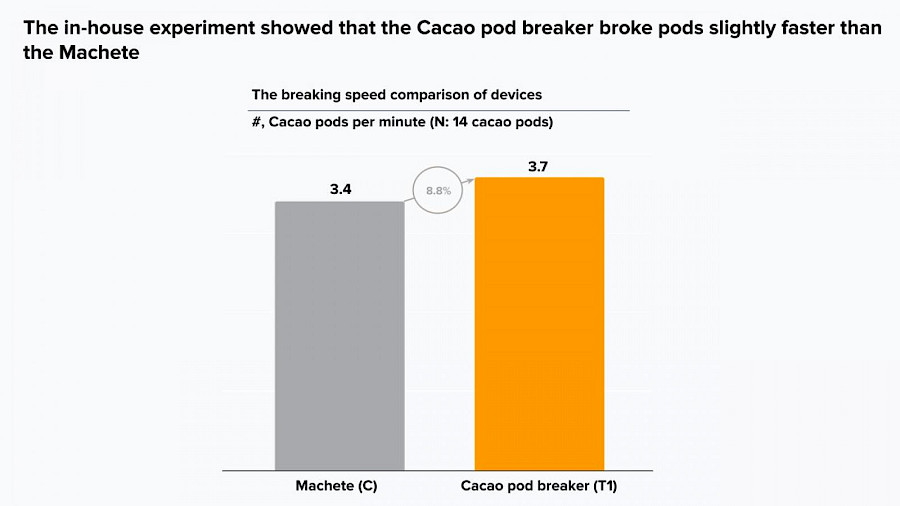
While initial testing of the Cacao pod breaker indicated it could break cacao pods slightly faster than the Machete, the device requires further development to strengthen its stability and sharpness features.
The problem
What we found
In 2022, Indonesia emerged as the third-largest global producer of cacao beans, yielding approximately 667.3 thousand metric tons (Source: Statista). In Indonesia, smallholder farmers play a significant role in driving the cacao industry, contributing significantly to cacao production compared to large plantations. However, they still fully rely on a traditional approach of processing cacao.The speed of cacao seed extraction is crucial during post-harvest processing, especially when farmers intend to ferment the beans. Fermentation boxes typically require 500-650 kilograms of cacao beans, and failing to meet this quantity can result in lower quality fermentation. To ensure high-quality fermentation, the seeds must be quickly extracted from the pods.
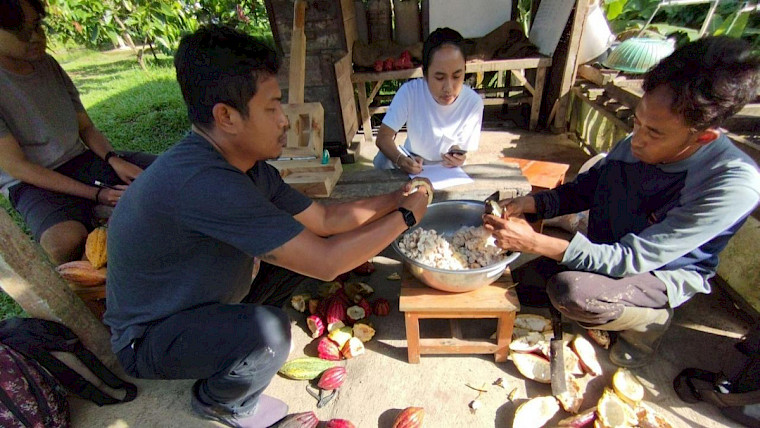
After harvesting cacao pods, farmers in Indonesia typically use machetes to crack them. This practice poses a major risk to farmers as repetitive and forceful movements with a machete can cause musculoskeletal injuries. Additionally, the long working hours and associated stress further contribute to health risks.
The solution
What we tested
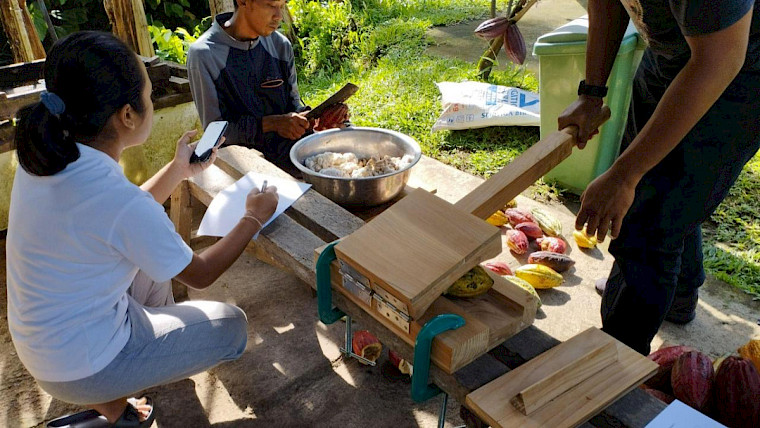
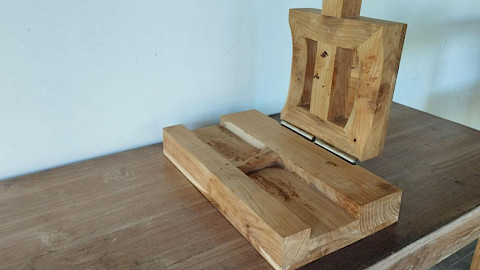
To address this issue, we designed and tested a prototype tool for cacao bean extraction, aiming to enhance process efficiency and ensure farmer safety.
Project design
How we ran it
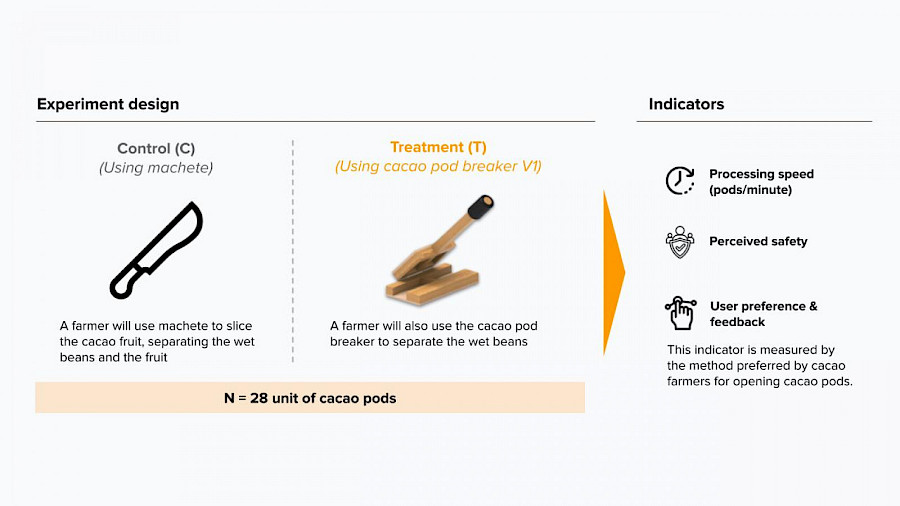
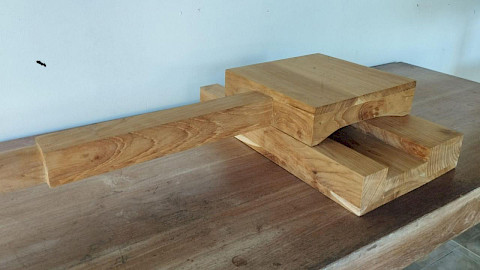
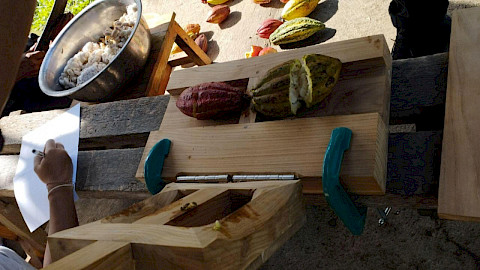
The experiment involved two groups. The first group, the control group, featured a farmer using a machete, a common practice among cacao smallholder farmers in Indonesia. The second group, the treatment group, used a cacao pod breaker, a tool designed to break two cacao pods simultaneously, leading to faster cacao beans extraction (Hereafter, we will refer to the tool as V1). A total of 28 cacao pods were used, divided equally between both groups. We worked together with cacao farmers from Tabanan, Bali to test the tool.
We focused on three main indicators during the experiment:
1. Speed: We measured how many pods are processed per minute, on average. Using a stopwatch, we recorded the time from the moment users began working with a new pod until all beans were completely separated. This process was repeated for all harvested pods to ensure consistent data collection.
2. Safety: We gathered user feedback on the perceived safety of V1 compared to a machete, aiming to assess the reduction in risk during use.
3. Overall user preference: We collected comprehensive feedback from users regarding their overall experience with V1. This included aspects such as ease of use, comfort, and any additional features users found beneficial or lacking. These insights provided a broader understanding of how well the device met the practical needs of farmers.
The technology
Results
What we learned
The experiment showed that the treatment group was only slightly faster in separating the cacao beans from the pods than the control group. The average time difference between both groups was 8.8%, with the treatment group being 0.3 seconds faster than the control group - a marginal difference.
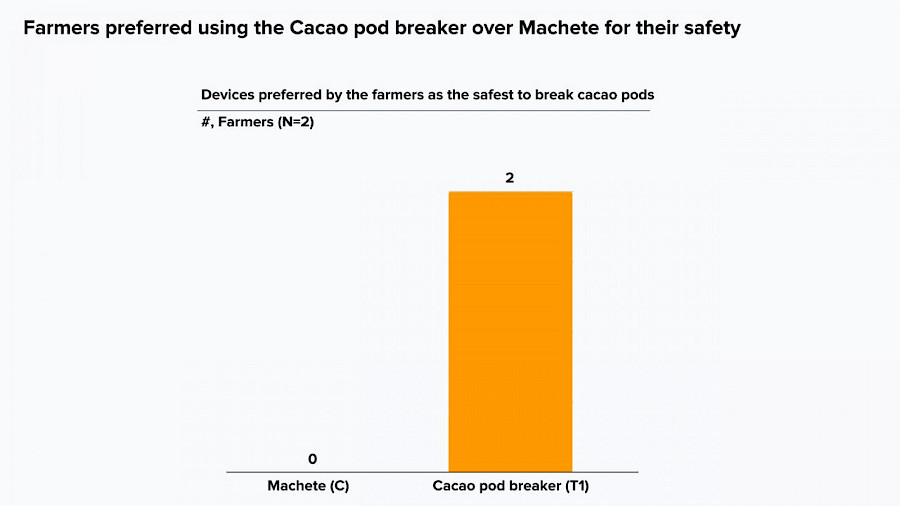
Users who participated in this experiment identified the V1 pod breaker as the safer tool for breaking cacao pods, as it removed the risk of accidental cuts and injuries during the extraction process using a machete.
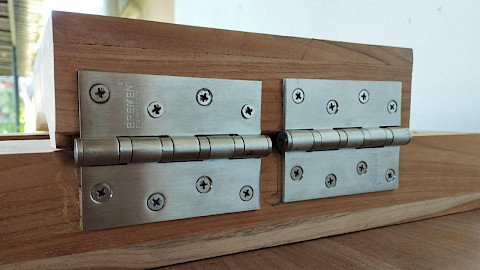
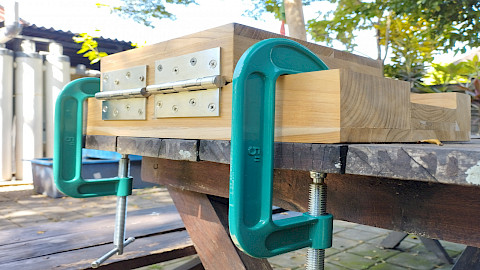
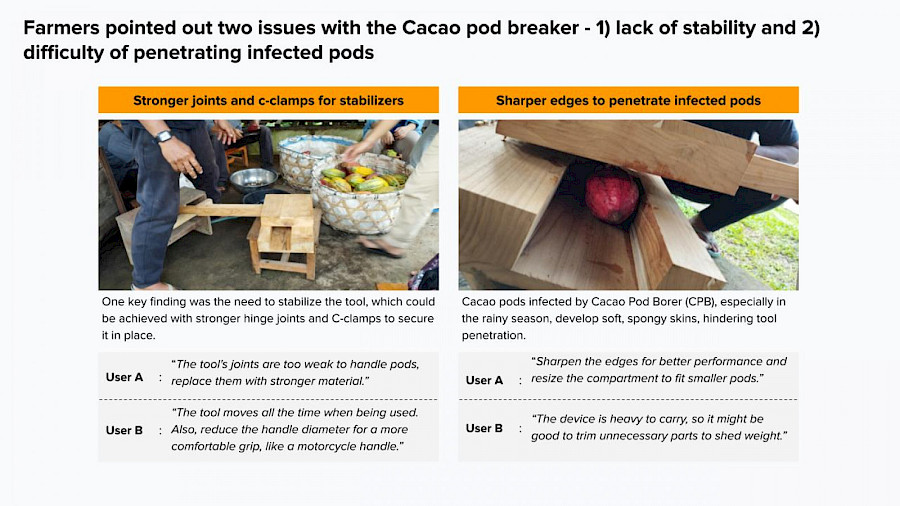
In terms of user feedback, it was noted that the V1 tool's ability to break two cacao pods simultaneously results in high pressure on stress points, particularly the hinges and clamps, and in order to withstand this pressure, strong metal hinges and sturdy clamps are needed. During testing, it was noted that the V1 tool struggled to break cacao pods infected by the Cacao Pod Borer (CPB), as it lacks the sharpness needed to penetrate the harder shells of infected pods.
Conclusion
Initial tests showed that the V1 pod breaker opened cacao pods only slightly faster than a machete, and required further improvements in both stability and sharpness.
Building on lessons learned from this experiment, Kopernik will incorporate more robust metal hinges and durable clamps into the tool for its next iteration, while also ensuring that users can test both methods. Further optimization of the bean separation mechanism will also be considered to improve efficiency and facilitate eventual widespread adoption.
Read more
Project profile
Wigita, Putu Arya, M. Fahrian Yovantra, Abrar Ridhollah, and Ni Kadek Adnya Kusuma Sari (2024). https://www.kopernik.info/en/current-projects/improving-the-cacao-postharvest-process-with-a-cacao-pod-breaker