

Fish Cooling Solutions for Wholesalers
Inefficient fish chilling process affecting the freshness of fish
Summary
We tested the performance of an improved chilling method using a combination of an insulated container, a reduced amount of ice, and gel packs to maintain a low temperature during the chilling process prior to shipping of fish.
Why we rated it this way
The gel packs with ice in insulated containers improved the effectiveness of the chilling process to maintain fish freshness.
The problem
What we found
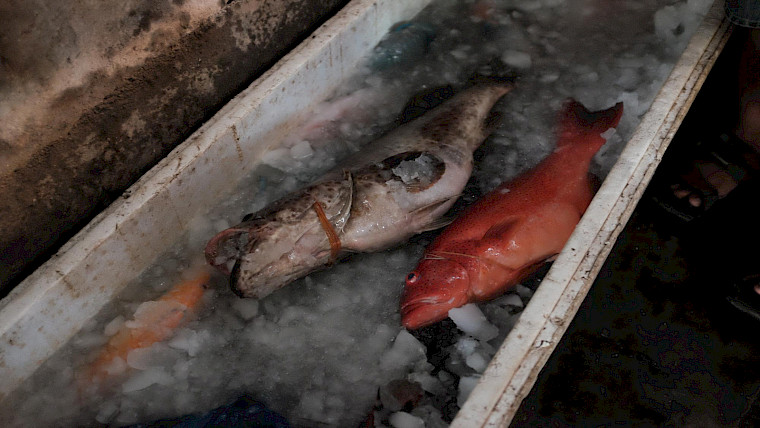
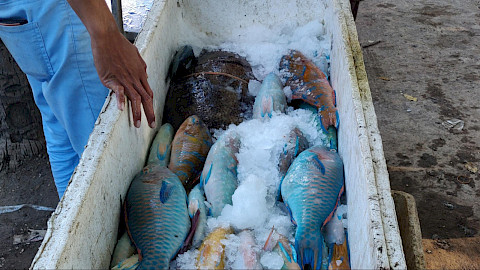
Being the third-largest marine producer in the world, Indonesia produced 6.71 million tonnes of fish and seafood, contributing 8 percent of global marine capture. In 2019, the fisheries sector in Indonesia contributed around 2.65 percent of the country’s total gross domestic product (equal to 30 million USD) - with fish exports reaching all five continents, with Singapore and Malaysia as the largest fresh fish consumers. The process of chilling fish by fish wholesalers in East Nusa Tenggara to prepare fish for export typically uses ice, seawater, and a styrofoam box to submerge the fish in chilled seawater. During this process, the ice melts rapidly affecting the freshness of the fish.
The solution
What we tested
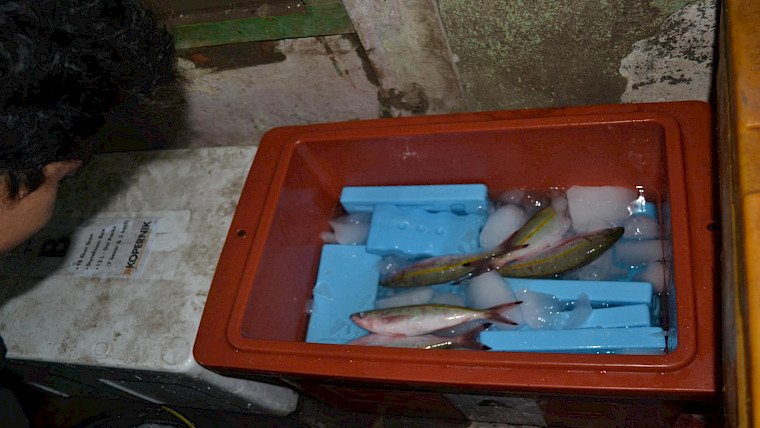
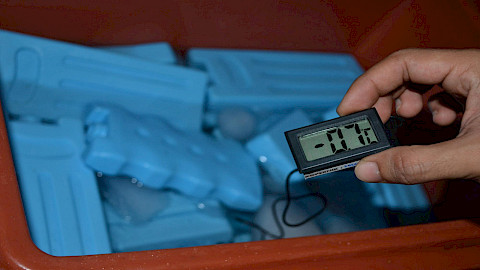
Kopernik tested a cooling solution consisting of an insulated container, less ice that is typically used, and gel packs to keep a low temperature during the chilling process to better preserve the fish’s freshness. The insulated container is made from polycarbonate with hard foam inside to maintain the inner temperature. The gel packs are able to be refilled every two years to maintain optimal performance. The ice is produced by the wholesalers.
Project design
How we ran it
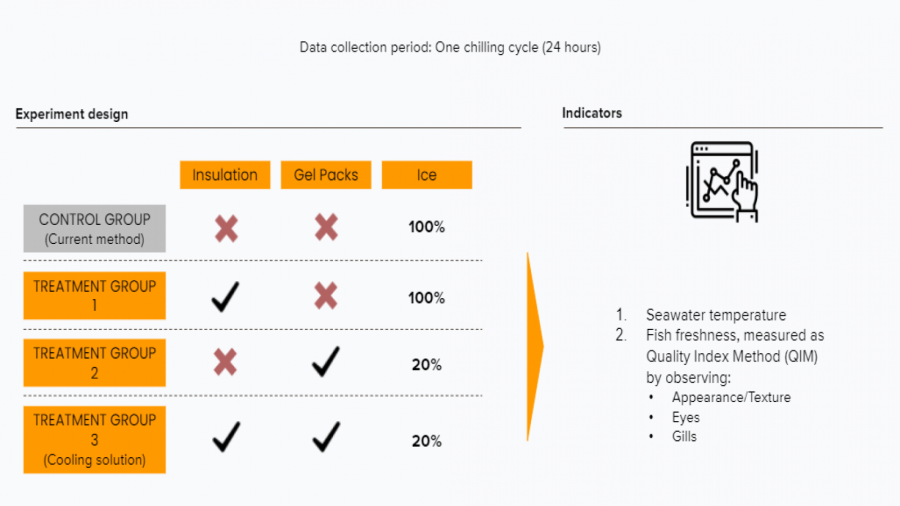
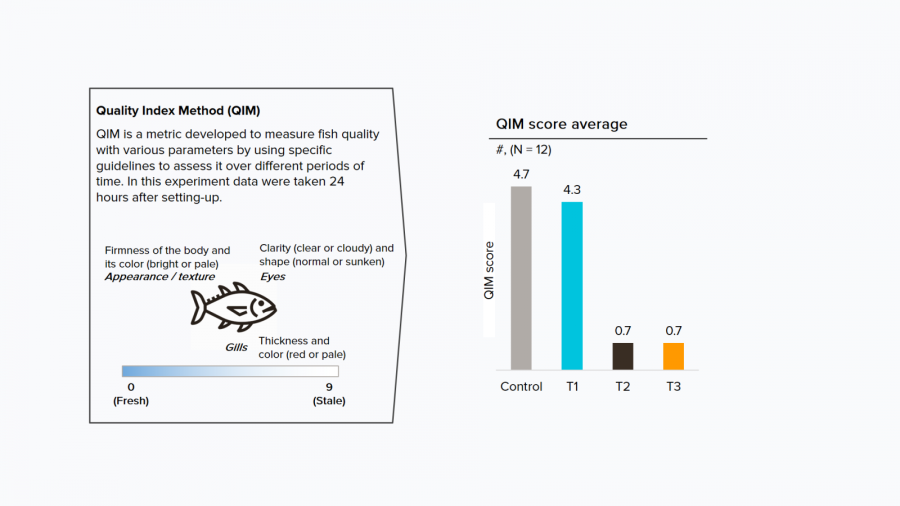
We compared the performance of four different set-ups of gel packs, ice, styrofoam boxes, and insulated containers. We worked with a wholesaler in Sikka, East Nusa Tenggara, to test the effectiveness of the solutions. The experiment was conducted over 24 hours, the typical duration of the chilling process. For all groups, we measured the seawater temperature and fish freshness. In assessing fish freshness, the Quality Index Method (QIM) -recommended by FAO- was used to measure several sensory parameters. The experiment was conducted from May to September 2019.
The technology
Results
What we learned
The experiment showed that the combination of ice and gel packs, in Treatment Groups 2 and 3, kept the temperature low for longer while the type of container did not significantly influence the temperature.
Better fish quality, shown by the QIM score, was achieved by the treatment groups that used thegel packs: Treatment 2 and Treatment 3. The mean QIM score for Treatment 1 was 0.7, four points lower than the control group or current method (the lower the QIM score, the fresher the fish).
Conclusion
The experiment found that the cooling solution - a combination of gel packs with ice in insulated containers - improved the chilling process, maintaining fish freshness for longer. Using gel packs in addition to a reduced amount of ice is key to maintain fish freshness, while the type of container used was not a significant factor in maintaining the freshness of fish.
Additional considerations
Although Treatment group 2 and Treatment group 3 reached the optimum temperature levels, Treatment 3 is considered to be a better option considering the longevity of the products used - insulated containers and gel packs. The total cost required for a cooling solution (gel pack & insulated box) is US$73.19 which within four months, the initial investment (excluding freezer cost) could be recovered. Additional information is available in the project report (see Reference).
Read more
Project profile
Reports and references
Saraswati, Made Sania and Mochamad Dwi Ergianto. 2021. Improving Fish Preservation: Cooling Solutions for Wholesalers Project Report.
Kopernik Insights
SWITCH-Asia. (2021). MATA KAIL empowers around 2,000 youths in Indonesia's fish processing sector.