

Haze Safe School
Low indoor air quality as a result of smoke from forest fires
Summary
We tested the performance of Haze Safe School air filtration configuration intended to reduce the presence of harmful particles in the air in West Kalimantan during the haze season.
Why we rated it this way
The ‘Haze Safe School’ air filtration configuration was unable to improve the air quality to meet safety standards inside the classroom.
The problem
What we found
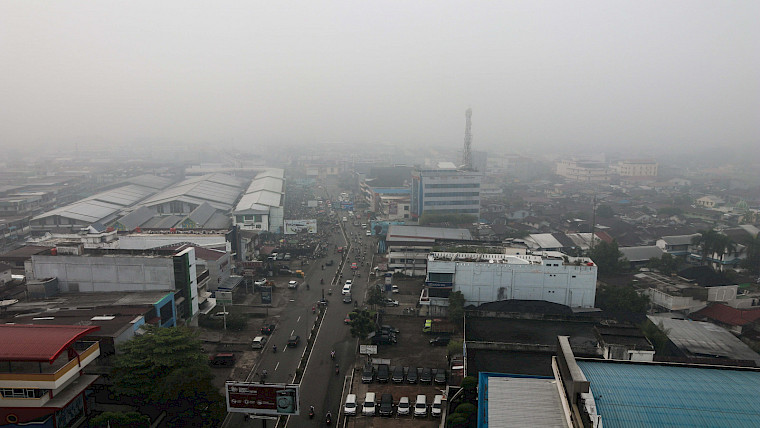
Indonesia regularly experiences extreme smoke or haze conditions due to forest fires and land fires, mostly caused by the expansion of agricultural land through the practice of slash-and-burn farming methods. which are commonly carried out to convert large areas of land (often peatland) into palm oil plantations. In August to October 2019, there were 3,919 forest fire hotspots detected in West Kalimantan, a very significant increase from previous months (May to July) during which period there were on average 160 hotspots detected. When there are fires, these lead to extreme haze conditions due to the smoke caused by the fires and people who are exposed to the dangerous smoke, in particular, children who are a vulnerable group as their lungs have not yet fully developed have a high-risk towards respiratory health issues. . School activities typically continue during the haze season, where children are exposed to the polluted air. A solution is therefore needed to protect children’s health at school during the haze season.
The solution
What we tested
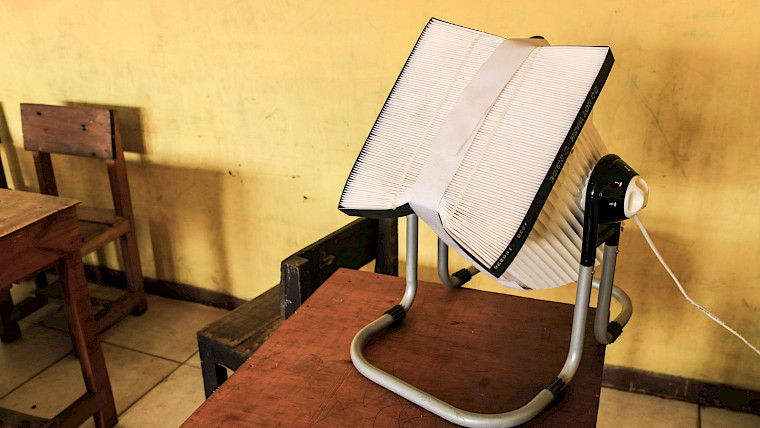
Kopernik tested a Haze Safe School (HSS) configuration, a modified version of the ‘haze-free classroom’ developed by the Ministry of Education, to understand its performance on reducing harmful particles present in the air during the haze season. The materials used for HSS are locally available products so that they could be easily adopted and replicated. We tested the HSS configuration by measuring the particulate matter (PM10 and PM2.5 levels), temperature and humidity.
Project design
How we ran it
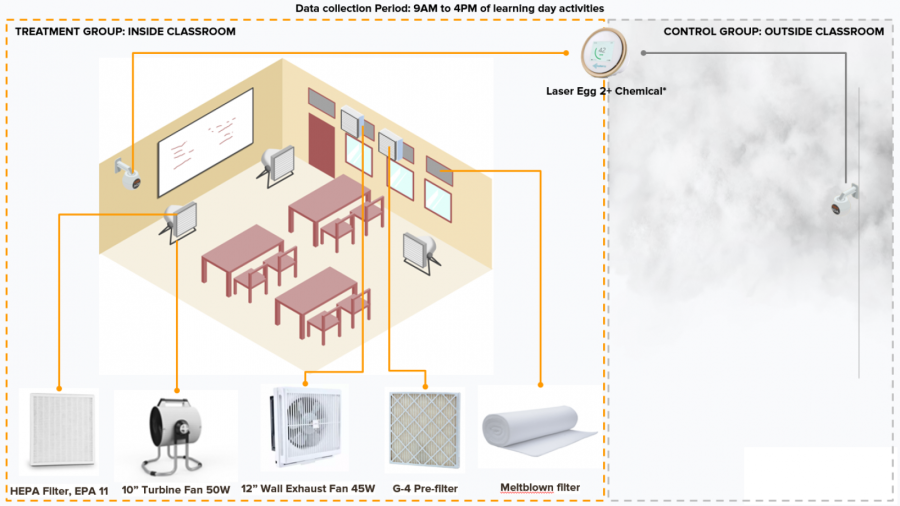
This experiment was conducted from July 2019 to October 2019. Together with Wahana Visi Indonesia, we installed a Haze Safe School configuration that consisted of 2 exhaust fans equipped with G-4 prefilter, 3 conventional fans equipped with a HEPA filter (EPA 11), and a meltblown filter to seal the entire classroom. We compared the PM levels, temperature, and humidity inside and outside the classroom using the Laser Egg 2+ Chemical, a low-cost air quality monitor, to collect real-time data every minute which is then transmitted to the cloud.
We initially planned to collect data during school days for 20 days during the haze season. However, there were some technical difficulties where school staff turned off the sensors and the school was closed for subsequent days following government instructions. Nonetheless, we collected data for one day during the haze season.
The technology
Results
What we learned
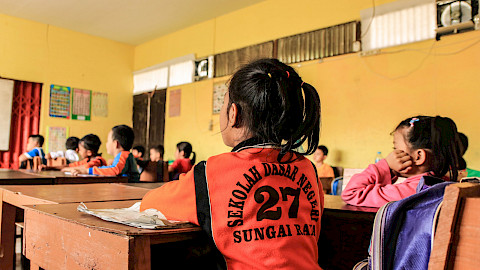
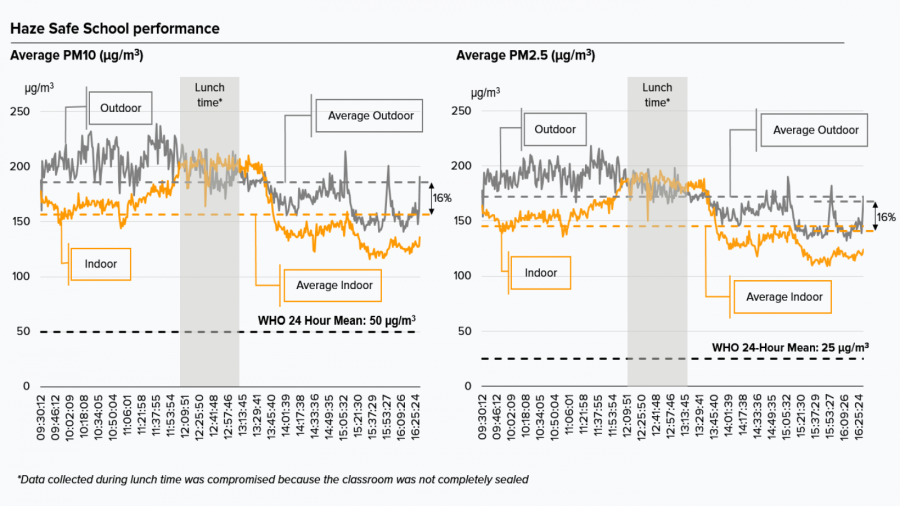
We found that the HSS configuration reduced levels of particulate matter (PM10 and PM2.5) by 16 percent inside the classroom compared to outside of the classroom. However, the HSS configuration was not capable of reducing both PM10 and PM2.5 levels sufficiently to meet the required WHO standards for air that is safe to breathe.
Conclusion
The Haze Safe School configuration was able to slightly reduce the harmful particulate matter, both PM10 and PM2.5 levels. However, it did not reach safe air quality levels inside the classroom. Further improvements are needed to meet the required WHO standards for air quality in the classroom whilst providing a comfortable study environment for students.
Additional considerations
During the experiment, classrooms full of students increased the indoor temperature by 2 degrees celsius causing students to experience discomfort and distraction which affected their learning. It was also found that using conventional fans to circulate air inside the classroom was insufficient to reduce the increased temperature and to manage humidity levels. Therefore, teachers had to open the doors and windows to let air in order to cool the classroom done. This, unfortunately worsened the air quality inside the classroom through harmful particles in the air from outside.