

Mobile Clinic for the Elderly Community
Difficulty in Accessing Healthcare Facilities
Summary
We tested the effectiveness of mobile clinic visits and a pill organizer for the elderly community in Kayu Batu, Papua, on increasing the number of times elders’ health are being assessed, as well as adherence to medications.
Why we rated it this way
Mobile clinic visits increased the number of health assessments; however, neither the mobile clinic visits nor the use of pill organizers improved medication adherence.
The problem
What we found
Elderly individuals face a high prevalence of degenerative diseases such as diabetes mellitus, hypertension, heart disease, cancer, stroke, osteoporosis, and rheumatism (Suiraoka, 2012). These conditions require regular health assessments and medication adherence to prevent complications, monitor disease progression, and adjust treatments as needed. This approach helps improve treatment effectiveness, reduce hospitalizations, and maintain the quality of life for seniors.
In Indonesia, elderly individuals can access regular health check-ups through Posyandu Lansia (integrated health posts for the elderly) at the village level. However, due to budget constraints, not all villages offer this service. Currently, only about 9,000 Posyandu Lansia, are available, covering just 11.8 % of villages across Indonesia. Additionally, the quality of these services varies by region. In rural areas, many facilities lack adequate infrastructure, which affects medicine availability and limits disease monitoring by healthcare workers.
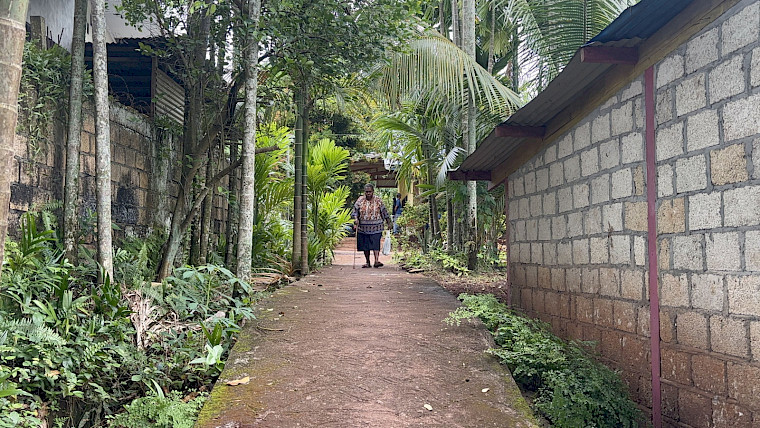
In the Papua region, Posyandu Lansia (elderly health posts) are especially limited. Many elderly individuals are reluctant to attend regular check-ups due to the long distances they must travel to reach these facilities—a challenge also prevalent in our project location. According to data from the Dinas Kesehatan Kota Jayapura, there are 57 Posyandu Lansia across Kota Jayapura, each facing distinct challenges. For example, in Argapura, South Jayapura District, the Posyandu Lansia lacks a dedicated venue for its activities, resulting in low participation from elderly residents. In contrast, in Kampung Kayu Batu, North Jayapura District, the main issue is accessibility: elders must walk from the coastal area to a Posyandu Lansia located on a hill, leading to many to miss their regular health check-ups. Additionally, even among those who do attend, medication adherence is a concern, as many elderly individuals often forget to take their prescribed medicine regularly.
The solution
What we tested
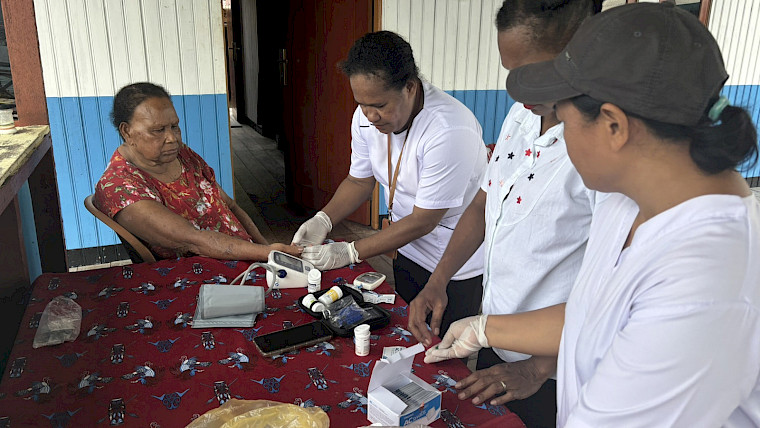
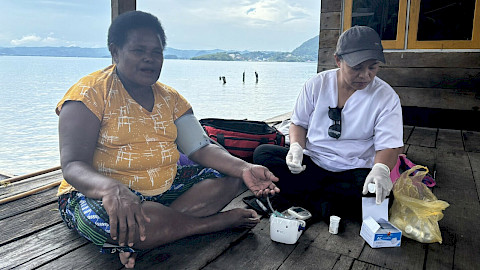
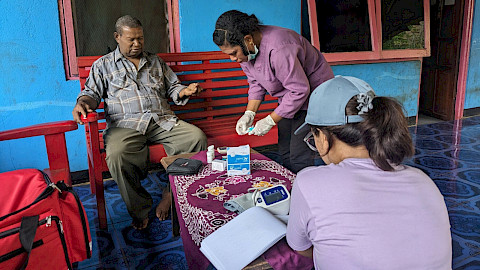
Kopernik proposed a mobile clinic system designed to increase the frequency of health assessment amongst the elderly population. Furthermore, we will also introduce the use of pill organizers to increase medicine adherence.
Project design
How we ran it
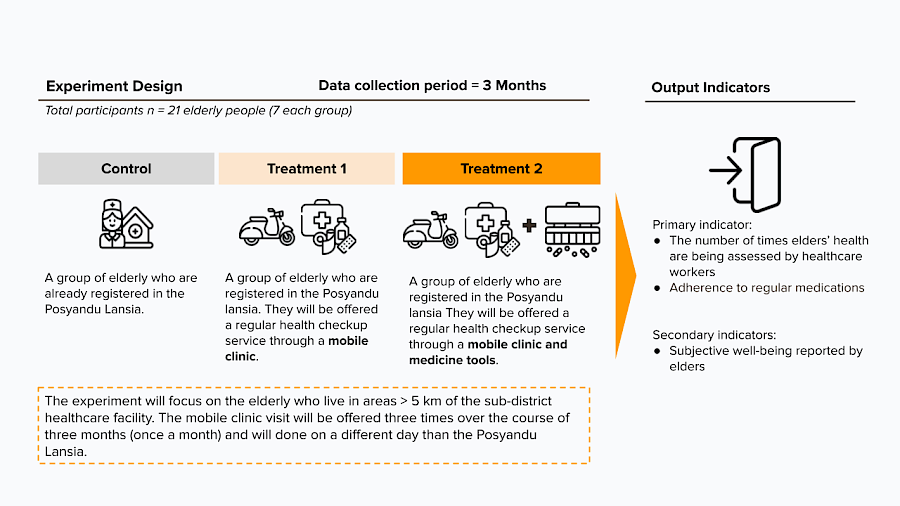
The mobile clinic experiment was designed with one control group and two treatment groups. Elderly participants in the control group continued their usual health assessments at the Posyandu Lansia, while elderly participants in the two treatment groups received health assessments through mobile clinic visits. To test the effectiveness of pill organizers in improving medication adherence, the elderly participants in the second treatment group were provided with pill organizers and trained on how to use them, while participants in the control group and the first treatment group did not receive any pill organizers.
Careful consideration was given in selecting elderly participants for the experiment. First, participants had to be registered members of Posyandu Lansia in Kayu Batu. Second, only those registered members living more than five kilometers from the nearest healthcare facility were selected as candidates. Finally, 21 elderly participants were randomly assigned to the control and treatment groups from the pool of eligible candidates. Since the participants lived either in stilt houses above the sea or in the surrounding hills, we ensured that both locations were equally represented in each group.
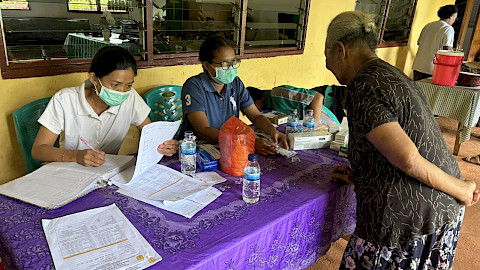
The experiment was conducted over three months, from October to December 2024, in collaboration with healthcare workers from Puskesmas Kayu Batu and cadres from the Efrata Kayu Batu Indonesian Christian Church (GKI Efrata). During this period, all elderly participants were allowed to attend their monthly Posyandu Lansia visits as usual, but those in the treatment groups were offered a mobile clinic visit as well. Healthcare workers recorded the attendance for both Posyandu Lansia and mobile clinic visits to measure the attendance rate. To evaluate medication adherence, healthcare workers inspected the prescribed medications, with any leftover medicine indicating non-adherence.
The technology


Results
What we learned
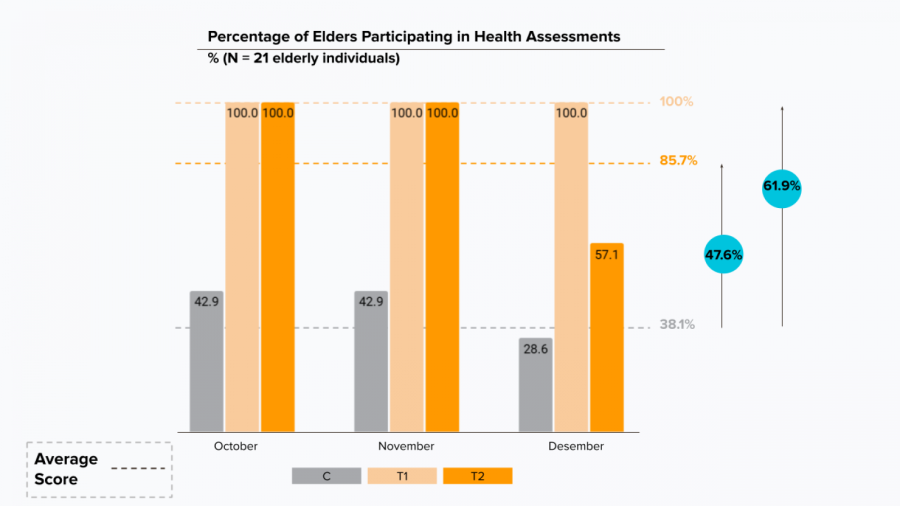
Health-assessment coverage improved dramatically in the two treatment groups. Over the three-month study, every elder in Treatment 1 was assessed (100%), and 85.7% of elders in Treatment 2 received an assessment, compared with only 38% in the Control group.
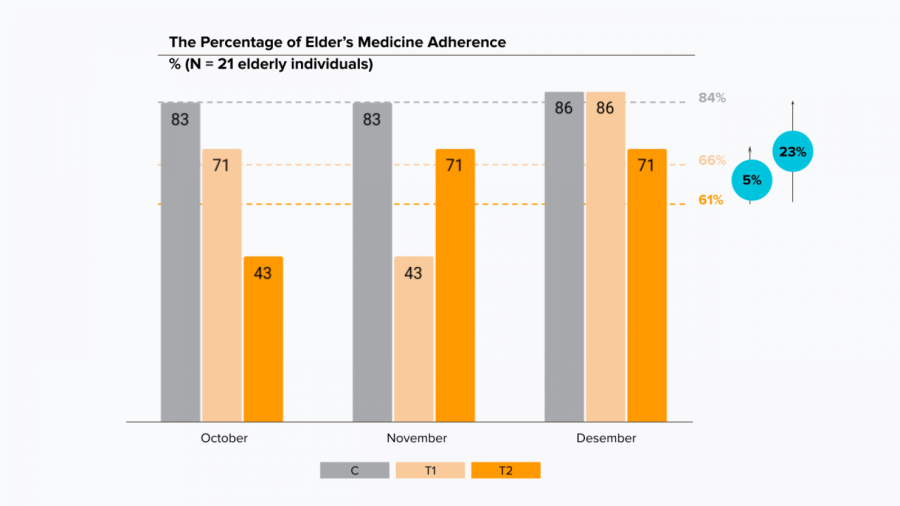
However, medication adherence remained low across all groups. 78% of elders in the Control group took their medications as prescribed, while adherence was 53% in Treatment 1 (mobile clinic only) and 51% in Treatment 2 (mobile clinic plus pill organizers). Follow-up interviews revealed that pill organizers were not the main barrier. Since no doctor accompanied the mobile clinics, prescriptions had to be phoned in, and medications were not dispensed on-site. Additionally, many elders live far from pharmacies, making it difficult for them to obtain medications. As a result, they often ration their pills, saving them for days when symptoms are more severe rather than taking them daily. Until these supply challenges are addressed, pill organizers alone are unlikely to improve adherence..
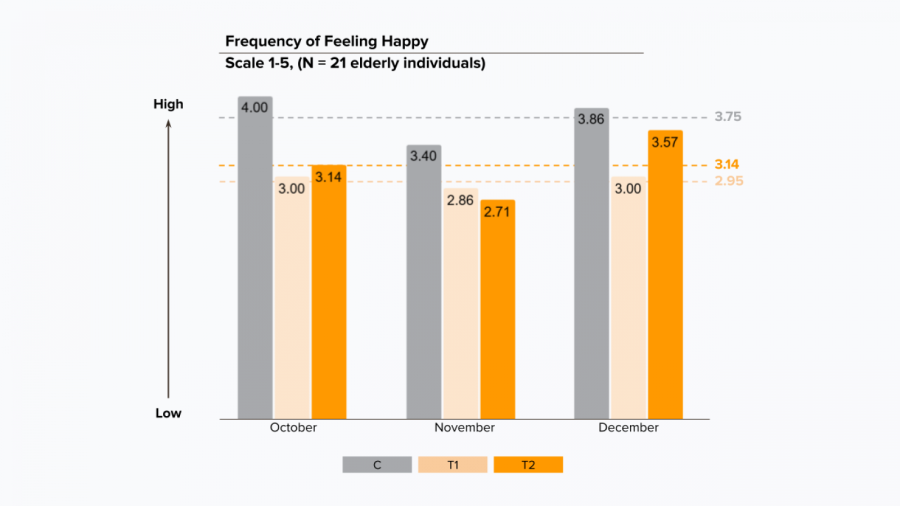
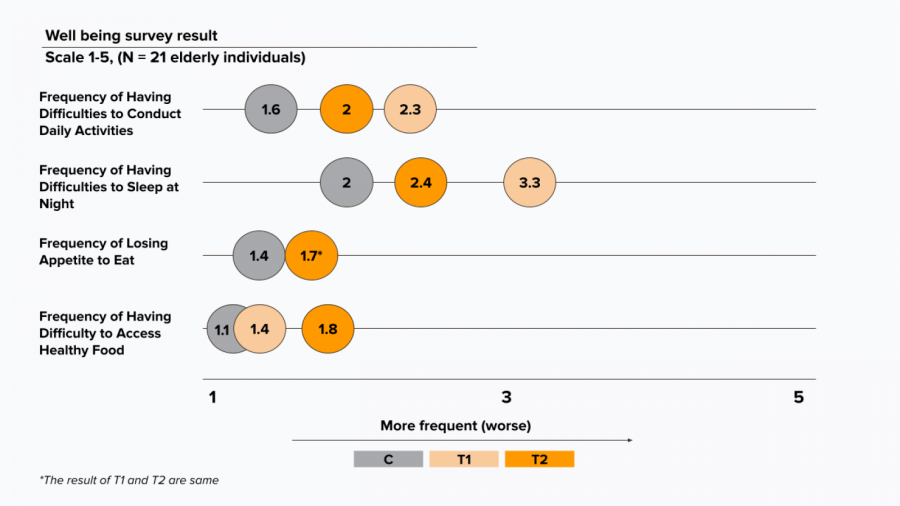
Alongside the primary indicators, we conducted a well-being survey to gauge each participant’s mental and physical state. On mental health, the Control group averaged 3.75 / 5, versus 2.95 for Treatment 1 and 3.14 for Treatment 2. Physical well-being showed a similar pattern: Control group elders reported virtually no limitations in daily activities, sleep, eating, or access to healthy food, whereas both treatment groups reported more difficulties—especially Treatment 1, where sleep problems were common.
The consistently higher well-being scores in the Control group suggest that randomization did not fully eliminate selection bias. A review of medical histories after the trial revealed that every Control group participant had been classified as “independent” (able to walk, eat, and perform daily activities independently), while most participants in the treatment groups were rated as either “semi-dependent” or “dependent” (having limited or no mobility and relying on others for daily activities such as eating).
Conclusion
Mobile clinic visits did increase the number of health assessments, but pill organizers failed to improve medication adherence. Participants in both treatment groups still struggled to obtain their prescriptions and, as a result, rationed the medicine they had rather than taking it as directed. Future trials should ensure that a doctor accompanies each mobile visit so prescriptions can be issued and medications dispensed on-site.
The higher well-being scores in the control group suggest that important baseline characteristics—such as whether an elder was independent, semi-dependent, or fully dependent—were not balanced across groups, despite randomization.