

Modified Tripikon S - Alternative Wastewater Treatment
Lack of wastewater treatment for stilt houses in coastal areas
Summary
We tested the effectiveness of the Modified Tripikon S, an alternative wastewater treatment system, in treating household blackwater from stilt houses in West Kalimantan
Why we rated it this way
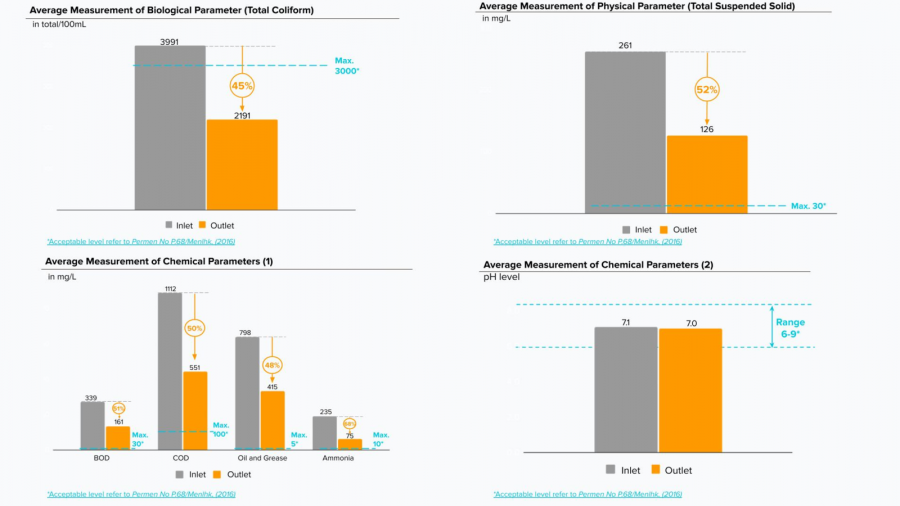
The Modified Tripikon S effectively reduced biological parameters by 42%, physical parameters by 52%, and chemical parameters by 50-70% compared to untreated wastewater
The problem
What we found
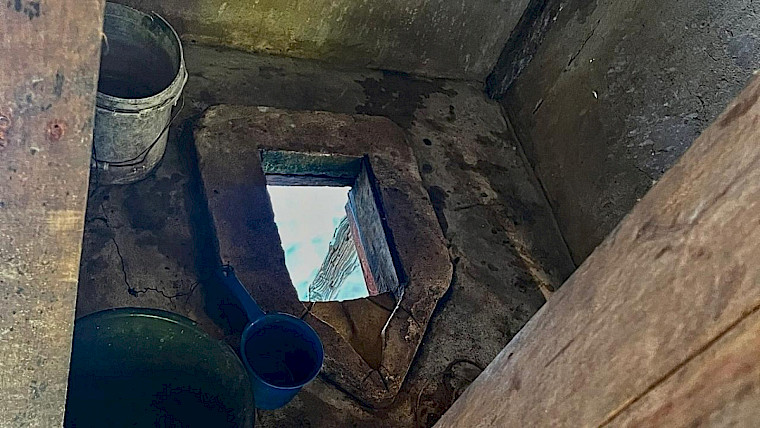
Growing coastal populations in Indonesia have led to increased pollution, specifically water pollution from domestic wastewater. One such coastal community is Batu Ampar, located in Kubu Raya Regency, which consists of 512 households, with half of them living in stilt houses. An assessment conducted by our partner, the Blue Forest Foundation, revealed that 60.3% of Batu Ampar’s residents lack proper septic tanks, forcing them to practice open defecation.
Directly releasing untreated household sewage into the water beneath stilt houses potentially harms the community's health and ecosystem, with dangerous pathogens contaminating the surrounding area. Poor water flow in crowded stilt house areas worsens this by concentrating pollutants and depleting oxygen, creating dead zones that harm marine life.
Additionally, traditional septic tanks are not suitable for wastewater treatment in these areas due to difficult terrain and tidal forces. Finally, there are no commercially available septic tanks designed for these specific geographical conditions.
The solution
What we tested
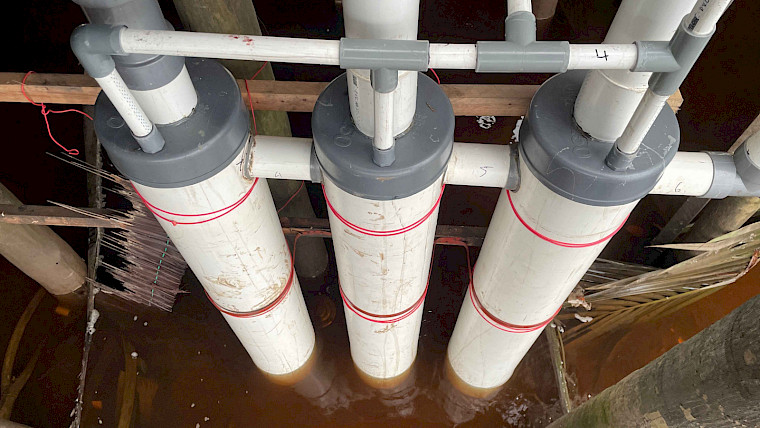
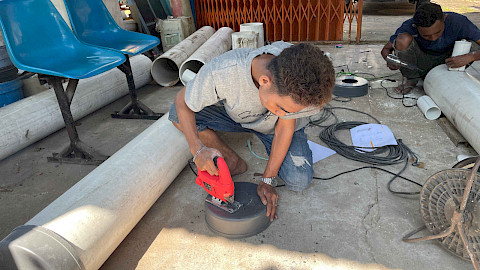
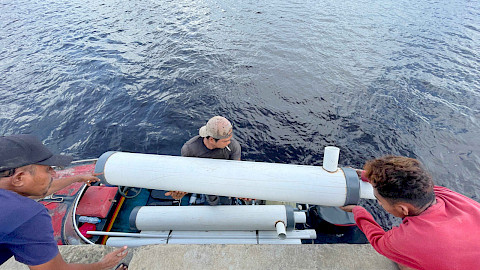
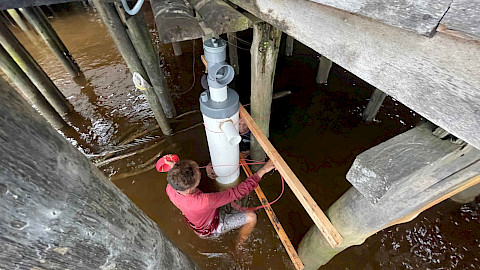
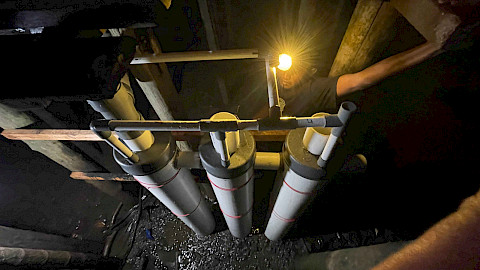
We tested the Modified Tripikon S, an appropriate wastewater technology suitable for installation beneath stilt houses. This system consists of three concentric pipes, which are made of locally available materials, and can be assembled by the community. This technology is designed to lower BOD (Biological Oxygen Demand), adjust pH, and reduce organic matter in blackwater. An earlier version of this system (non-modified Tripikon with 2 pipes) has been tested using freshwater inside the system in river communities, however, there is limited data on its effectiveness using brackish water (coastal communities).
Project design
How we ran it
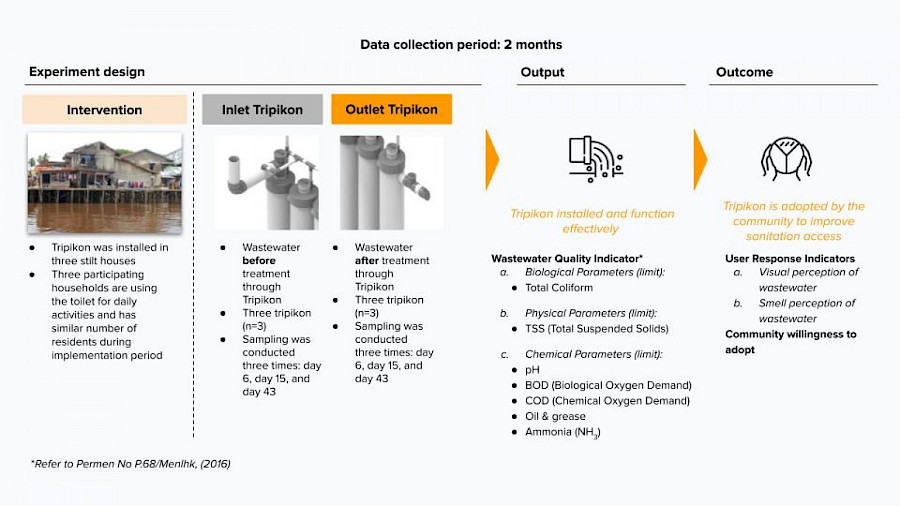
The experiment was conducted from January to April 2024, starting with the installation in January, followed by data collection in February and March. We compared two groups: a control group representing the current practice (untreated wastewater entering the Tripikon system), and a treatment group (wastewater exiting the Modified Tripikon S). Data analysis involved comparing the quality of water before and after treatment by the Modified Tripikon S.
To evaluate the performance of the Modified Tripikon S system, we referred to the regulation from the Ministry of Environment and Forestry (2016) about domestic wastewater quality standards, which includes biological, physical, and chemical parameters. The biological parameter measures total coliform (total/100mL). The physical parameter (mg/L) measures total suspended solids (TSS), while the chemical parameters included pH, biological oxygen demand (BOD), chemical oxygen demand (COD), oil and grease, and ammonia levels. The following are the definition of each parameters:
Biological parameter
- Total coliform is a biological parameter used to assess the microbiological quality of water. High levels of total coliform indicate the presence of fecal matter in the water, which can pose health risks to humans and animals
Physical parameter
- TSS stands for Total Suspended Solids, which is the dry weight of suspended particles in a water sample that are not dissolved and can be trapped by a filter. High level TSS can decrease water temperature and block sunlight which can harm aquatic life.
Chemical parameter
- pH is a chemical parameter used to measure the acidity and basicity of a solution
- BOD stands for Biological Oxygen Demand, which is the quantity of dissolved oxygen needed to completely break down organic matter in water using biological and chemical process that occur in water
- COD stands for Chemical Oxygen Demand, which is the amount of oxygen required to oxidize the organic matter in a sample of water using chemical oxidizing agents
- Oil and grease are types of pollutants that can contaminate water. They can come from various sources such as food waste or soap
- Ammonia is a type of pollutant that can be found in water. High levels of ammonia can be toxic to aquatic life and must be treated before being released into the environment.
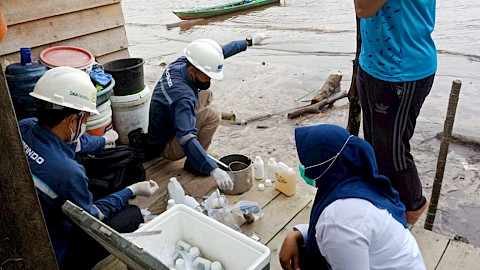
For data collection, we collaborated with Sucofindo Pontianak (laboratory services) and Batu Ampar Health Care (Puskesmas Batu Ampar), taking samples on specific days: Day 6, Day 15, and Day 43. During the data collection process, the household was responsible for maintaining the Modified Tripikon S by adding an EM4 solution and chlorine after the sample was taken by the laboratory. Additionally, we gathered feedback from the households involved in the experiment.
The technology
Results
What we learned
After collecting data on Days 6, 15, and 43, the Modified Tripikon S systems installed in three different houses were found to effectively reduce various pollutants across three key parameters: biological, physical, and chemical.
Biological Parameter
For the biological parameter, measured by total coliform levels, Modified Tripikon S showed positive results. According to the data, the system was able to reduce total coliform by an average of 45%, while maintaining total coliform levels within the acceptable limit of <3000/100 mL set by national regulations.
Physical Parameter
For the physical parameter, measured by total suspended solids (TSS), the Modified Tripikon S demonstrated the ability to reduce pollutants by an average of 52%, indicating that the active bacteria may break down organic matter and cause particles to aggregate naturally. However, even after treatment, the TSS remains at 126 mg/L—more than four times the government limit of 30 mg/L.
Chemical Parameter
For the chemical parameters, we monitored several indicators:
- pH levels remained between 6.7 and 7.4 throughout the testing period, within the acceptable range of 6-9.
- COD (Chemical Oxygen Demand) and BOD (Biochemical Oxygen Demand), which are closely related as they both assess the pollution load in water, were reduced by an average of 50% (although they remained far above the national standard).
- Oil and grease, which consist of fats, oils, and greases present in wastewater, can be processed by the Modified Tripikon S. However, the results remain significantly above the national standard, with an average pollutant reduction of 48%.
- Ammonia, a compound made up of nitrogen and hydrogen (NH₃) commonly found in human waste and urine, poses a risk of oxygen depletion and harm to aquatic life if present in high concentrations. Tripikon significantly reduced ammonia levels by an average of 68%. However, the treated effluent still contains 75 mg/L of ammonia—well above the government limit of 10 mg/L.
In summary, the Modified Tripikon S system demonstrated the ability to substantially reduce pollutants across biological, physical, and chemical parameters, with varying levels of efficiency over time. However, some pollutant levels remained above the Indonesian National Standard (SNI).
Conclusion
The Modified Tripikon S system demonstrated strong performance in reducing total coliform, a major bacterium responsible for causing diarrhea. It also showed notable reductions in other key wastewater indicators, indicating significant improvements compared to the current practice of direct discharge. However, further modifications are necessary to optimize the system’s overall effectiveness and ensure sustained pollutant reduction across all parameters, particularly to meet the Indonesian National Standard (SNI).
Additional considerations
The use of Modified Tripikon S systems requires regular maintenance, which involves the routine application of microorganism (EM4) solutions and chlorine to ensure optimal wastewater processing. However, since these solutions and chlorine may be difficult to source in rural areas, further research and development are needed to explore alternatives. One potential substitute is the use of eco-enzymes derived from kitchen waste, which could provide a more accessible and sustainable solution for maintaining the system.