

Solar dryer for small fish (2)
Inefficient fish drying process during rainy season
Summary
We tested the effectiveness of a full-scale solar dryer for drying anchovies and small shrimp during the rainy season in Aceh Jaya, Aceh.
Why we rated it this way
The solar dryer, covered with UV plastic, can protect fish during rainy weather. However, its advantage over the traditional floor-drying method in rainy days was not able to be assessed due to favorable weather during data collection. In no-rain conditions, the solar dryer demonstrated improved drying performance, as well as better quality of anchovies.
The problem
What we found
Indonesia is the second-largest fish producer after China, with fish production reaching 21.8 million tons in 2022 (World Population Review, 2024). There are approximately 5 million fishers in Indonesia (KKP, 2019), and over 60% of them are small-scale fishers. Small-scale fishers usually sell their catch locally, either fresh or as salted and dried fish after further processing (SEAFDEC, 2017).
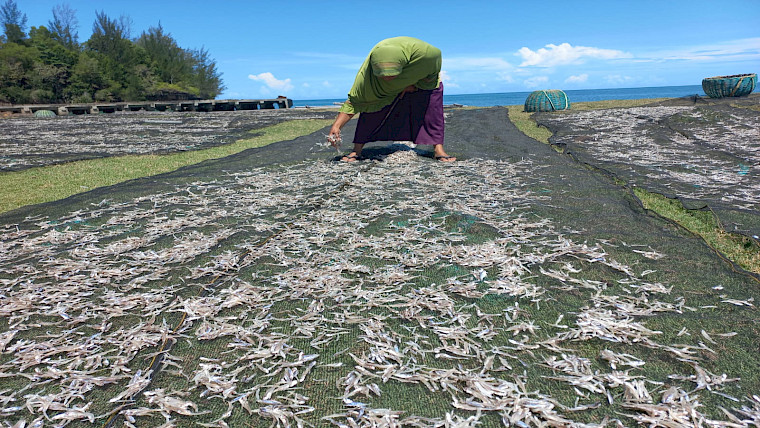
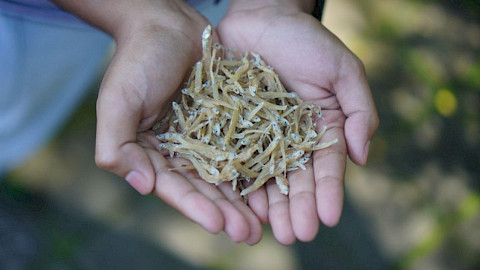
Aceh is a province located on a coastal area, with almost three hundred thousand square kilometers of ocean territory, rich in marine and fisheries resources. Lhok Kruet, a village located along the coast, is mostly inhabited by fishing communities. Aside from fishing, the villagers, mostly women, also produce dried anchovies and small shrimps.
The existing method of drying anchovies and shrimps involves spreading them on net sheets on the ground under the sun, commonly known as floor drying. However, this method is vulnerable to rainy weather, which can disrupt the drying process and lead to spoilage. Fishers must complete the drying process within eight hours to meet the demand of daily visits from middlemen.
A simple solution is needed to effectively dry these commodities during the rainy season. The community requires an alternative drying method that can dry fish in less than eight hours, is as simple as the existing method, and produces higher-quality fish.
The solution
What we tested
In a previous phase of this experiment, the prototyping stage, we concluded that a solar dryer equipped with a solar collector offered the best drying performance and was the ideal candidate for a full-scale test.
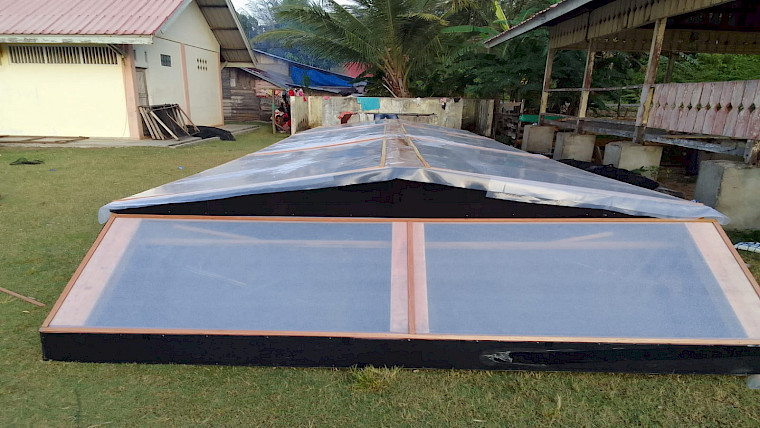
For the current experiment, we partnered with YABUMI, a local organization supporting coastal women in Aceh, to construct a full-scale solar dryer equipped with a solar collector in Lhok Kruet village, Aceh Jaya.
Due to material constraints, we used UV plastic sheets for the roof instead of polycarbonate and less durable wood compared to the meranti wood used in the prototype.
Project design
How we ran it
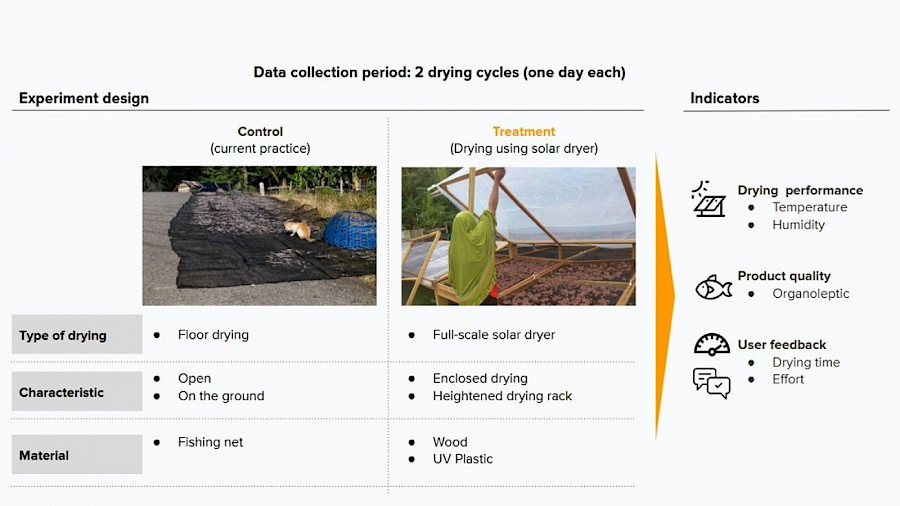
We assessed the solar dryer's performance and compared it to conventional floor drying. We measured drying performance (temperature and humidity retention), product quality (organoleptic, using the Indonesian National Standard SNI 8273:2016), and gathered user feedback on drying time and effort. Data was collected over two drying cycles. We collaborated with YABUMI to involve local fishers (women and men) and middlemen in testing the solar dryer's effectiveness.
The technology
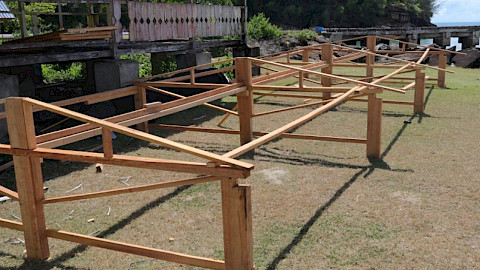
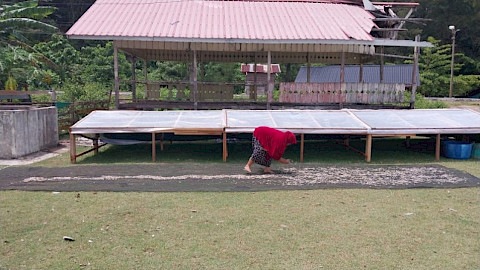
Results
What we learned
1. Drying performance
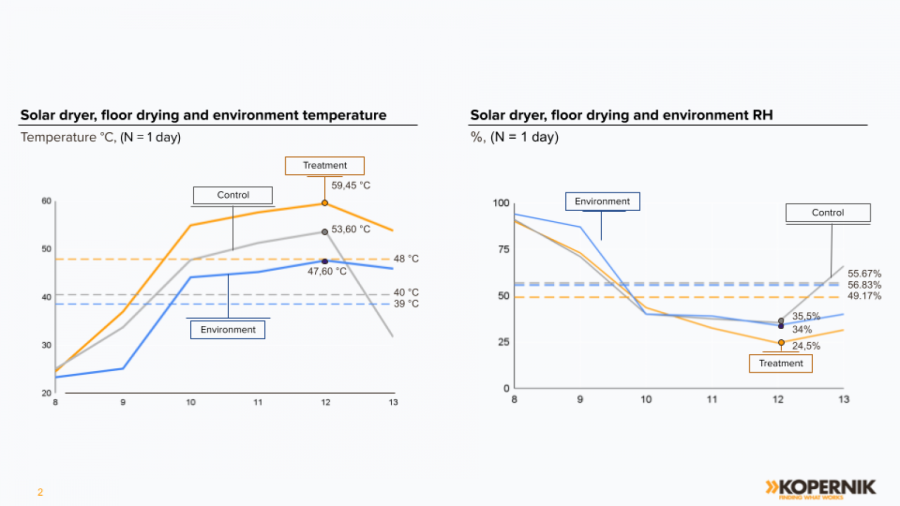
The solar dryer demonstrated superior drying performance, maintaining the highest average temperature (48°C) and lowest average relative humidity (49.17%) compared to floor drying (40°C and 55.67% relative humidity) and ambient conditions (39°C and 56.83% relative humidity). The average temperature falls within the recommended range for fish drying (below 60°C to prevent protein breakdown). However, the average relative humidity slightly exceeded the optimal range of 10-40% suggested by previous research from Sorong Marine and Fisheries Polytechnic (Siddhi et al., 2018).
During rainy days, the solar dryer is expected to retain residual heat and shield the catch from direct rain, reducing fish moisture content.
2. Product Quality
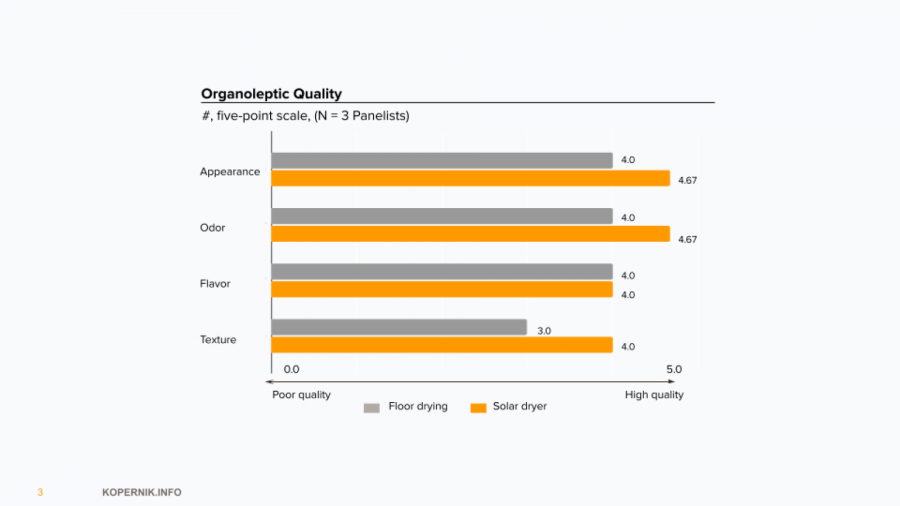
Product quality was assessed using a five-point scale based on the Indonesian National Standard for dry salted fish (SNI 8273:2016). A score of five indicates optimal quality (clean, bright appearance; strong, fresh odor; fresh, salty flavor; and firm, non-brittle texture). Lower scores indicate decreasing quality in these attributes.
Fish dried using the solar dryer exhibited improved appearance (score of 4.67, cleaner and brighter), a fresher, stronger odor (score of 4.67), and better texture (score of 4, firm and non-crumbly) compared to floor-dried fish. Floor-dried fish scored 4 for appearance and odor (paler color, dirtier, and less strong odor) and 3 for texture (more fragile and crumbly).
3.User feedback
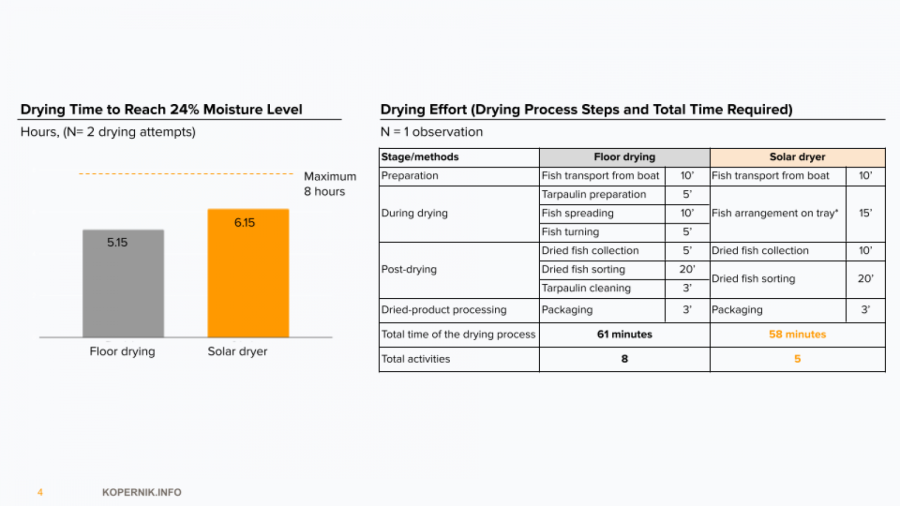
User feedback was assessed based on drying time and effort required. The solar dryer resulted in a one-hour increase in drying time. This can be attributed to the fixed tray placement in the solar dryer, not allowing frequent turning of fish like the floor drying method allows for. Despite the longer drying time, the solar dryer maintained fish shape and texture, and the overall drying process remained within the desired eight-hour timeframe, allowing for same-day sale.
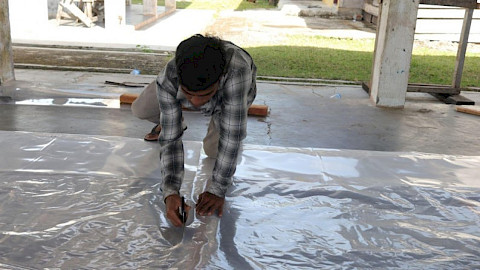
Even in ideal weather conditions, the solar dryer slightly streamlined the drying process by reducing time required for labor-intensive tasks like tarpaulin preparation, fish spreading, turning, and post-drying cleaning. The community also appreciated the solar dryer's ability to protect fish during cloudy and rainy weather, ensuring continued drying without spoilage concerns. This highlights the solar dryer's potential advantage over traditional floor drying, especially during rainy days when floor drying requires constant monitoring and protection to prevent spoilage.
Conclusion
The full-scale solar dryer equipped with a solar collector demonstrated improved drying performance and product quality compared to traditional floor drying, particularly in terms of temperature, humidity, and fish quality.
The solar dryer's ability to protect fish during adverse weather conditions could provide a significant advantage over the traditional method. However, as it didn’t rain during this experiment, it was not possible to directly test the reduction in drying effort during rainy days.
Read more
Reports and references
https://solutions-catalog.kopernik.info/en/projects/solar-dryer-for-small-fish