

Storing Green Coffee Beans Using Desiccants (1)
Difficulty in maintaining adequate green coffee bean moisture during storage
Summary
We tested the effectiveness of desiccants (silica gel & natural clay) for storing green coffee beans at Kopernik’s office in Bali, Indonesia.
Why we rated it this way
The desiccant effect was inconclusive due to the suboptimal storage environment at Kopernik’s office and the use of unsuitable plastic woven sacks, which might have influenced moisture content.
The problem
What we found
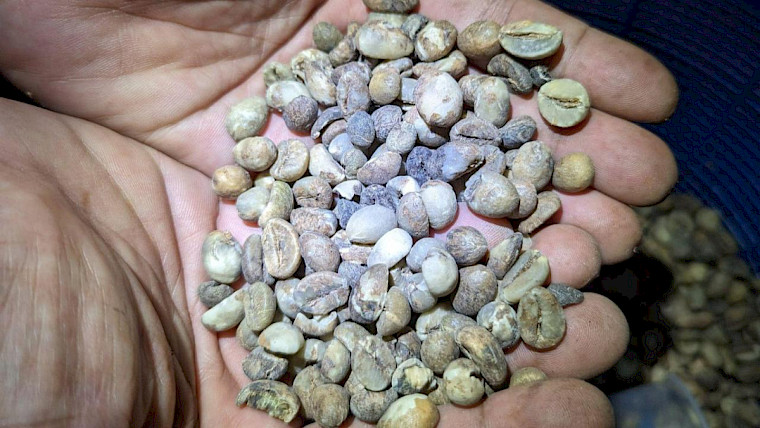
Indonesia has more than 2 million farmers who rely on coffee cultivation for their livelihood.1. As Indonesia is located in a tropical area, smallholder coffee farmers face challenges in maintaining proper storage of green coffee beans due to high temperatures and relative humidity, leading to deterioration of the coffee beans.
Smallholder farmers commonly use plastic bags, plastic woven sacks, or a combination of both as the current storing method of green coffee beans, due to the accessibility and affordability of these items (at USD 0.16 for 100kg beans). However, these sacks are permeable, allowing air to enter. As a result, the accumulation of air within the sacks elevates relative humidity levels and raises the moisture content of the green coffee. The Indonesian National Standard or SNI 01-2907-2008 standard requires green coffee to adhere to a maximum water content standard of 12.5%. The increased moisture content creates a conducive environment for the proliferation of pests, molds, and fungi, which pose a significant threat mainly to degrading bean quality and price.
In contrast, materials such as hermetic packaging, which are impermeable and airtight, offer a potential solution. Nonetheless, the adoption of such impermeable and airtight materials comes at a higher cost (approximately USD 3.28 for 75kg beans).
The solution
What we tested
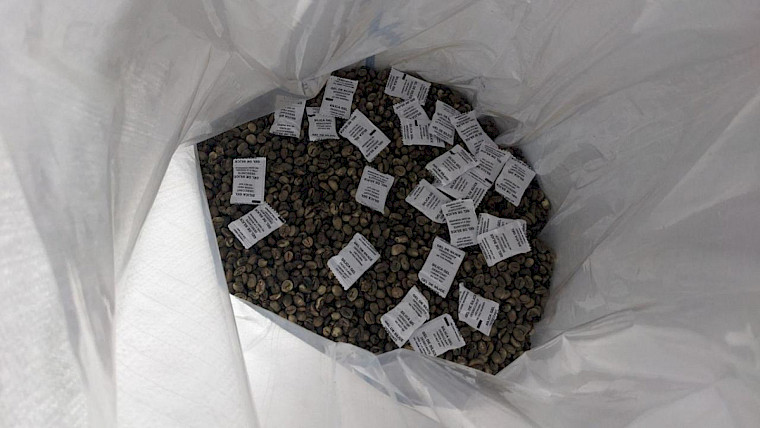
We conducted an in-house experiment to enhance the current storing method used by smallholder farmers by integrating desiccants. Desiccants are substances with the capacity to adsorb water and moisture, thereby effectively controlling relative humidity levels. In this experiment we investigated the effectiveness of two specific types of desiccants: silica gel and natural clay. Silica gel is derived from silicon dioxide that naturally occurs in sand, while natural clay is composed of mineral calcium aluminosilicate. Both silica gel and natural clay are widely accessible materials that are commonly used to reduce moisture contents and are readily available in the market.
Project design
How we ran it
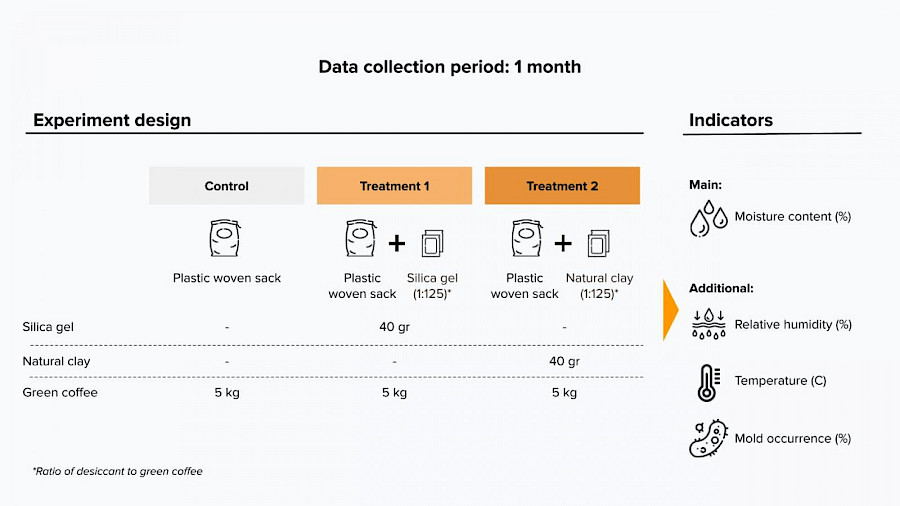
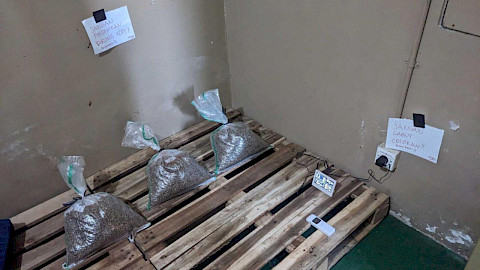
We tested the effectiveness of desiccants in storing green coffee for one month, from 22 May 2023 to 19 June 2023. The experiment included a control group and two treatment groups with the following composition:
- Control group (C): 5 kg of green coffee in a plastic woven sack
- Treatment 1 (T1): 5 kg of green coffee in a plastic woven sack with 40 gr of silica gel on top of the green coffee
- Treatment 2 (T2): 5 kg of green coffee in plastic woven sack with 40 gr of natural clay on top of the green coffee
All groups were placed on a wood pallet inside Kopernik’s storage room.
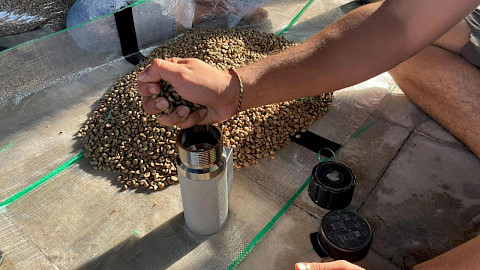
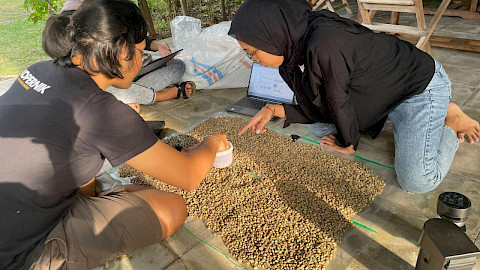
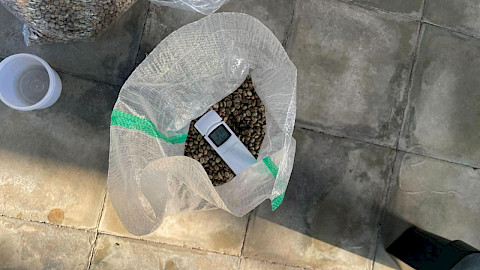
The main indicator measured in this experiment was the moisture content of green coffee beans. The data on moisture content was collected using Wile and fork moisture meter at baseline, midline and endline. We sampled 100 gr of green coffee for each measurement to calculate the average moisture content.
We also measured additional indicators to support the analysis, as follows:
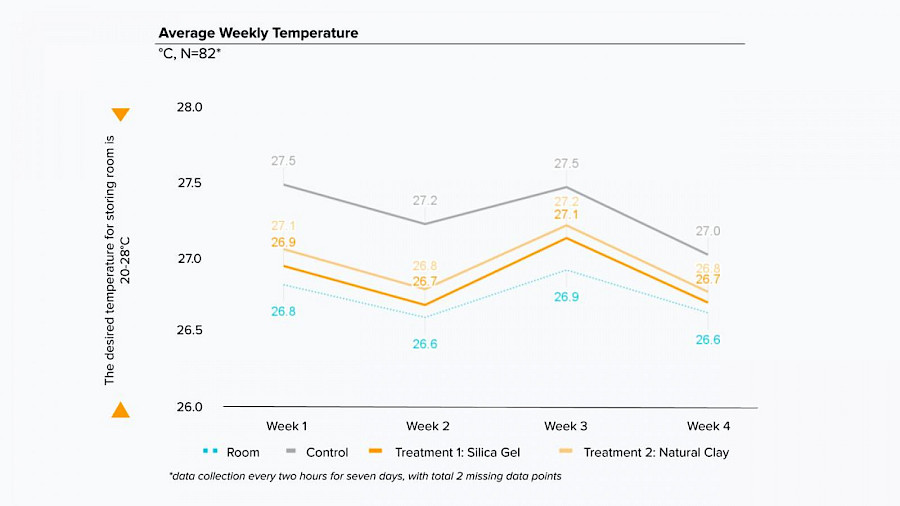
- Temperature: We used 4 Misol sensors. Three sensors were placed inside the plastic woven sack for all groups, and one sensor was placed inside the room. Temperature data was collected every two hours.
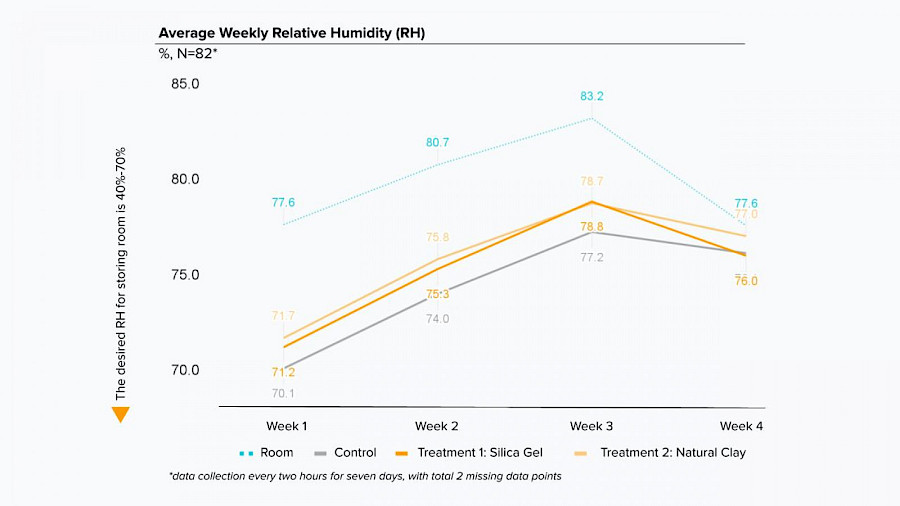
- Relative humidity: Similar to the temperature indicator, the relative humidity data was collected using the same four sensors every two hours.
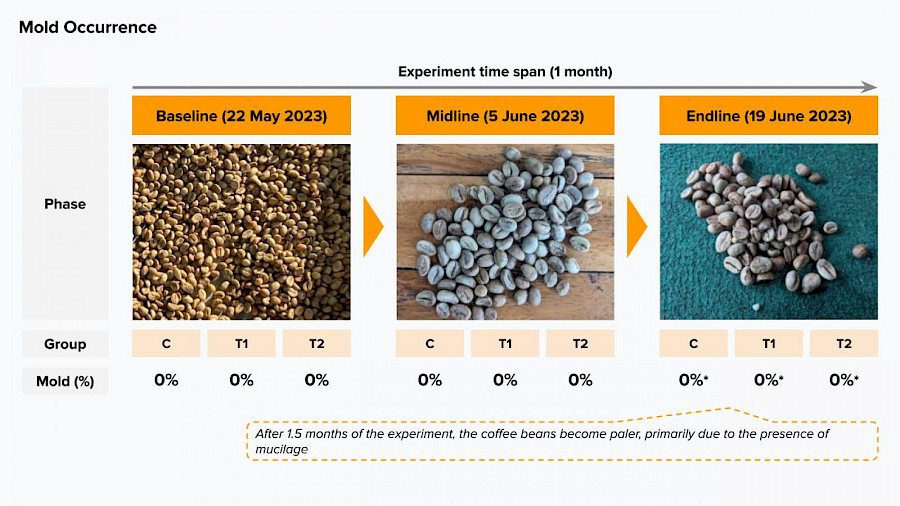
- Mold occurence: Mold occurrence was assessed by visually inspecting 200 gr of beans from five areas of each sack (four corners and the center). The methodology involved mixing the samples and weighing the coffee beans exhibiting signs of mold, if any. The data was collected three times, at baseline, midline, and endline.
The technology
Results
What we learned
Moisture Content
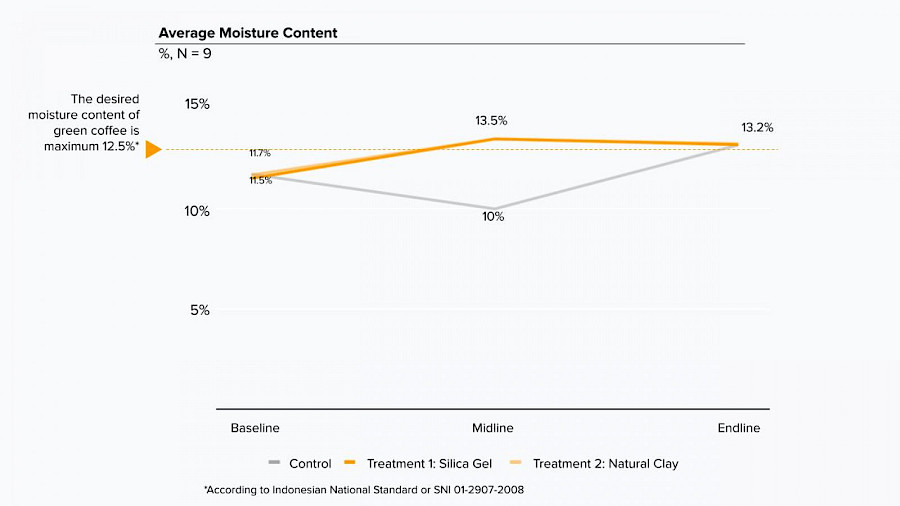
At baseline, the control group and treatment groups indicated a similar moisture content, (control group & natural clay 11.7% vs silica gel 11.5%) which were within the desired moisture content based on The Indonesian National Standard or SNI 01-2907-2008 of a maximum 12.5%. During the midline data collection, the control group experienced a downward trend to 10% while the treatment groups (silica gel & natural clay) experienced an increase in moisture content to 13.5%. After a month of storing period, the moisture content of all groups showed similar results at 13.2% which exceeded the SNI level. We assume that the absence of an airtight system in combination with desiccants had attracted surrounding moisture to be absorbed by the green coffee beans.
It's important to note that a Wile moisture meter was used for baseline and endline measurements, while a fork moisture meter was used for midline data collection due to the unavailability of the Wile model as it malfunctioned. Differences in moisture meter readings may have contributed to the observed data.
Relative Humidity (RH)
The ideal RH level for a green coffee bean storage room is between 40 and 70%. The experiment results revealed that the storage room was not ideal for green coffee, as the RH levels exceeded this range. This may have been due to inconsistent closure of the room and the storage of other goods within it. While the RH levels within the plastic woven sacks were lower than the ambient environment, the treatment groups (silica gel and natural clay) had slightly higher RH levels (71.7% - 77%) compared to the control group (70% - 76%).
Several factors may have influenced these results, including the placement of the plastic woven sacks, the permeability of the sack materials, or an inappropriate ratio of green coffee to desiccant (for more information, please refer to the Additional Considerations section).
Temperature
The average temperature inside of the plastic woven sack of all groups during the storing time was between 27.5 - 26.7°C , which is within the required storing temperature in Indonesia (20-28°C). The treatment groups (silica gel and natural clay) consistently maintained a slightly lower average temperature (26.7°C - 27.1°C) compared to the control group (27°C - 27.5°C).
Mold Occurrence
In this experiment, we defined mold occurrence as the presence of white filaments (hyphae), which are characteristic of mold growth.
Mold was not detected in any of the groups during the experiment. However, we observed a physical change in the coffee beans: a paler color due to mucilage, a thin layer that adheres to the beans when the hulling process is incomplete. This is a common occurrence during storage.
Conclusion
The experiment's inconclusive results regarding the desiccant's effect on green coffee moisture content can be attributed to suboptimal storage conditions. The storage room at Kopernik's office was not ideal, as it was shared with other goods and experienced frequent foot traffic. Additionally, the plastic woven sacks used were permeable, allowing for airflow and potentially influencing moisture levels. It is possible that these factors collectively compromised the experiment's ability to accurately assess the desiccant's effectiveness.
To address these limitations, the next iteration of this experiment will test the combined effects of desiccant and non-permeable sacks in real-world storage conditions with smallholder coffee farmers in Bali.
Additional considerations
Desiccant Ratio
In this experiment, we used a desiccant-to-green coffee ratio of 1:125. This ratio was based on the principle of using 500 grams of desiccant for every 62.5 kg of green coffee. It's important to note that this calculation does not account for variables such as packaging material, desired moisture content, and storage conditions. It should be acknowledged that different ratios could potentially lead to varying results.
Moisture Content Measurement
To assess the moisture content, we used a Wile grain moisture meter for both the baseline and endline readings of the green coffee. However, during the midline measurement, we had to resort to a fork moisture meter due to the unavailability of the primary tool due to malfunction. This variation in measurement tools could contribute to differences in results.
Experiment Environment
This experiment was conducted in Kopernik’s storage room, which was also being used to store various other goods. The room experienced frequent foot traffic, with the door being opened and closed regularly. It's important to acknowledge that these conditions are suboptimal for maintaining controlled experiment settings. The presence of people and the fluctuating environment might have impacted the experiment results.