

Water desalination technology
Limited access to clean drinking water in coastal communities
Summary
We tested the performance of a water desalination technology to produce clean drinking water for coastal communities in Nusa Penida
Why we rated it this way
The water desalination technology was able to produce clean drinking water from a brackish water source
The problem
What we found
Bali is one of the world's top tourist destinations, with the tourism sector contributing to significant declines in water availability. The island's water demand is 28,719 million meter3/year while the available water is only 1,067 million meter3/year, resulting in a deficit of 27,652 million meter3/year. As a result, many hotels, companies, and households have to source their own water through springs, rivers, and groundwater extraction using private pumps. This led to uncontrolled water extraction that diminished Bali's groundwater supply at an alarming rate.
Furthermore, Bali’s rivers and groundwater - which are the primary water sources are polluted due to ineffective waste management systems, with large amounts of waste ending up in the island’s water sources, as well as pesticides from agricultural activities. This has led to challenges in accessing clean and safe drinking water for the population.
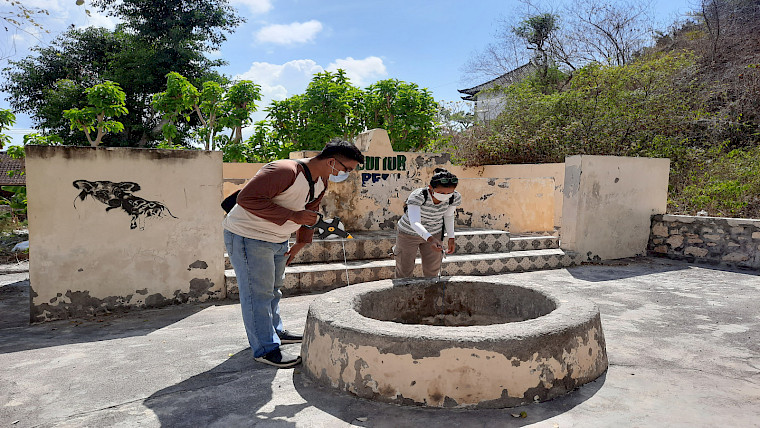
Located off the southeast coast of Bali, Nusa Penida is one of the driest regions in the province. It has a population of more than 45,000 people and 130,000 tourists annually (prior to the pandemic).
Rainwater collection is one method of meeting the water needs for the residents of Nusa Penida, however due to low rainfalls this method is insufficient. Groundwater extraction is challenging due to saltwater intrusion. An alternative source of water supply is needed to fulfil the drinking water needs of Nusa Penida residents.
The solution
What we tested
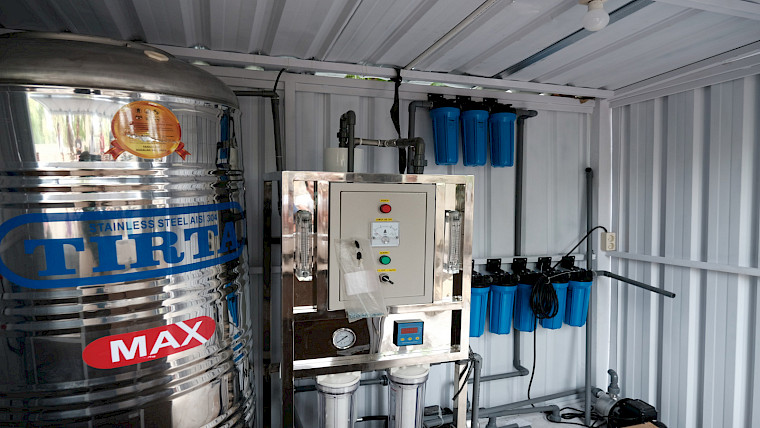
Kopernik installed a water desalination technology unit in Suana Village, Nusa Penida to provide an alternative source of drinking water. We tested the performance of the technology in producing clean drinking water from brackish well water by measuring the physical and chemical parameters of the water produced by the desalination technology.
Project design
How we ran it
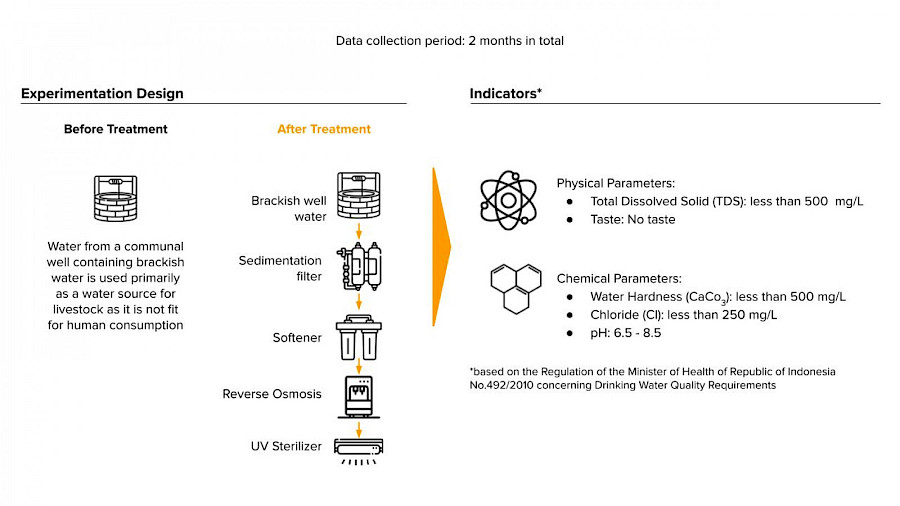
We installed the desalination technology to treat the brackish well water into potable water. The technology consists of a four-step filtration system:
- Sediment Filtration: filters dirt, improves taste, and settles sediment using PP filters (10 inch housing)
- Softener: reduces the water hardness level using carbon, manganese, and cation filters (13 inch housing)
- Reverse Osmosis: reduces Total Dissolved Solid (TDS) level by 95 percent using a seawater membrane on a 40 inch FRP Housing
- UV Steriliser: kills bacteria in water using a 6 GPM UV stabiliser component
We collected water samples from the well and from the desalination system to measure and compare the physical and chemical parameters based on the Regulation of the Minister of Health of Republic of Indonesia No.492/2010 on drinking water quality standards. The government standards include the bacteriology and inorganic parameters which are directly related to health, along with 6 physical and 20 chemical parameters which are indirectly related to health.
In this experiment, we tested all 26 physical and chemical parameters of the untreated (brackish well water) and treated water (desalinated water). The results showed that 21 out of 26 parameters tested meet the government standards. Meanwhile the other 5 parameters have either resulted in significant changes or not met the government standards :
- Physical parameters: Total Dissolved Solid (TDS) level and water taste
- Chemical parameters: Water Hardness (CaCo3) level, Chloride (Cl) level, and pH level
We sent the water samples to Bali Provincial Health Laboratory Office in Denpasar for both physical and chemical analysis. The experiment was conducted from December 2020 to February 2021.
Results
What we learned
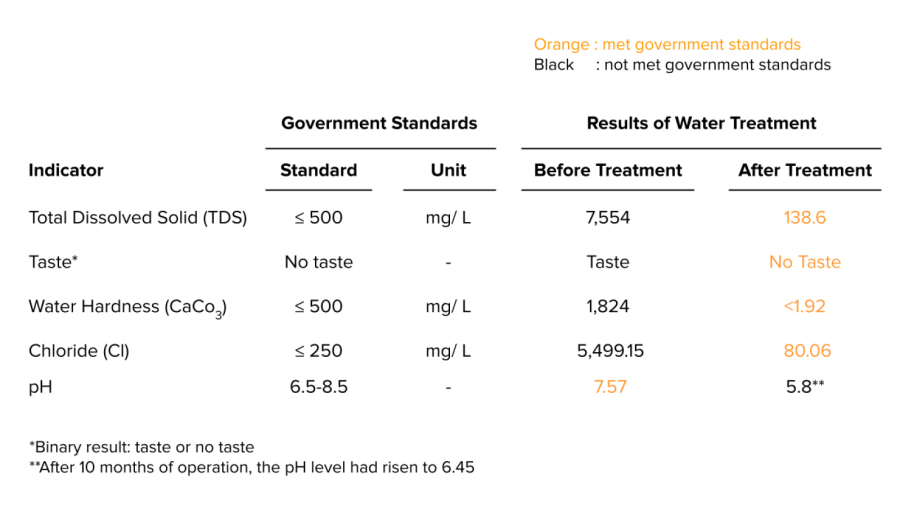
Based on the lab results, we found that the water from the desalination technology reached the TDS level of 138.6 mg/ L, meeting the government’s standard of TDS maximum level of 500 mg/L. The technology has fully removed the brackish taste of the water. l. The water hardness level was significantly reduced from 1,824 mg/L to 1.92 mg/L, meeting the government’s standard of 500 mg/L. The chloride level was also lowered from 5,4449.15 mg/L to 80.06 mg/L, within the government's standard of 250 mg/L. Meanwhile, the pH level was reduced to 5.8, - which is below the standard pH level range of 6.5-8.5. Wujudkan! Indonesia, our technology provider, explained that this may be caused by substances left from the adhesive material on the piping system. The pH level is expected to rise gradually as the intensity of machine operation increases in which case it will be within the accepted range. A follow-up test after eight months of the operation of the system found that the thepH level had risen to 6.45, much closer to the required standard.
The performance of the desalination technology using the 4-step filtration system was able to turn brackish well water into clean drinking water that met most of the key government standards except for pH level.
Conclusion
In this experiment, we found that the treatment of water desalination technology using sediment filtration, softener, reverse osmosis, and UV steriliser was capable of converting brackish well water into clean drinking water that can be an alternative source of drinking water for the local community in Suana village, Nusa Penida.
Additional considerations
The upfront investment to build a water desalination facility costs US 11,853 or IDR 170 million with a production capacity of 1,800 litres per day. The technology is able to fulfil the daily water needs of 60 households (based on the standard quantity recommended by WHO of 7.5 litres drinking water per capita per day). The water desalination technology and the technicians required to install it were sourced from outside Bali, increasing the cost of installation.
Read more
Project profile
Reports and references
Ergianto, Mochamad Dwi, Ivanie Destila, and Hadohoan Satyalen Simaremare. 2021. Waste For Water: Creating a Community-Led Water Desalination Business to Provide Clean Drinking Water to Coastal Villages in Bali Project Report.
Kopernik Insights
Utami, Cita, Ivanie Destila and Arya Wigita. 2022. Training for a Community-Based Business Unit Project Report.