

Fire Up Oecusse, Timor-Leste
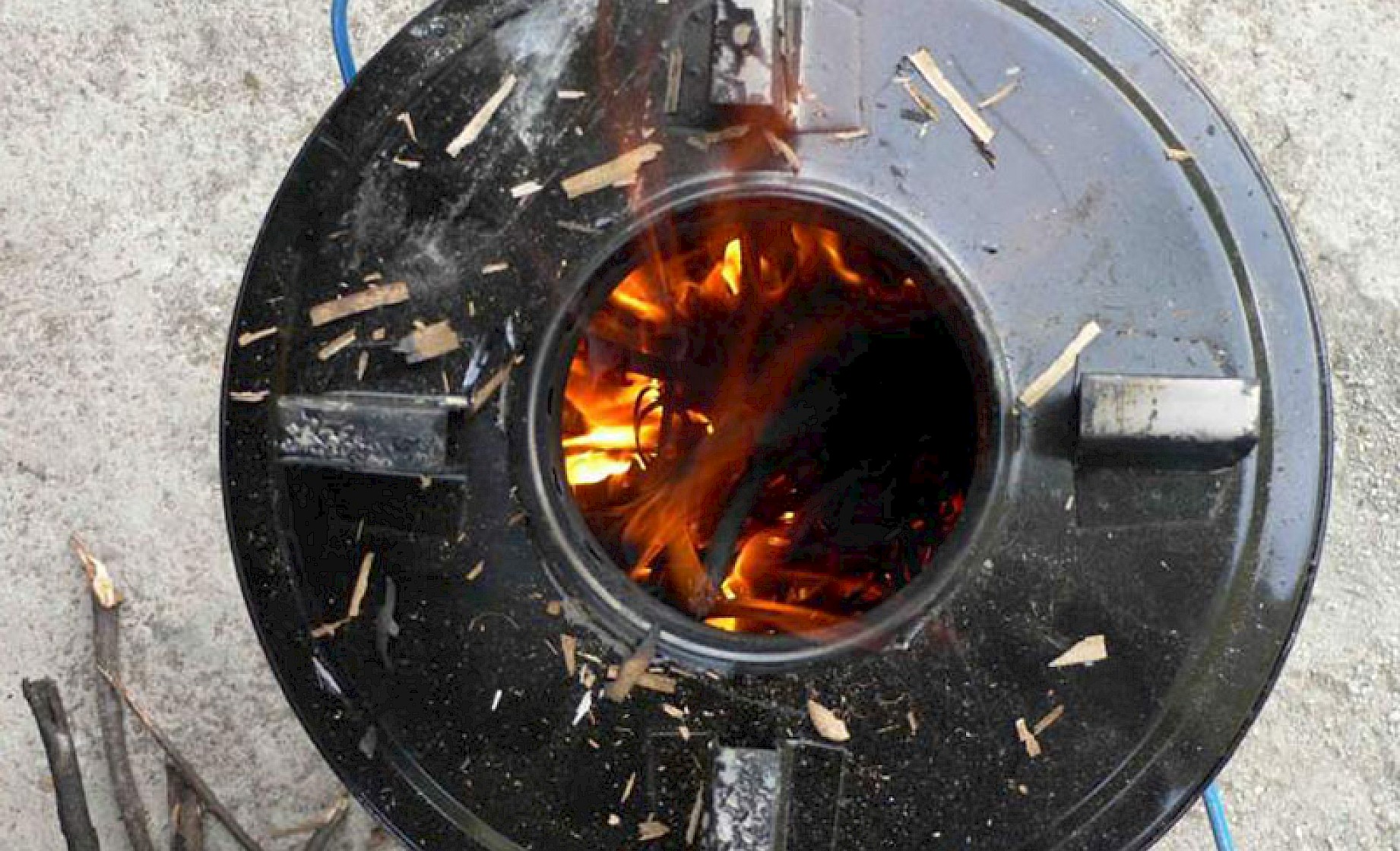
Making cooking cleaner, faster and safer for women in Oecusse, with fuel efficient biomass stoves and briquettes.
Project type
- 革新的な解決策をテストする
- 3. Good Health & Well-Being
Partners


The problem
Most people in Oecusse use firewood for cooking on traditional three-stone fires, typically cooking indoors. Firewood is expensive at 25 cents per bundle outside of the town and 50 cents per bundle in town. Generally people use two bundles per day for their household needs. Using firewood for cooking and boiling water is contributing to rapid deforestation in Oecusse. The burning of wood, indoors, which produces significant smoke, causes respiratory illness.
The solution
UB.03-1 biomass stoves use much less firewood than cooking over a three-stone fire. The stovescan also be fueled by other biomass such as agricultural waste or briquettes. Families will save time collecting firewood, or save money buying it, and will breathe more easily as the stoves produce very little smoke. To further reduce the need for firewood, we will introduce biomass charcoal briquettes to Oecusse. The briquettes can be made locally in Oecusse, and could provide a source of youth employment.
The expected impact
The stoves and the briquettes will be sold at a locally appropriate price, which will be set based on the unit cost of the products and discussions with the local community.
The project results
Alongside introducing the fuel-efficient cookstoves, we also introduced biomass charcoal briquettes to Oecusse. Michael Woon trained FEEO staff to make MIT D-Lab's biomass charcoal briquettes in November 2010. Our goal was for FEEO staff to train local youth to make and sell charcoal briquettes, creating employment and further reducing the amount of firewood needed for cooking.
People in Timor are not used to cooking with charcoal, and we ultimately found that charcoal briquettes were not economically viable in Oecusse. Firewood costs about five times as much in Dili, the capital of Timor-Leste, as it does in Oecusse. This makes charcoal briquettes a viable cooking fuel in the city, but not in Oecusse. Even if briquettes were made in Oecusse to be sold in Dili, the cost of transport between Dili and Oecusse would take a big dent out of any profits, as charcoal is a high volume, low unit price product. It would be difficult for people to recover the start-up cost of the equipment required to make the briquettes.
"The biomass stove uses only a small amount of wood, we feel good. We no longer have to spend so long collecting firewood, we like that when we cook there's no smoke. Now we don't use the kerosene stove, which is not good because the black smoke makes us sick. We don't cook over an open fire, the black smoke makes us feel unwell." - Sri Wakyumi, Oesono village
"The difficulty was, before I got this biomass stove, I cooked at home with firewood, and the wood was almost gone here. This stove really helps now. It's really economical with fuel, you can cook really fast, and there's no smoke. It doesn't dirty up the kitchen." - Rosina
Show project location
Project cost
| Type | Description | Amount |
|---|---|---|
| Product | Cost of the stoves - 100 units | $1,275 |
| Briquette Development | 10 drums, transport, tools | $800 |
| Briquette Development | Training, making the briquettes | $750 |
| Shipping | Cost of international shipping (for stoves and for drums for briquette production) | $1,000 |
| Clearance and local duty | Based on the average clearance and local duty cost | $405 |
| Wire Transfer Fee | One transfer to technology producer, one transfer to cover local duty and clearance | $90 |
| Total | $4,320 |
01 / 01