

Food production through aquaponics: supporting COVID-19 affected communities in Bali
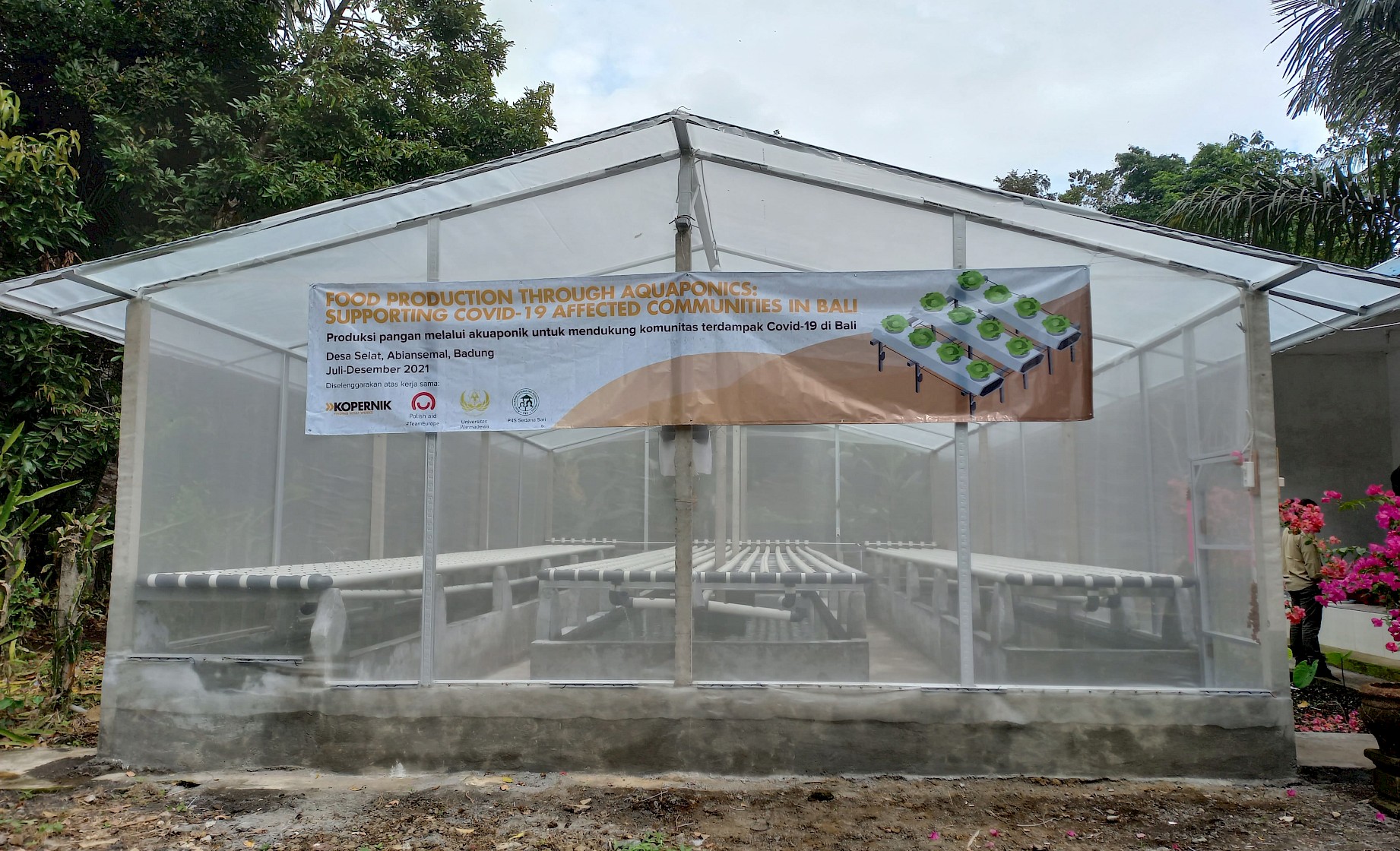
We are building an aquaponics facility to support the livelihoods of communities affected by COVID-19 pandemic through an alternative source of food supply.
Project type
- アンメット・ニーズ(未開拓の課題)を特定する
- 2. Zero Hunger
Partners


The problem
The COVID-19 pandemic has impacted the livelihoods of many Balinese due to a heavy reliance on tourism. Thousands of people are out of jobs, with challenges in fulfilling their day-to-day necessities, including food supplies.
The solution
Introduction of aquaponics as a food production system that produces aquatic animals (e.g. catfish, tilapia) and grown plants (e.g. green vegetables) for consumption and potentially for sales.
Introduction and establishment of an aquaponics facility as a food production system with capacity of producing hydroponic plants and is equipped with a fish pond - combining hydroponic and aquaculture technology for food production.
We will conduct training for the community members in aquaponics installation, usage, and maintenance, as well as developing the facility as community-owned business.
The expected impact
Through the introduction and training on aquaponics usage and maintenance, we expect the community to be able to produce food supply such as hydroponic plants and fish to fulfill their needs, as well as developing a community-owned business strategy for the aquaponics facility.
The project results
Kopernik constructed an aquaponics facility in Bali, consisting of a greenhouse equipped with 1,600 holes of PVC pipes for growing plants, four reservoirs of water filtration system, and four ponds to accommodate approximately 1,000 fish.
In partnership with Warmadewa University, we provided training to the participating community on how to build and maintain the aquaponic facility and grow, raise plants and aquatic animals, and manage the facility. The project participants consisted of 11 women and 4 men from Selat village and neighboring villages. During the project period, the training participants successfully grew and harvested vegetables twice which are used for their consumption and market distribution.
Show project location
Project cost
| Type | Description | Amount |
|---|---|---|
| Solution & Project Implementation | Costs associated with the purchase of the solutions tested and project coordination | $3,684 |
| Monitoring & Evaluation | Costs associated with data collection, analysis and reporting | $7,229 |
| Administration Fee | Cost of transferring payments internationally, processing online donations (5%) and a contribution to Kopernik's operational costs (15%) | $873 |
| Total | $11,786 |
01 / 01