

Merapi Volcano Response
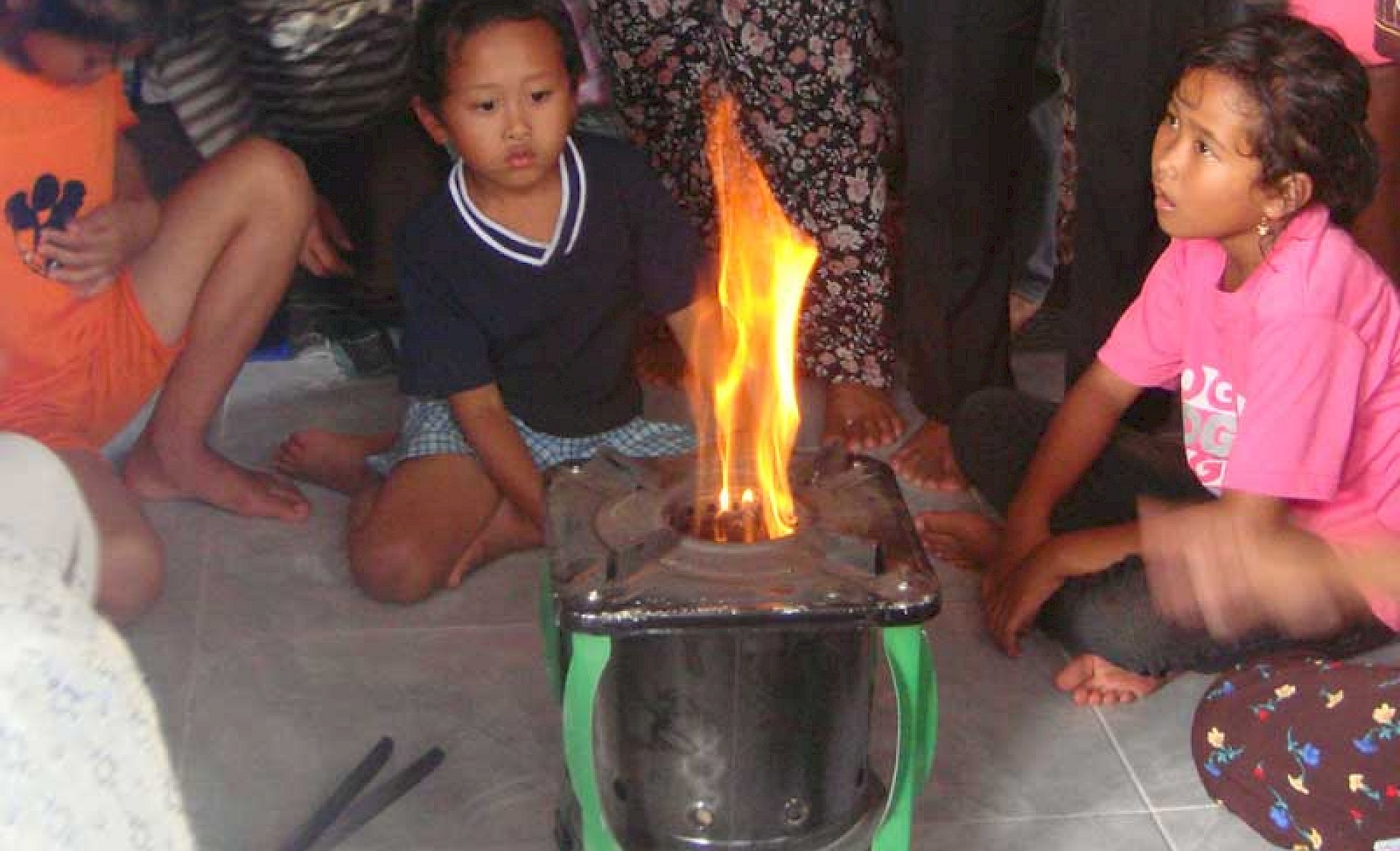
Connecting clean cookstoves with people left homeless by the eruption of Mt Merapi in October 2010, aiding the recovery process.
Project type
- 革新的な解決策をテストする
- 3. Good Health & Well-Being
Partners
The problem
The eruption of Mount Merapi in Central Java in October 2010 destroyed hundreds of homes, leaving many people homeless. Most of their property and appliances were destroyed by the pyroclastic cloud that descended and engulfed their houses. Survivors had to stay in temporary shelters, rebuild their lives in their hometown, or start new lives in new places. They needed basic tools, including cookstoves. Their traditional stoves were not fuel-efficient, making it necessary for women and children to spend much time collecting firewood. This also contributed to deforestation problems. Some organisations have distributed gas stoves in the communities, however, few people can afford to fuel them as gas costs around US$2 per week.
The solution
We can help families recover from the disaster by providing clean cookstoves, making it easier to fuel their daily cooking. The UB.03-1 biomass stove can burn dry leaves, tree branches, twigs or corn cobs, and uses up to 80 percent less fuel than traditional stoves. It also produces almost no smoke, allowing women to breathe cleaner air as they prepare meals.
The expected impact
As an emergency response project, we will make the stoves available for free to the disaster survivors, helping them to rebuild their lives. Our local partner will conductan initial assessment and hold community meetings to determine who needs the stoves the most and how to distribute them.
The project results
There were a couple of challenges that we had to overcome during distribution and technology adoption. One of them was difficulty in preparing the biomass before use. People had to cut or chop biomass materials such as tree branches and twigs into small pieces so that the wood would be small enough to put inside the burning chamber, which is additional effort for busy people. Furthermore, when the wood or other biomass was not dry enough, it produced smoke and it was difficult to ignite the fire. Explaining the definition of dry biomass was another challenge. People thought if wood had no water droplets on it then it was dry. This is certainly not true, as the wood may still contain water inside its tiny pores. Therefore, firewood or biomass material needs to be dried under the sun. Also, the wood has to be free from chemical contamination such as paint and cement.
Women from a shelter in Gondanglegi, Hargobinangun, Pakem, Sleman said that the stove is magical. Even though the stove uses biomass material, the size of the flame can be increased or reduced by opening or closing the side air window. This is different from any other stove using firewood.
Show project location
Project cost
| Type | Description | Amount |
|---|---|---|
| Product - UB.03-1 biomass stove | Cost of technology - 809 units | $7,686 |
| Shipping | $1,666 | |
| Wire transfer fee | $45 | |
| Kopernik 10% | Waived | $0 |
| Total | $9,397 |
01 / 01