

Providing Better Access: DIY Solar Lanterns Phase One
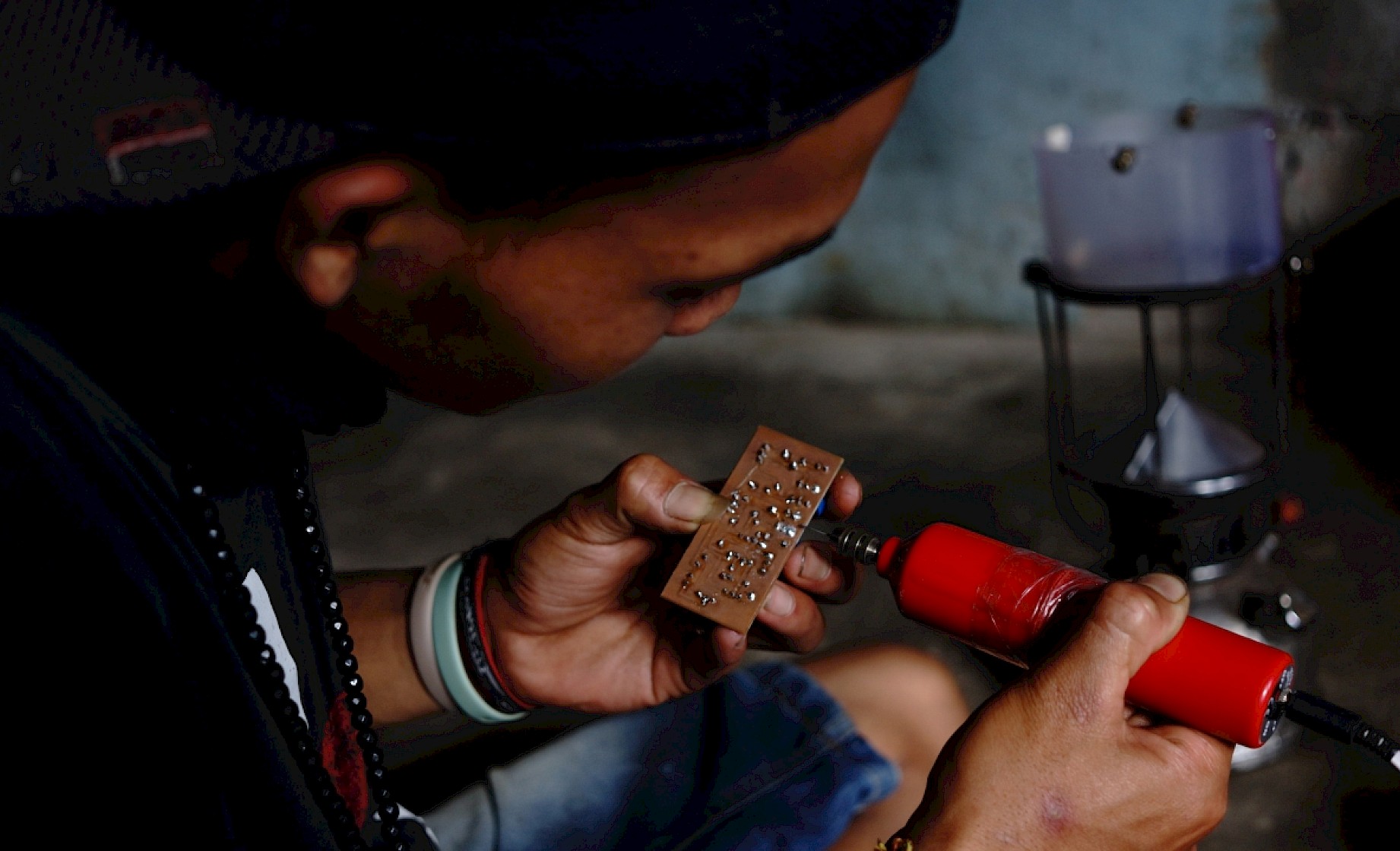
We want to develop an affordable solar lighting solution using locally available materials, training local people in the assembly and maintenance process
Project type
- 革新的な解決策をテストする
- 7. Affordable & Clean Energy
Partners



The problem
Freshwater fisherman in Takengon, have long been using kerosene lanterns as their primary source of lighting to fish at night.. Yet with increasing fuel prices, people have slowly abandoned their kerosene lanterns resulting in waste. Most fishermen now use torch or electrically charged lamps to replace their kerosene lanterns but this lighting option is considered expensive.
Distribution of solar lights (for free or at a locally appropriate price) provides an alternative to kerosene or electrical lighting. However feedback from the field suggests that solar lighting is still perceived as a luxury technology that is not long-lasting or easy to maintain. In last mile communities, ‘ready-to-go’ solar lights do have their drawbacks. It does remain difficult to fix broken solar lights due to their customised design and lack of in-village manufacturer sUpport. The replacement components are often not locally available or if they are, the product is manufactured in a way that makes DIY problem-solving impossible . In the absence of long-term technical sUpport on the ground in small villages, distribution of solar lights is not a fail-safe long-term solution.
The solution
We will collaborate with a professor located in the project location to develop a simple solar system circuit board that can be integrated into the old lanterns. Subsequently we will engage five different working groups, training them on the assembly process. We will then distribute 10 DIY solar lantern kits to each group and monitor the outcomes related to the success of the training and whether they can successfully build the solar lanterns for use by other community members.
The project team will monitor the following indicators within 1.5 months of conducting training:
- Percentage of successfully assembled lantern;s
- Percentage of assembled lanterns that work properly and are being used;
- Percentage of used lanterns that are being utilized for more than one activity;
- Percentage of users that are satisfied, or unsatisfied with the lantern; and
- User’s willingness to pay
We will also evaluate each trained group to gauge which group was most successful in respect to the number of workable lights they assembled and whether the process was cost-effective and whether they had demand for the finished product.
The expected impact
We are interested to learn whether the assembly of these lanterns could be a viable small business opportunity for people with a need for affordable and sustainable lighting solutions.
Show project location
Project cost
| Type | Description | Amount |
|---|---|---|
| Project Implementation & Technology | Costs associated with project coordination and the technology | $5,400 |
| Monitoring & Evaluation | Costs associated with data collection and analysi | $2,399 |
| Administration Fee | Cost of transferring payments internationally, processing online donations (5%) and a contribution to Kopernik's operational costs (15% | $1,618 |
| Total | $9,417 |
01 / 01