

RACHEL Device for Remote Learning in Ban Village, East Bali
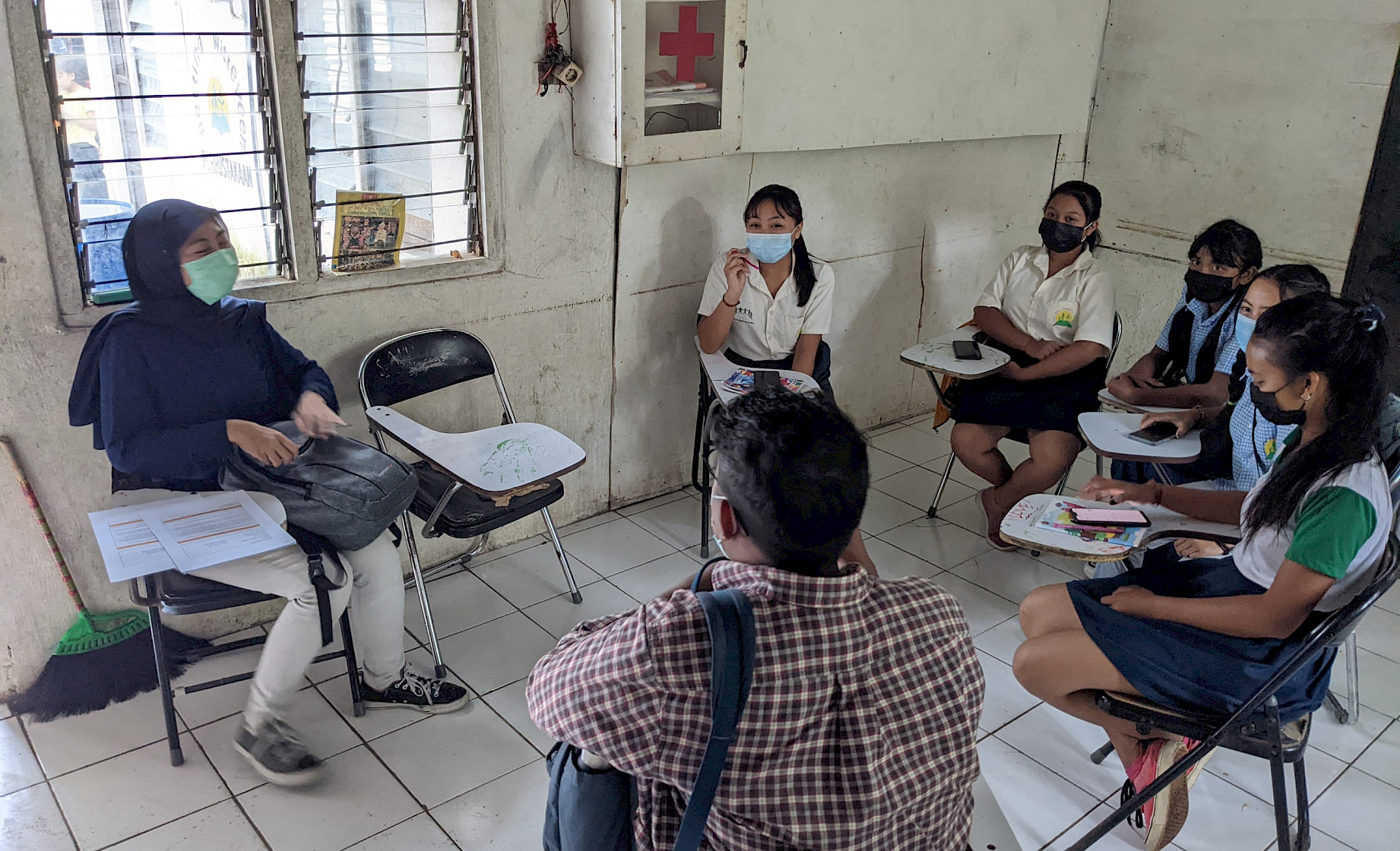
We are testing the Remote Area Community Hotspot for Education and Learning (RACHEL) device in Ban Village. RACHEL enables teachers and students with limited internet access to gain access to learning materials.
Project type
- アンメット・ニーズ(未開拓の課題)を特定する
- 4. Quality Education
Partners
The problem
Education is a basic human right. However, due to the COVID-19 pandemic, which has resulted in the temporary closure of schools and a shift to online learning, access to proper education has become more difficult for students in remote areas. In the foothills of Mount Agung in East Bali, students in Ban Village have found participating in online classes challenging.
The remote village of Ban has limited road access, limited clean water, and other basic facilities, with many families living in poverty. For many students, Learning materials and internet access are unaffordable, making online learning inaccessible. Further, internet access is generally very limited, with residents having to walk 1 to 2 kilometers to find a stable internet connection. Limited road access also results in challenges for teachers wanting to conduct visits and home monitoring.
With all these challenges, teachers and students in Ban Village need a simple solution that can facilitate remote learning effectively.
The solution
To support access to education in Ban Village, we are experimenting with the RACHEL device. It is a portable, battery-powered device equipped with educational materials that are accessible by students and teachers without the need for an internet connection. The materials in RACHEL can be easily connected to nearby tablets, laptops, or smartphones.
Prior to the experiment, we translated the operational language of RACHEL to Bahasa Indonesia and added learning materials suitable for the Indonesian education curriculum.
We are testing RACHEL to find whether this means of delivering educational materials to students in remote areas can improve and increase students' engagement in learning activities.
We will also measure the usability and adaptability of RACHEL for both teachers and students, and record their feedback.
The expected impact
We expect students and teachers to have easier access to learning materials, which will increase motivation and engagement in remote learning.
If proven successful, this technology could be adopted or replicated by the government and educational service providers to improve the learning process, especially in areas with limited internet access.
The project results
We found that most teachers integrated RACHEL into their teaching activities, and students found it highly beneficial in supporting their learning activities, despite facing technical issues and time constraints while exploring the device. Students were also enthusiastic about utilizing RACHEL outside of class hours to watch interactive videos related to English, further enhancing their learning experiences. RACHEL significantly improved the learning process, particularly during face-to-face classroom sessions.
Another insight from our experiment with RACHEL revolves around the role of teachers. We observed that teachers play a crucial role in determining the usage of RACHEL. When faced with troubleshooting problems related to RACHEL, they preferred to continue with their regular teaching methods, rather than relying on the technology.
Show project location
Project cost
| Type | Description | Amount |
|---|---|---|
| Solution & Project Implementation | Costs associated with the purchase of the solutions tested and project coordination | $3,354 |
| Monitoring & Evaluation | Costs associated with data collection, analysis and reporting | $3,514 |
| Administration Fee | Cost of transferring payments internationally, processing online donations (5%) and a contribution to Kopernik's operational costs (15%) | $168 |
| Total | $7,036 |
01 / 01