

Cacao Pod Breaker (2)
Slow performance and unsafe extraction of cacao beans from the pods
Summary
We tested the speed and safety of two new cacao pod breaker tools with cacao farmers in Yapsi, Papua.
Why we rated it this way
Among the two tools tested, the tool with a stainless steel hinge was preferred by the farmers because it is safe and steady. In terms of the speed, however, the machete was the fastest among all groups.
The problem
What we found
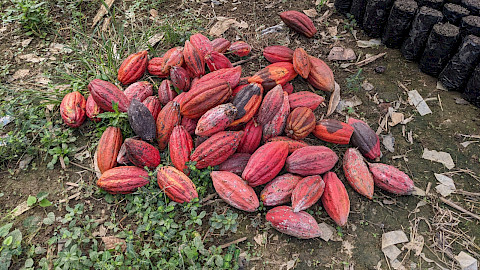
In 2022, Indonesia emerged as the third-largest global producer of cacao beans, yielding approximately 667.3 thousand metric tons (Source: Statista). In Indonesia, smallholder farmers play a significant role in driving the cacao industry, contributing significantly to cacao production compared to large plantations. However, they still fully rely on a traditional approach of processing cacao.The speed of cacao seed extraction is crucial during post-harvest processing, especially when farmers intend to ferment the beans. Fermentation boxes typically require 500-650 kilograms of cacao beans, and failing to meet this quantity can result in lower quality fermentation. To ensure high-quality fermentation, the seeds must be quickly extracted from the pods.
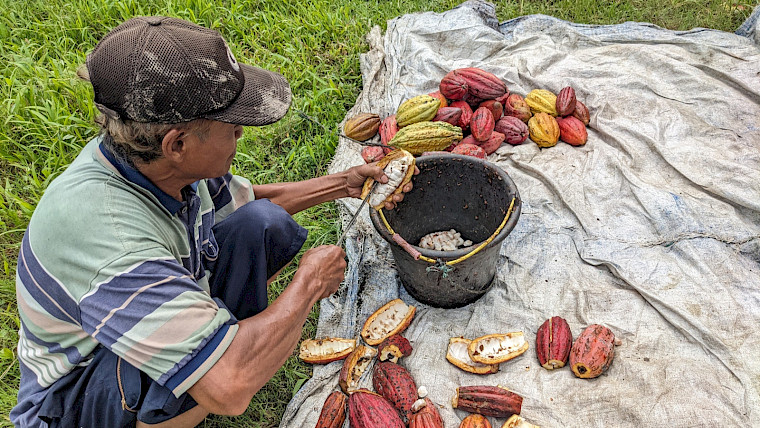
After harvesting cacao pods, farmers in Indonesia typically use machetes to crack them. This practice poses a major risk as repetitive and forceful movements with a machete can cause musculoskeletal injuries. Additionally, the long working hours and associated stress further contribute to health risks.
The solution
What we tested
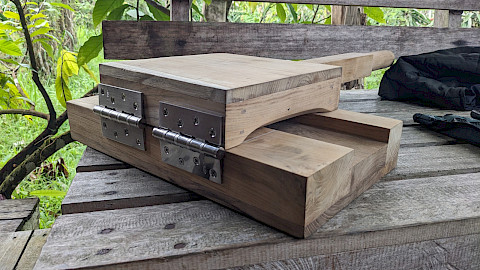
Based on the learnings from our in-house experiment in Tabanan, we improved the tool’s sharpness to make breaking the pods easier and introduced a new hinge model that is readily available in Papua. Additionally, we modified the experimental design to ensure every farmer had the opportunity to test each tool.
Project design
How we ran it
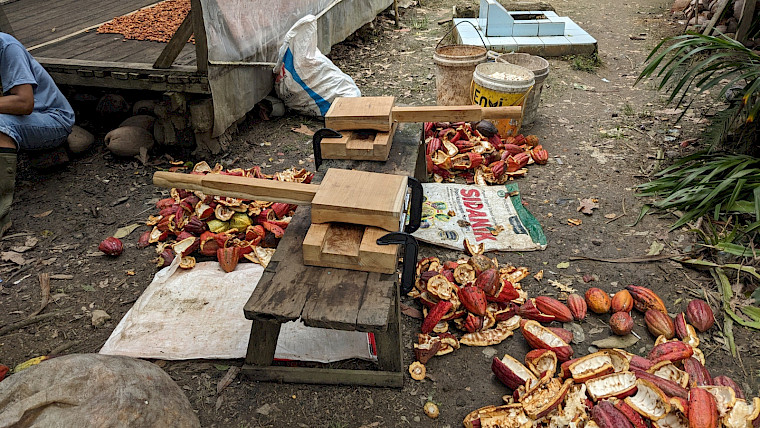
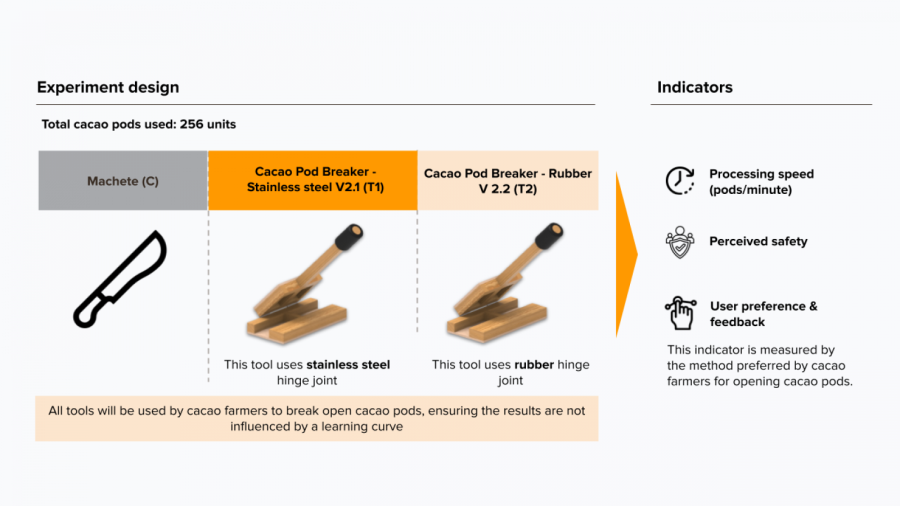
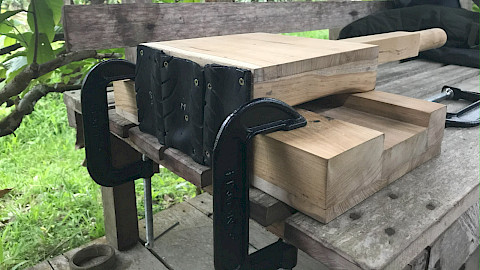
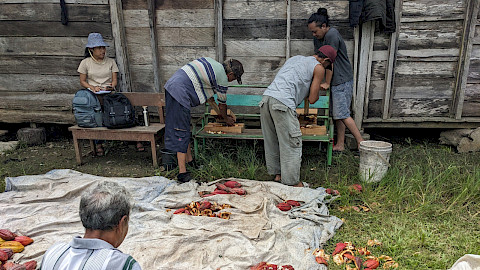
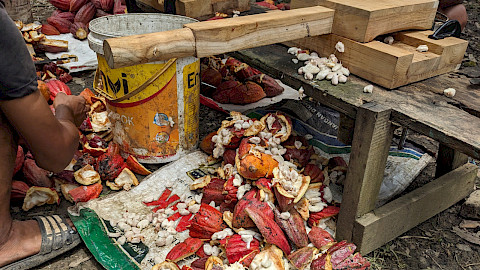
There are three groups in this experiment. The first group, the control group, uses a machete, a common practice among cacao smallholder farmers in Indonesia. The second group uses a cacao pod breaker with a stainless steel hinge joint (hereafter, we will refer to the tool as Tool V2.1). The third group uses a cacao pods breaker with a rubber hinge joint (hereafter, we will refer to the tool as Tool V2.2). We used a total of 256 cacao pods divided between the three groups. We worked with six cacao farmers from Yapsi District, Papua to test the tools.
During the experiment, we focused on two main indicators and general user feedback. First, we measured the speed of processing cacao pods, which comprises the time to crack cacao pods, and to separate cacao seeds from their pods. Secondly, we assessed the perceived safety regarding the method for opening cacao pods. In addition to the main indicators, we also asked for general feedback and potential improvement from the farmers.
The technology
Results
What we learned
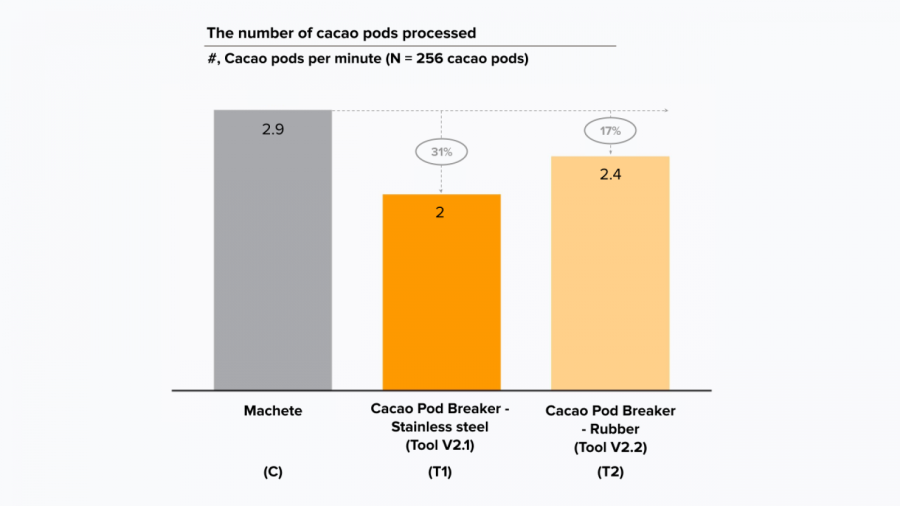
During the experiment, we engaged six farmers and processed 256 cacao pods at the site. Among the tools tested, the machete method (C) had the fastest processing speed. Compared to the machete, tools with a stainless steel hinge (V2.1) and a rubber hinge (V2.2) were slower by 31% and 17%, respectively. When farmers used the new cacao pod breakers (V2.1 and V2.2), they also reported that the resulting cacao seeds were often messy.
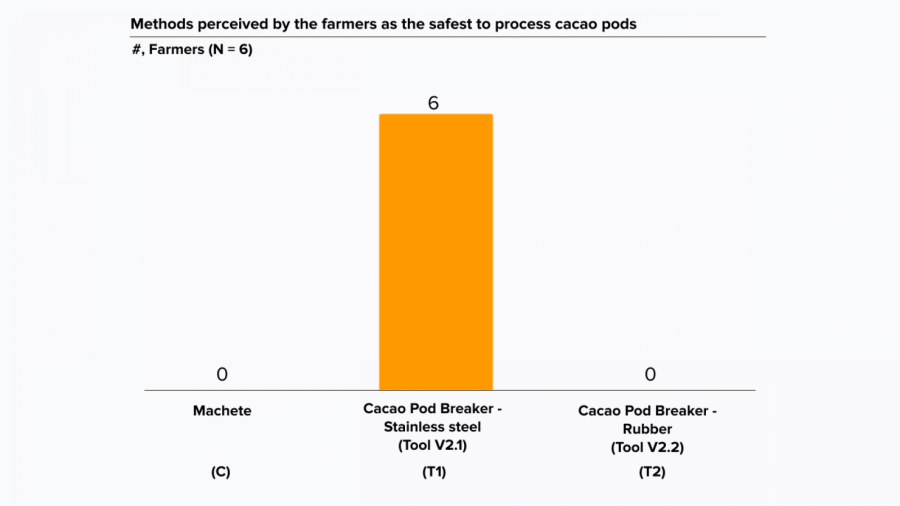
In terms of perceived safety, all six participants considered the tool V2.1 to be the safest option, outperforming both the machete (C) and tool V2.2.
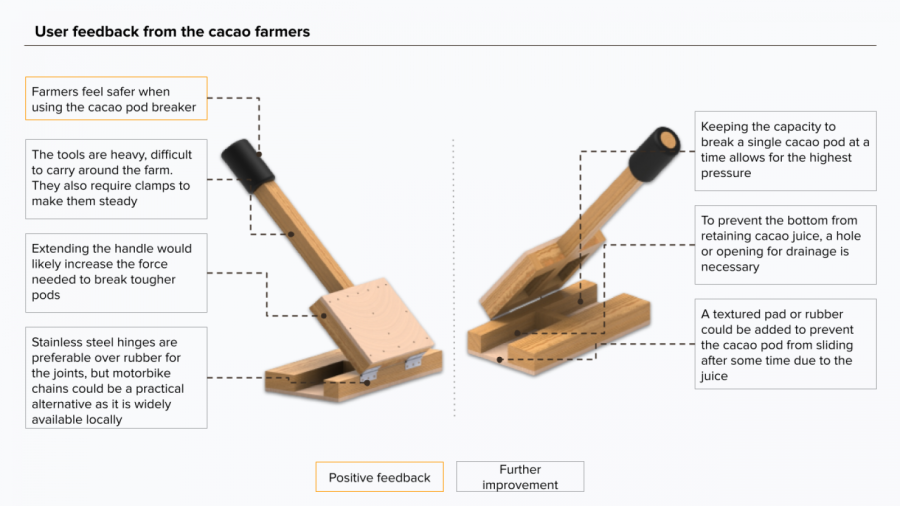
Additionally, V.2.1 was described as steadier and more convenient to use. On the other hand, V2.2 was found to be unstable, and farmers often struggled to crack cacao pods accurately with it. Post-experiment interviews also revealed several ways to further improve the current cacao pod breakers. Farmers expressed a preference for cracking one pod at a time rather than two. Despite being faster, cracking two cacao pods at once required significantly more effort. To address this, they recommended designing a longer handle to reduce physical effort. They also suggested incorporating a joint handle made from locally available materials, such as used motorbike chains, which are common in Papua. Furthermore, the current tool requires two clamps to remain stable, posing a challenge for farmers who lack flat, dedicated surfaces for cracking pods. Addressing this feedback requires a more ergonomic and slim design of the cacao pod breaker.
Conclusion
While the V2.1 and V2.2 tools were slower in processing cacao ponds by 31% and 17% respectively compared to machete (C), all farmers reported that V.2.1 was the safest method to process cacao pods. Farmers also suggested improvements, including a longer handle for more leverage, more ergonomic design, and a joint handle made from accessible materials like a motorbike chain.