

Hermetic Bag and Drum Storage for Grain (2)
Loss of grains due to weevil infestation during storage
Summary
We tested alternative storage methods for sorghum to prevent farmers in East Flores from experiencing post-harvest crop losses due to weevil infestation.
Why we rated it this way
Hermetically sealed plastic drums have proven to be effective in combating weevil infestation and maintaining safe storage conditions for grain.
The problem
What we found
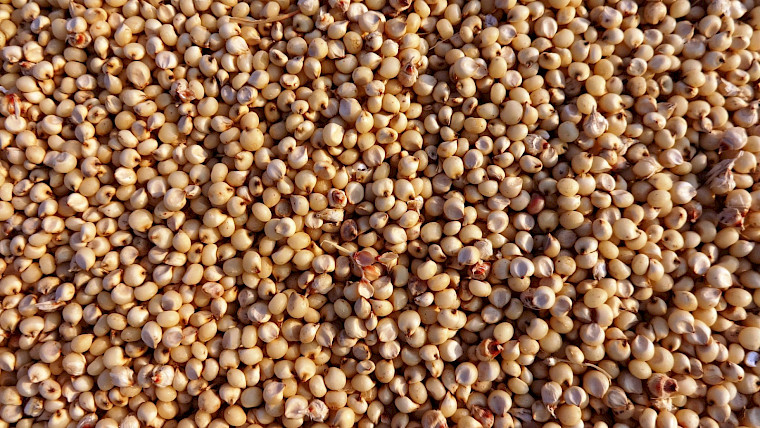
In many developing countries, including Indonesia, more than one-third of food is lost during the post-harvest period, with 50-60 percent of grain losses occurring during storage. Two of the major food crops in East Nusa Tenggara province (NTT) of Indonesia are sorghum and maize. Farmers lose between 30-70% of stored grain because traditionally used storage methods do not provide adequate protection against weevils or rodents.
In the first phase of the experiment, we learned that both a hermetically-sealed plastic drum and a hermetic storage plastic bag placed inside a plastic woven bag showed promise in reducing the number of weevils in stored sorghum. While the number of weevils in the storage containers were significantly reduced in comparison to the traditionally used storage method, we saw that a significant number still survived. We hypothesised that this was possibly because of the remaining oxygen supply that could have assisted the weevils to survive (due to the containers not being fully filled and due to regular opening of the containers to measure the levels of weevil infestation). Further testing was needed to further reduce the number of weevils inside the storage methods..
The solution
What we tested
We tested whether the number of weevils would be further reduced when compared to the experiment conducted in phase one by further limiting their oxygen supply. This was done by filling the storage containers with sorghum to their full capacity and keeping them sealed for six months. Results were compared to the traditionally used storage method to count the number of weevils present.
Project design
How we ran it
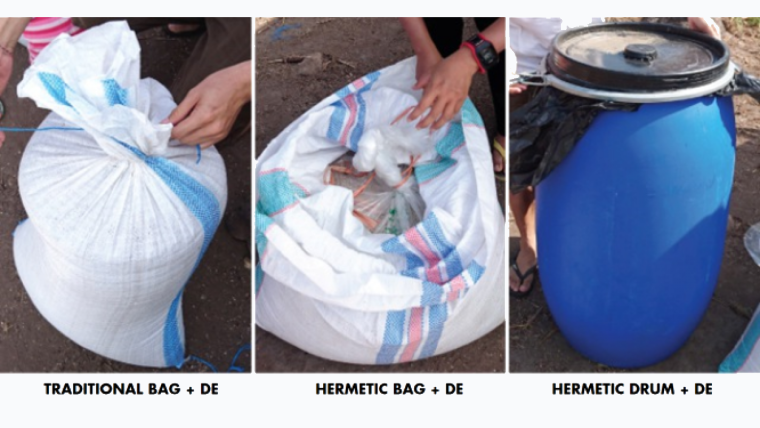
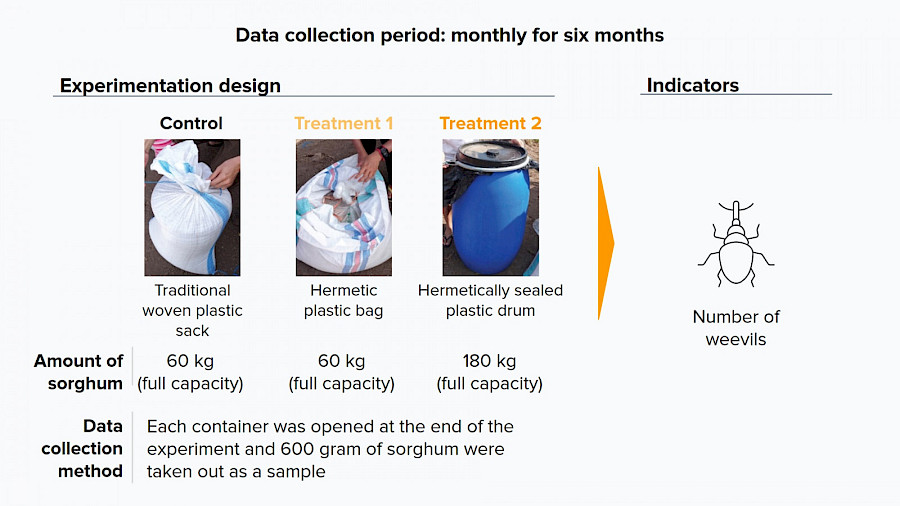
From July to December 2017, we tested three methods of storage:
- A hermetically sealed plastic drum (180kg capacity)
- A hermetic plastic bag (60kg capacity) placed inside the traditionally used woven plastic sack
- A traditionally used woven plastic sack (60kg capacity)
All storage methods were fully filled to their capacity to limit the amount of oxygen in each container.
Each container was kept in a warehouse for six months. We then opened each container after the six month period and took 600 grams of sorghum as a sample from each storage container to measure the number of weevils present. We then compared the results with the average number of weevils found in each storage method in phase 1.
The technology
Results
What we learned
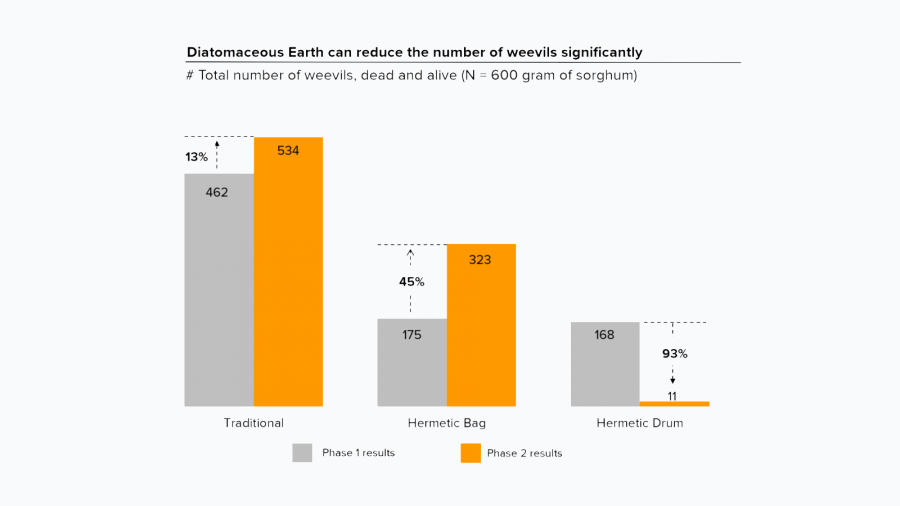
We found that the fully packed hermetically-sealed plastic drum was the most effective storage method for preventing weevil infestation, with a 93% reduction compared to the results in phase 1. Meanwhile, the hermetic bag had more weevils during this phase as compared to phase 1. This is likely due to the presence of small holes we found in the bag, allowing air to enter the bag. Our assumption is that these holes were caused by the weevils chewing through the plastic in search of oxygen.
The experiment showed that filling the hermetically sealed plastic drum to its full capacity and keeping it sealed for six months provided a better result than partially filling it and opening the storage container every month over the six month period.
Conclusion
In this phase, we found that the hermetically sealed plastic drum was the most effective solution in reducing weevil infestation. Kopernik will conduct another round of tests to determine whether an even better result can be obtained if a natural (food-grade) pesticide is added to the storage containers, in order to allow farmers to access their grain more frequently.
Read more
Reports and references
Marlangen, Cantika. (2017). Increasing Food Security and Income with Better Grain Storage Solutions Phase Two Project Report.