

Reef Star Coral Regeneration Method
Coral reef ecosystems under threat
Summary
We tested the potential of the ‘Reef Star’ and compared it to two commonly used methods -repurposed glass bottles and limestone statues- to regenerate coral reefs in Candidasa, which is one of the top destinations for snorkeling and diving in Bali, Indonesia.
Why we rated it this way
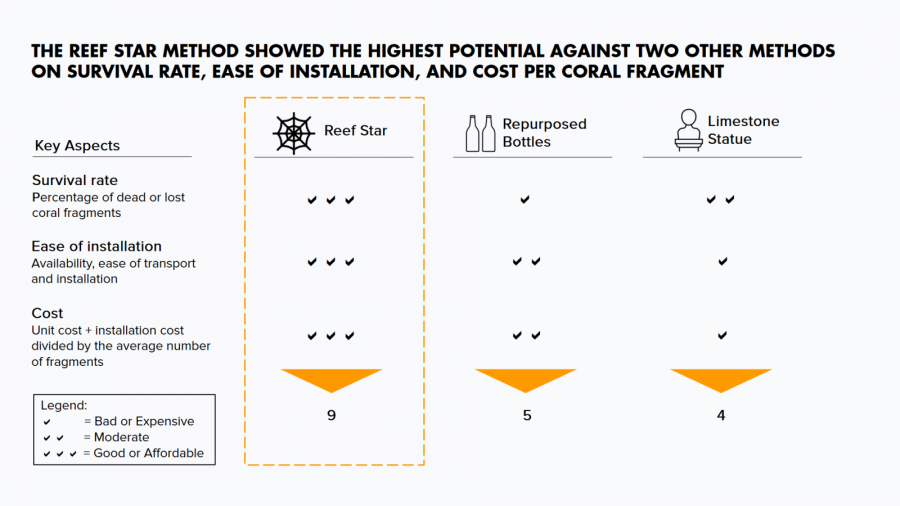
The ‘Reef Star’ had a higher coral survival rate, was easier to install, and was more cost-effective as compared to two other coral regeneration methods that include repurposed glass bottles or limestone statues. However, the coral survival rate was below our expectations.
The problem
What we found
Indonesia is home to 14 percent of the world’s coral reefs, covering a total area of 2.5 million hectares largely concentrated in Sulawesi, Maluku, Papua, Nusa Tenggara, and Bali. The reefs have huge ecological and economical functions such as providing feeding grounds and habitat for marine animals, providing coastal protection, as well as attracting tourism.
Unfortunately, coral bleaching and the impacts of human activities are threatening the coral reef ecosystems. A 2018 report released by the Indonesian Science Institute indicated that only 6.5 percent of Indonesia’s coral reefs are in an ‘excellent’ condition (live coral cover above 75 percent) and 34 percent are in a ‘poor’ condition (live coral cover below 25 percent) (Hadi et al., 2017).
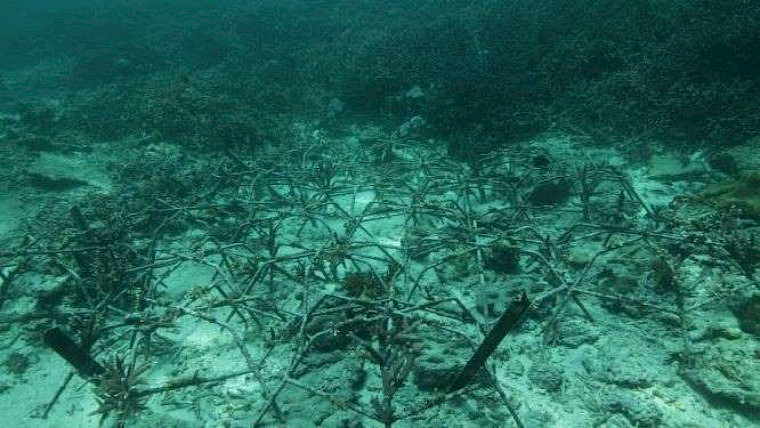
In 2012, Livingseas Bali discovered a patch of damaged reef surrounded by healthy coral colonies, about one kilometer from Candidasa beach. Six years later they noted that no coral colonies had grown or regenerated at the damaged site despite it being surrounded by a healthy coral reef.
The solution
What we tested
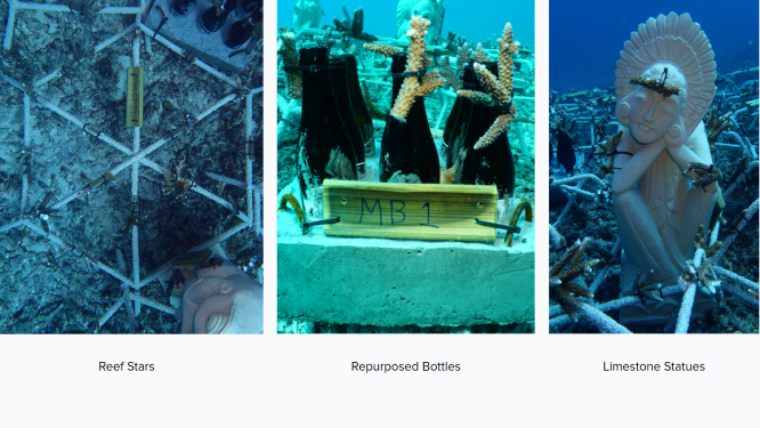
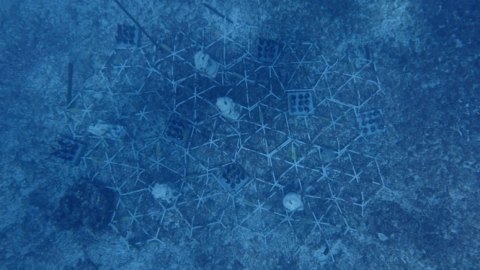
Kopernik worked with Livingseas Bali to test the potential of regenerating coral reef ecosystems by comparing the survival rate, ease of installation, and cost-effectiveness of the ‘Reef Star’ against two commonly used coral regeneration methods. The ‘Reef Star’, previously known as ‘Coral Spider’, is a regeneration method made of hexagonal steel structures developed by a multinational company in 2011.
We compared the ‘Reef Star’ to two other regeneration methods. 1. Repurposed glass bottles - a method developed and manufactured by Livingseas from widely-available used glass bottles that are placed in a concrete base. 2. Using limestone statues - referred to in several studies in Indonesia as a method for coral restoration.
Project design
How we ran it
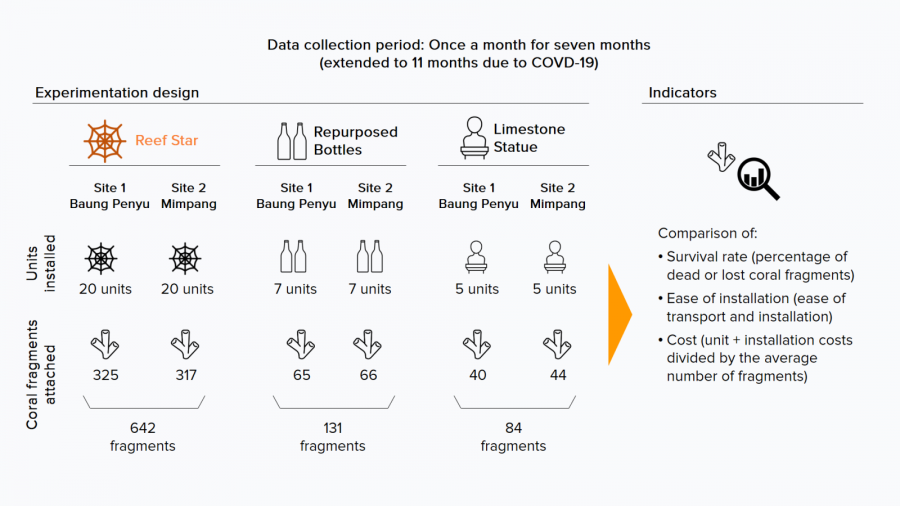
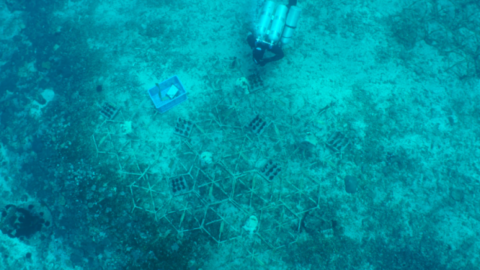
We compared the ‘Reef Star’ against the two other methods in two diving sites in Candidasa -Baung Penyu and Mimpang-, where we installed 20 ‘Reef Stars’, seven repurposed glass bottles, and five limestone statues, at an approximate depth of 10 meters at each site.
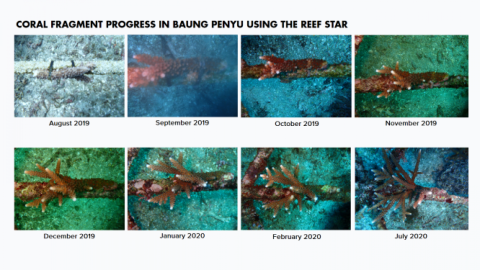
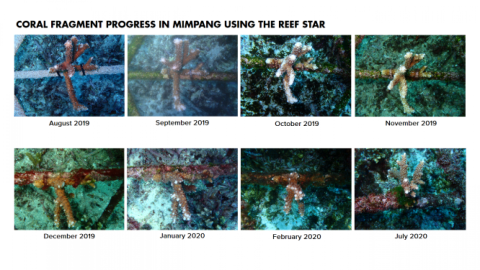
The first indicator we measured was the coral survival rate. Pieces of coral were attached to the structures of the three different methods, and the number of dead fragments were counted over a period of 11 months - between August 2019 and July 2020.
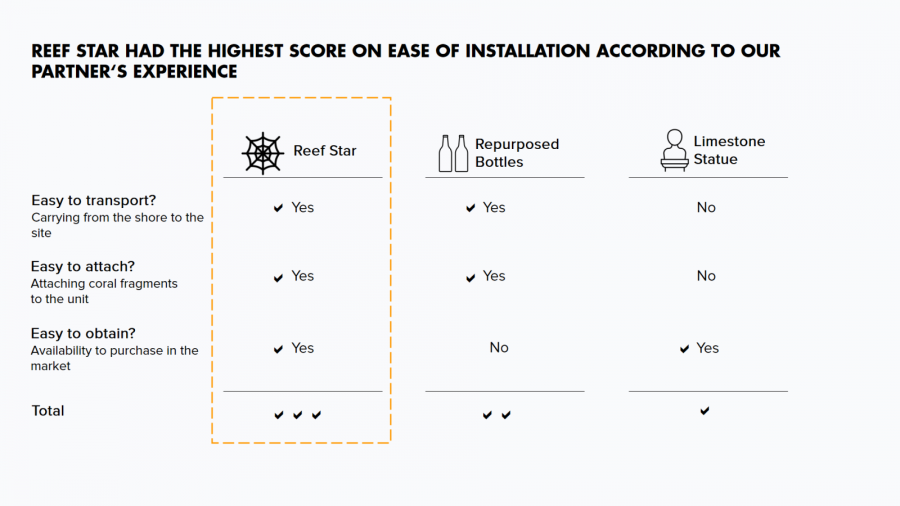
The second indicator was the ease of installation, evaluated by our partner. This was based on the local availability of materials, ease of transportation, ease of attaching coral fragments, and ease of installing each type of structure on the seabed.
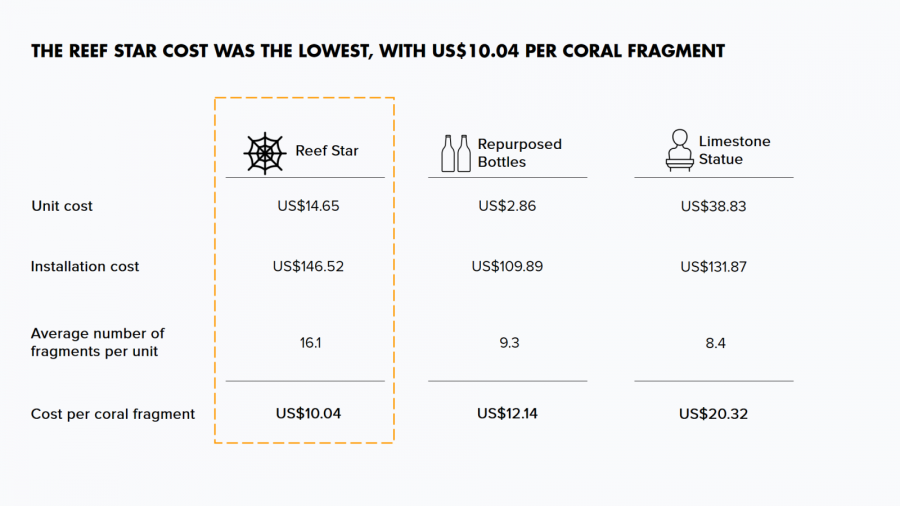
As for the third indicator, we calculated the average ‘cost per coral fragment’, considering the costs of materials and installation of each of the three methods.
The technology
Results
What we learned
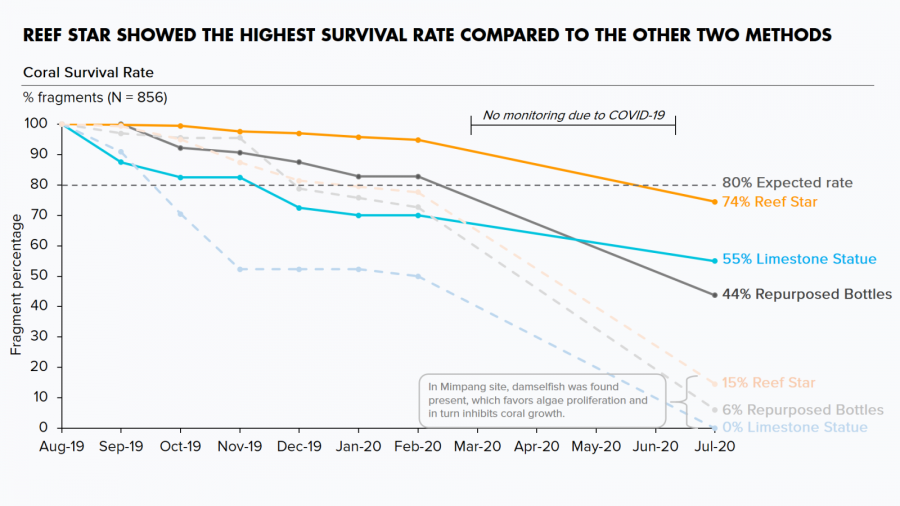
The experiment found that the ‘Reef Star’ had a higher coral survival rate after 11 months (up to 74%) in comparison with the limestone statue (up to 55%) and repurposed glass bottle (up to 44%) methods. The survival rates were linked to the structures’ ability to keep coral fragments attached to their surface.
In terms of ease of installation, the ‘Reef Star’ was the preferred method, followed by repurposed glass bottles and then limestone statues. The shape of the Reef Star reduces the space needed for transportation and allows for the binding of several pieces. This makes a stable network of structures that are less prone to movement as a result of ocean currents. The repurposed glass bottle system is labor-intensive to make, but the attachment of coral fragments to it is relatively easy. The limestone statues were the hardest to install, transport, and attach coral fragments to their surface.
Additionally, the ‘Reef Star’ resulted in the lowest cost per fragment, at US$ 10.04. The repurposed glass bottles had a cost per fragment of US$ 12.14, while the limestone statues’ cost was US$ 20.32. This is in part due to the ‘Reef Star’ ability to have more coral fragments attached to the steel structure.
Conclusion
The experiment found that the ‘Reef Star’ had a higher potential to regenerate coral reef ecosystems, due to higher survival rates of the coral, ease of installation, and lower cost, in comparison with the repurposed glass bottle and limestone statue methods.
However, the Reef Star’s survival rate of 74 percent was slightly below our expectations (80 percent) and further experiments with more resilient types of coral are being explored.
Read more
Project profile
Reports and references
Bhanoo, S. N. (2010, June 21). Damselfish Cultivate Their Algae Gardens. Retrieved November 24, 2020, from The New York Times
Kopernik Insights
Hadi, T. A., Prayudha, B., Hafizt, M., Budiyanto, A., and Suharsono. (2017). Status Terumbu Karang Indonesia 2018 (Publication). Jakarta Pusat, DKI Jakarta: Pusat Penelitian Oseanografi – Lembaga Ilmu Pengetahuan Indonesia. Retrieved January, 2019.