

Solar Dryer for Seaweed (1)
Difficulty in drying seaweed during the rainy season
Summary
We tested the efficacy of a solar dryer to improve seaweed drying in Lembata, East Nusa Tenggara.
Why we rated it this way
The solar dryer reduced the drying time for seaweed during the rainy season and made the drying process easier for farmers.
The problem
What we found
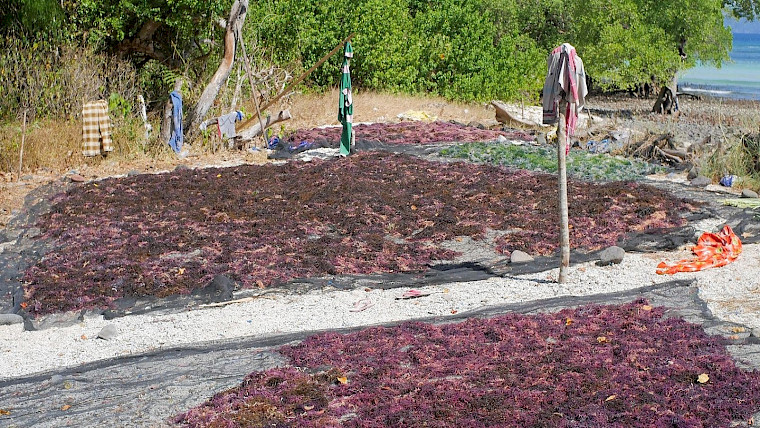
Indonesia is the largest seaweed producing country in the world, accounting for more than a third of global seaweed production (Sebastian and Saleh, 2020). The majority of people who live in the coastal regions of the Lembata regency, East Nusa Tenggara province, Indonesia depend on seaweed farming for their livelihoods. Farmers however, find it hard to dry seaweed particularly during the rainy season. The most common drying method is to lay seaweed on a net on the ground, which exposes it to rain and makes it susceptible to contamination with sands and dust. Farmers also need to manually cover seaweed with a tarpaulin to protect it from rain (and then remove the tarpaulin when the rain stops to continue drying), making it a relatively laborious process for farmers. Improved drying methods are therefore needed to protect seaweed from rain and other contaminants, while easing the drying process for farmers.
The solution
What we tested
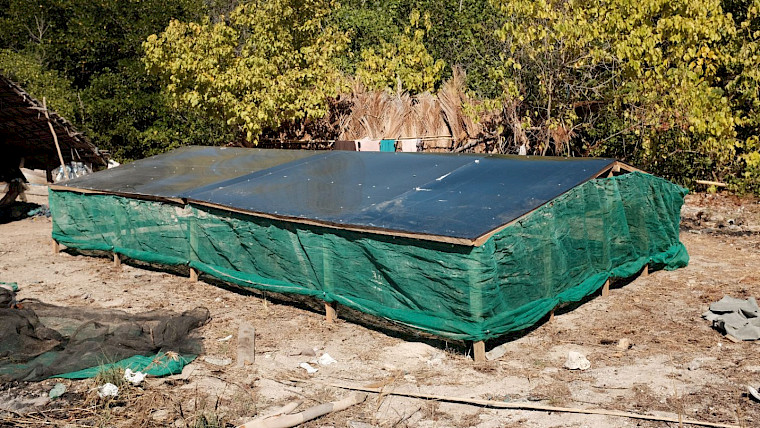
Kopernik built a simple solar dryer, made from locally available materials to improve the seaweed drying process. We compared the efficacy of drying seaweed in the solar dryer to the traditional drying methods by measuring the drying time.
Project design
How we ran it
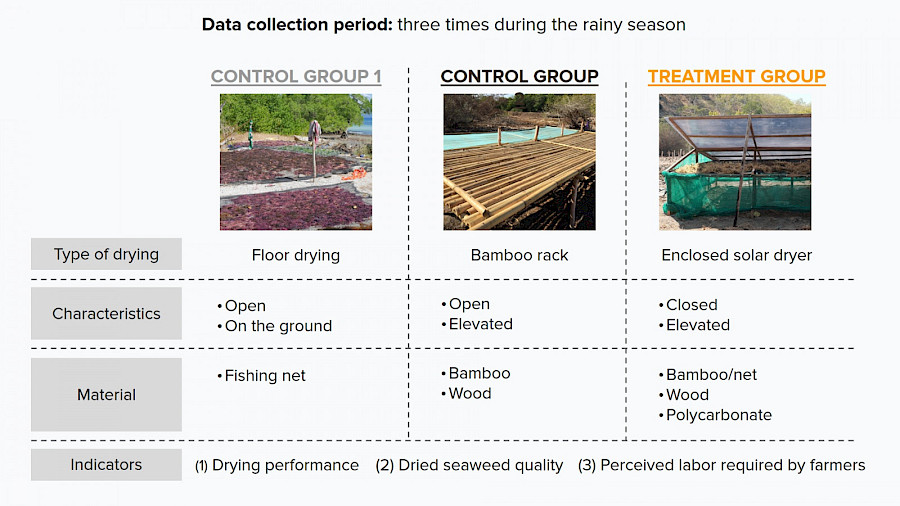
From August 2019 to January 2020, we tested drying seaweed with a solar dryer in Waowala village, Ile Ape district, Lembata regency with a capacity of 400 kg. We compared the solar dryer (treatment group) to the traditional floor drying method (control group 1) and open drying on a bamboo rack (para-para) (control group 2) by measuring the drying time to reach the optimum moisture levels during the rainy season, as well as the resulting quality of the seaweed. We also interviewed seaweed farmers on their experience of using the solar dryer.
Results
What we learned
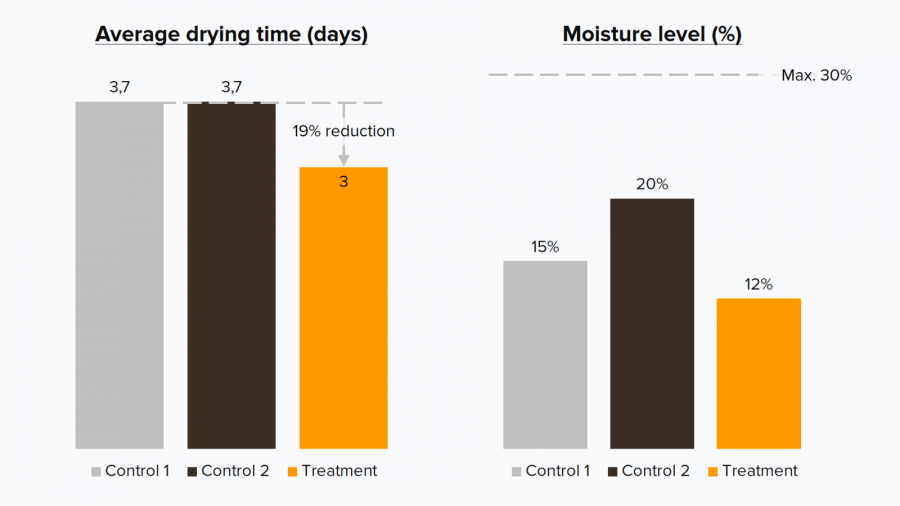
We found that the solar dryer (Treatment Group) enabled faster drying during the rainy season by 19%. Using the solar dryer, it took 3.7 days to dry seaweed while with the floor drying method (Control Group 1) and bamboo rack (Control Group 2) the process took four days. While dried seaweed from all groups reached the optimum moisture level of a maximum of 30% as required by the Indonesian National Standard (SNI 2690:2015), the moisture levels of dried seaweed from Control Group 1, Control Group 2, and Treatment Group varied (15%, 20%, and 12%, respectively). The Treatment Group reached the lowest and most desirable moisture level as compared to the control groups.
The farmers reported that the solar dryer made the drying process during the rainy season easier as they did not have to manually cover the seaweed with a tarpaulin when it rained. Shortly after we concluded the experiment, the farmers replicated the solar dryer on their own with a slightly adjusted design, using locally available materials which included tree trunks, bamboo, and the leftover polycarbonate. This indicated that the farmers saw value in the benefit of the solar dryer.
Conclusion
The experiment showed that the solar dryer dried the seaweed faster, and required less time and effort of seaweed farmers during the drying process.
Read more
Project profile
Reports and references
Nadhila, Kirana and Cokorda Suryanata. (2020). Improving Preservation Solutions: Seaweed Solar Dryer Project Report.